Reefer Container Technology: Which Upgrades Improve Cargo Stability Most?




Reefer Container Technology: Which Upgrades Improve Cargo Stability Most?
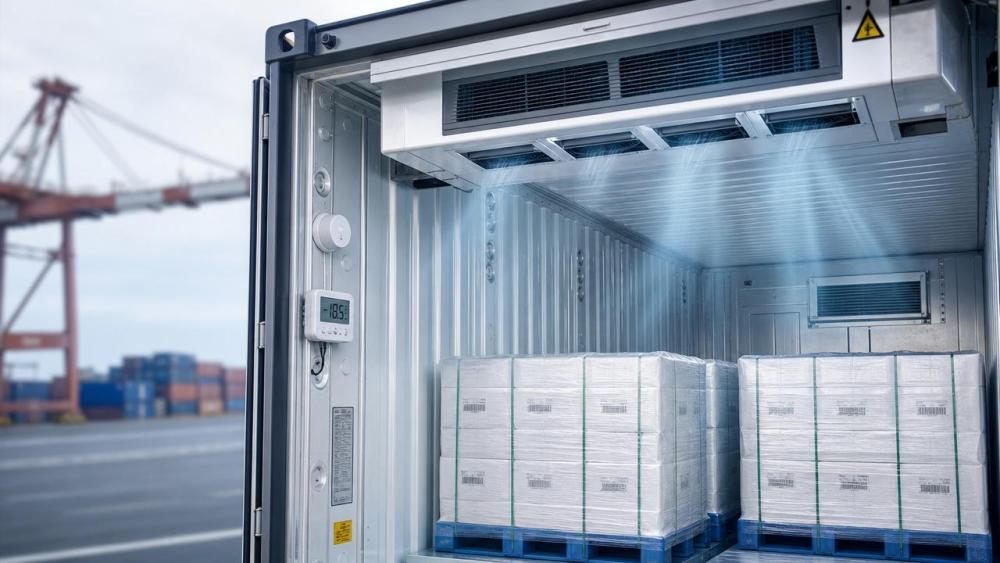
Reefer Container Technology is changing fast. It now does far more than keep cargo cold during transit.
For temperature-sensitive freight, cargo stability depends on control, visibility, and response speed. Cooling alone is no longer enough.
That shift matters most for food, life sciences, and premium perishables. Small variations can trigger quality loss, claims, or compliance failures.
From a risk perspective, the best Reefer Container Technology upgrades improve consistency, not just peak performance.
In practice, stability means the cargo stays within its required condition range from stuffing to delivery.
That includes temperature, airflow, humidity, door discipline, power continuity, and alarm handling.
The question is simple: which upgrades deliver the biggest stability gains, and where should operations teams invest first?
Why cargo stability fails even in modern reefer operations
Most cold-chain losses do not begin with total refrigeration failure. They start with smaller control gaps.
A sensor may drift. Air return may become blocked. A door may stay open too long during transfer.
Setpoint compliance can still look normal while the cargo core becomes unstable. That is where hidden risk grows.
This is why Reefer Container Technology is increasingly judged by data accuracy and thermal uniformity.
For quality and safety control, one reading at the controller panel is not a full picture.
A stable reefer system must detect developing deviations early, then support fast intervention across ports, depots, and inland moves.
The upgrades that improve cargo stability most
Not every upgrade produces the same operational value. Some features look advanced but deliver limited stability improvement.
The strongest gains usually come from four areas: sensing, airflow, remote visibility, and alarm execution.
1. Higher-accuracy sensor architecture
Sensor accuracy is the foundation of effective Reefer Container Technology. If readings are wrong, every downstream decision weakens.
Upgraded supply-air, return-air, and cargo-proximate sensing reduces blind spots. It also improves calibration confidence during long voyages.
This matters most for pharmaceuticals, berries, seafood, and frozen proteins. These products react quickly to unnoticed drift.
The biggest improvement comes when sensors support trend analysis, not just point readings at isolated times.
2. Smarter airflow management
Good Reefer Container Technology depends on controlled air circulation. Uneven airflow often causes temperature variation across the load.
Fan upgrades, better duct integrity, and airflow verification tools can outperform raw compressor improvements in real cargo conditions.
In actual operations, bad stowage frequently cancels out good machinery. Packaging pattern and floor clearance still matter.
That means equipment upgrades work best when paired with stricter loading discipline and pre-trip inspection routines.
3. Remote monitoring with live exception alerts
Remote visibility is now one of the most practical Reefer Container Technology investments for cargo stability.
Live telemetry lets teams track setpoint deviation, power interruptions, door activity, and delayed pull-down performance.
More importantly, it shortens the time between abnormal condition and operational response. That time gap drives many avoidable losses.
When alerts reach the right team quickly, a minor thermal excursion may stay minor instead of becoming a claim.
4. Faster and clearer alarm response logic
Alarm quality is often overlooked in Reefer Container Technology discussions. Yet poor alarm handling creates serious control failure.
Too many alarms produce noise. Too little context slows action. Both outcomes increase exposure.
The better upgrade is not just more alarms. It is smarter prioritization, escalation routing, and response playbooks.
This becomes especially valuable during port congestion, transshipment delays, and night-shift handovers.
Which upgrades usually deliver the highest return first
If budgets are limited, sequence matters. The best Reefer Container Technology roadmap starts with risk concentration points.
In many fleets, these four steps produce the fastest stability gains:
- Upgrade sensor calibration quality and add more reliable temperature mapping.
- Improve airflow validation during loading and pre-trip inspection.
- Deploy remote monitoring with real-time exception alerts.
- Standardize alarm escalation, response ownership, and closure records.
These upgrades usually beat cosmetic digital features because they reduce variation at the source.
For decision-makers, the key metric is not feature count. It is excursion prevention per lane, cargo type, and handoff point.
A practical comparison of major reefer technology upgrades
Where standards and compliance raise the bar
Reefer Container Technology should not be reviewed only through equipment brochures. Compliance expectations are rising too.
Food safety frameworks, pharmaceutical distribution controls, and customer audit rules all demand better evidence.
That evidence includes calibration records, alarm logs, temperature history, and documented corrective action.
For many operators, digital reefer upgrades now support compliance as much as operational performance.
This is especially relevant where IATA CEIV-aligned handling, GDP-style controls, or strict customer specifications apply.
A system that cannot prove stability is increasingly treated as a system that cannot guarantee it.
Common upgrade mistakes that reduce real-world performance
Some reefer projects underperform because the technology choice ignores operating behavior.
- Buying better controllers without fixing poor loading patterns.
- Adding dashboards without clear response ownership.
- Installing sensors but skipping calibration governance.
- Treating all cargo types as if they share one risk profile.
- Reviewing average temperatures instead of exception duration and location.
These mistakes are common because Reefer Container Technology is often evaluated as hardware alone.
In reality, cargo stability comes from hardware, data, procedures, and people working as one control system.
How to assess reefer upgrades before deployment
Before approving an upgrade, test it against actual risk scenarios. That step reveals value much faster.
- Map failure points by lane, cargo type, and transfer node.
- Review excursion history, including duration, not just frequency.
- Compare upgrades by detection speed and corrective-action support.
- Run pilot loads with defined acceptance thresholds.
- Audit whether teams can act on alerts within target response windows.
This approach keeps Reefer Container Technology decisions grounded in operational evidence instead of marketing language.
It also helps justify capital spend with measurable stability outcomes.
The bottom line on reefer container technology upgrades
The most effective Reefer Container Technology upgrades are not always the most visible ones.
The strongest gains usually come from accurate sensors, consistent airflow, remote monitoring, and disciplined alarm response.
Together, these upgrades improve cargo stability by reducing hidden variation and shortening intervention time.
That is where losses, claims, and compliance gaps are most often prevented.
In the current cold-chain environment, the smartest next step is to rank upgrades by stability impact, not by technical novelty.
Start with the controls that make deviations visible, actionable, and provable across the full transport journey.
That is how Reefer Container Technology turns from refrigeration equipment into a true cargo protection system.
Related News
 Where Autonomous Freight Vehicles Deliver the Most Value in Port OperationsPort Digital Twin ArchitectAutonomous freight vehicles ports: discover where automation delivers the highest value in quay-to-yard, rail, and logistics workflows—improving throughput, safety, and reliability.
 How to Size High-Rate Sortation Capacity for Peak Parcel VolumesGlobal Routing & Distribution StrategistHigh-rate sortation capacity planning: learn how to size peak parcel throughput, reduce recirculation, protect carrier cut-offs, and build a resilient operation.
 How to Calculate Rail-Sea Intermodal Logistics Costs Before Choosing a RouteZero-Carbon Powertrain FellowRail-sea intermodal logistics cost: learn to compare all-in freight, rail, port, customs, and risk costs before choosing a route for smarter sourcing decisions.
 What Should Ports Evaluate Before Selecting a Digital Port Platform?Port Digital Twin ArchitectDigital port platform selection guide: evaluate integration, data governance, automation readiness, cybersecurity, and pilots to choose a resilient solution that improves port operations.
 How to Compare Rail-Sea Intermodal Providers for Port-to-Inland Freight ReliabilityZero-Carbon Powertrain FellowCompare rail-sea intermodal providers with a practical guide to lane reliability, capacity, visibility, costs, and contingency planning for resilient port-to-inland freight.
 How to Select Autonomous Mobile Robots for Subzero Cold Storage OperationsPort Digital Twin ArchitectAutonomous mobile robots cold storage teams can rely on: evaluate batteries, navigation, safety, charging, and service for proven subzero performance.
 How Real-Time Route Optimization Reduces Delays Across Multi-Stop Freight OperationsChief Logistics AI & Fluid Dynamics ScientistReal time route optimization helps multi-stop freight teams cut delays, protect delivery windows, and respond faster to port, warehouse, and traffic disruptions.
 How to Build a Logistics Tender Workflow That Improves Bid Quality and ControlFreight Capital & Infra Investment EconomicsLogistics tender workflow guide: improve bid quality, compare total costs, assess suppliers, and strengthen contract control for better logistics outcomes.
 How Should UAE Businesses Evaluate Drone Logistics Systems for Last-Mile Delivery?Spatial Computing & Machine Vision GeekDrone logistics systems UAE: learn how to evaluate regulatory readiness, route safety, integration, reliability, and total cost for smarter last-mile delivery.
 How to Evaluate Port Automation Systems for Container Terminal Efficiency and ROIPort Digital Twin ArchitectPort Automation Systems for terminals: evaluate efficiency, TOS integration, supplier risk, and ROI to choose scalable solutions that improve throughput and resilience.
 How to Use Freight Benchmark Pricing to Compare Carrier Rates and Control CostsFreight Capital & Infra Investment EconomicsFreight benchmark pricing helps procurement teams compare carrier rates, control total transport costs, uncover surcharges, and negotiate better freight deals with confidence.
 Container Yard Management: How to Cut Truck Turn Times and Improve Slot UtilizationPort Digital Twin ArchitectContainer yard management strategies to cut truck turn times, optimize slot utilization, reduce rehandles, and improve yard flow with smarter appointments, planning, and real-time control.