EU CEIV Pharma Rule Mandates ULT Tracking




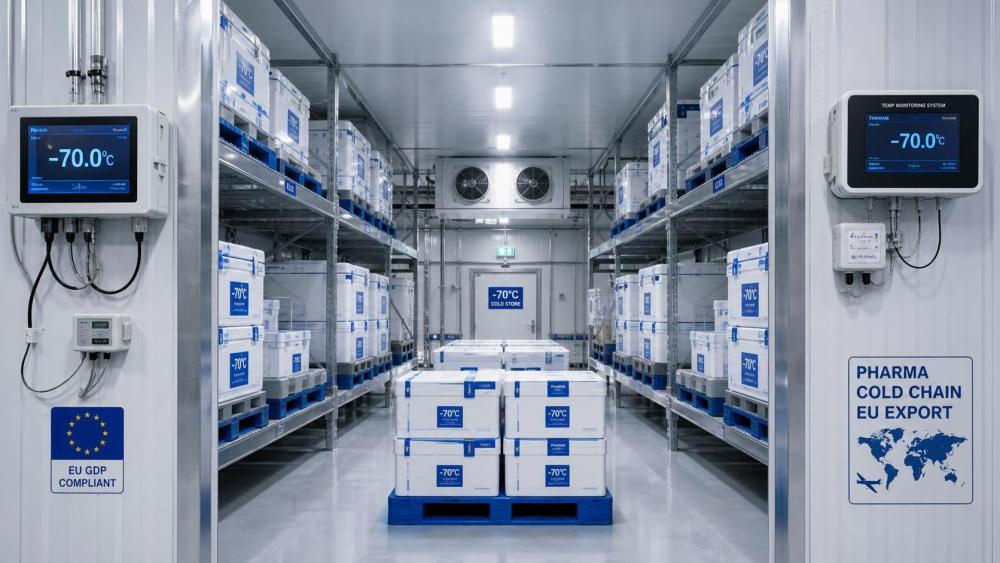
On July 28, 2026, an updated CEIV Pharma standard (v4.2) issued jointly by TIACA and IATA took effect for temperature-sensitive pharmaceutical exports to the EU. The change requires carriers and overseas warehouse operators serving this trade to deploy real-time thermodynamic state tracking in ULTRA-LOW TEMPERATURE (-70°C) cold rooms and to synchronize that data with the AEO digital customs protocol gateway. For Chinese medical and pharmaceutical exporters, cross-border cold chain logistics providers, and EU distributors, the issue is not only technical compliance but also market access and customs clearance timing.
What the updated requirement clearly covers
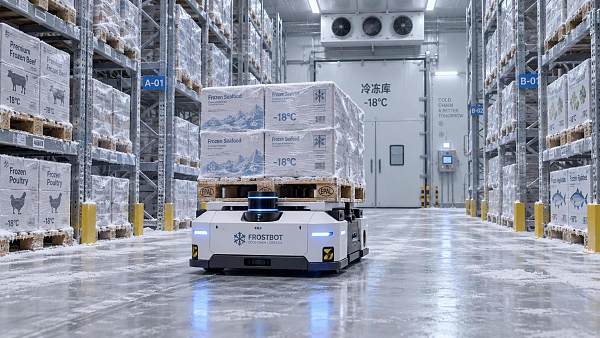
According to the information provided, TIACA and IATA jointly released CEIV Pharma standard v4.2, effective July 28, 2026. Under this update, all carriers and overseas warehouse operators exporting temperature-sensitive pharmaceuticals to the EU must install a real-time thermodynamic state tracking system in ULTRA-LOW TEMPERATURE (-70°C) cold rooms.
The required system must comply with ISO 14971 and IEC 62304. The information provided also states that the relevant tracking data must be uploaded simultaneously to the AEO digital customs protocol gateway. The stated direct impact falls on Chinese pharmaceutical and medical device exporters, cross-border cold chain logistics service providers, and EU distributors through compliance access and customs clearance efficiency.
Where the operational pressure is likely to appear first
Exporters facing a stricter compliance handoff
From an industry perspective, Chinese pharmaceutical and medical device exporters may be affected because their ability to ship temperature-sensitive products to the EU now depends more directly on whether transport and storage partners meet the new ULT tracking requirement. The practical pressure point is the compliance handoff between shipper, carrier, and overseas warehousing, especially where market entry and customs timing are sensitive to documentation and system readiness.
Cold chain service providers moving from temperature control to trackable proof
Carriers and cross-border cold chain operators are positioned at the center of the rule because the requirement is specifically tied to ULT cold room operations and real-time thermodynamic monitoring. The likely impact is not limited to physical cold storage conditions; it also extends to whether monitoring output can be generated, maintained, and synchronized in a form that supports customs-facing processes.
EU distributors watching clearance reliability
EU distributors may feel the downstream effects through inbound compliance screening and customs clearance timing. Observably, when data submission is tied to a digital customs gateway, distribution-side planning may become more sensitive to whether upstream logistics partners can provide complete and timely records in line with the updated standard.
Issues companies should be checking now
Whether current ULT facilities actually match the stated standard
What deserves closer attention is the gap between having a -70°C cold room and having a real-time thermodynamic state tracking system that meets ISO 14971 and IEC 62304. Companies involved in EU-bound shipments should distinguish between basic cold storage capability and the specific compliance configuration described in the update.
How data transfer connects with customs-facing workflows
The requirement to upload data to the AEO digital customs protocol gateway means the rule has a documentation and process dimension, not only an equipment dimension. In practical terms, businesses should pay attention to how operational records are captured, transferred, and aligned with customs-related submission steps in cross-border delivery.
Which partners carry the compliance burden in shared logistics chains
Many temperature-sensitive exports involve multiple parties across transport, warehousing, and distribution. Analysis shows that one immediate priority is clarifying which party is responsible for system deployment, which party controls data submission, and which party bears the risk if compliance gaps affect clearance or delivery schedules.
How to communicate timing and documentation expectations to customers
Because the rule directly touches compliance access and customs efficiency, affected companies should pay close attention to customer communication around required documents, service scope, and possible timing changes. This is particularly relevant where exporters rely on third-party carriers or overseas warehouses to satisfy the new requirement.
Why this matters beyond a single technical upgrade
Analysis shows this development is more appropriate to understand as an operational compliance signal rather than a routine standards update. The key point is that monitoring inside ULT environments is now tied more explicitly to recognized standards and to customs-linked digital submission. That combination suggests the market is paying closer attention to verifiable cold chain process integrity, not only stated temperature conditions.
At the same time, it would be premature to treat this as a fully settled industry outcome beyond the facts provided. Observably, the rule is already effective, but the extent of practical friction across different business models, shipment structures, and partner networks still requires continued attention.
How the industry may best read this change
The immediate meaning of this update is clear: EU-bound temperature-sensitive pharmaceutical logistics involving ULT cold rooms now face a more explicit compliance threshold. For the market, this is less a short-lived notice and more a concrete operating requirement with direct implications for access, coordination, and clearance efficiency.
It is more appropriate to understand this as a confirmed rule change with broader signaling value. The requirement is already in force, but its longer-term commercial and procedural effects still need to be observed through actual implementation across exporters, logistics providers, and EU distribution channels.
Basis of this article and what still needs verification
This article is based on the user-provided news title, event date, and event summary. Typical source types relevant to this kind of development may include official announcements, industry association releases, company disclosures, authoritative media reporting, and standard-setting documents.
No specific official source link was provided in the input, so the exact original publication path still requires ongoing verification. What remains worth tracking is whether further official wording, implementation clarification, or operational guidance emerges around compliance interpretation, data submission practice, and cross-border execution.
Related News
 Where Autonomous Freight Vehicles Deliver the Most Value in Port OperationsPort Digital Twin ArchitectAutonomous freight vehicles ports: discover where automation delivers the highest value in quay-to-yard, rail, and logistics workflows—improving throughput, safety, and reliability.
 How to Size High-Rate Sortation Capacity for Peak Parcel VolumesGlobal Routing & Distribution StrategistHigh-rate sortation capacity planning: learn how to size peak parcel throughput, reduce recirculation, protect carrier cut-offs, and build a resilient operation.
 How to Calculate Rail-Sea Intermodal Logistics Costs Before Choosing a RouteZero-Carbon Powertrain FellowRail-sea intermodal logistics cost: learn to compare all-in freight, rail, port, customs, and risk costs before choosing a route for smarter sourcing decisions.
 What Should Ports Evaluate Before Selecting a Digital Port Platform?Port Digital Twin ArchitectDigital port platform selection guide: evaluate integration, data governance, automation readiness, cybersecurity, and pilots to choose a resilient solution that improves port operations.
 How to Compare Rail-Sea Intermodal Providers for Port-to-Inland Freight ReliabilityZero-Carbon Powertrain FellowCompare rail-sea intermodal providers with a practical guide to lane reliability, capacity, visibility, costs, and contingency planning for resilient port-to-inland freight.
 How to Select Autonomous Mobile Robots for Subzero Cold Storage OperationsPort Digital Twin ArchitectAutonomous mobile robots cold storage teams can rely on: evaluate batteries, navigation, safety, charging, and service for proven subzero performance.
 How Real-Time Route Optimization Reduces Delays Across Multi-Stop Freight OperationsChief Logistics AI & Fluid Dynamics ScientistReal time route optimization helps multi-stop freight teams cut delays, protect delivery windows, and respond faster to port, warehouse, and traffic disruptions.
 How to Build a Logistics Tender Workflow That Improves Bid Quality and ControlFreight Capital & Infra Investment EconomicsLogistics tender workflow guide: improve bid quality, compare total costs, assess suppliers, and strengthen contract control for better logistics outcomes.
 How Should UAE Businesses Evaluate Drone Logistics Systems for Last-Mile Delivery?Spatial Computing & Machine Vision GeekDrone logistics systems UAE: learn how to evaluate regulatory readiness, route safety, integration, reliability, and total cost for smarter last-mile delivery.
 How to Evaluate Port Automation Systems for Container Terminal Efficiency and ROIPort Digital Twin ArchitectPort Automation Systems for terminals: evaluate efficiency, TOS integration, supplier risk, and ROI to choose scalable solutions that improve throughput and resilience.
 How to Use Freight Benchmark Pricing to Compare Carrier Rates and Control CostsFreight Capital & Infra Investment EconomicsFreight benchmark pricing helps procurement teams compare carrier rates, control total transport costs, uncover surcharges, and negotiate better freight deals with confidence.
 Container Yard Management: How to Cut Truck Turn Times and Improve Slot UtilizationPort Digital Twin ArchitectContainer yard management strategies to cut truck turn times, optimize slot utilization, reduce rehandles, and improve yard flow with smarter appointments, planning, and real-time control.