Tianjin Port and Huawei Launch PortGPT for AEO Clearance




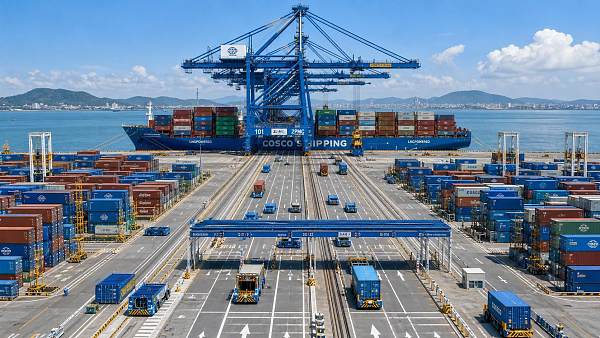
On June 19, 2026, Tianjin Port Group and Huawei formally put the PortGPT port model into operation at an upgrade event for a global smart port demonstration site. The development is notable not simply as a digital tool launch, but as a practical signal that AEO-related customs rules, mutual recognition terms, and clearance path selection are being translated into machine-readable workflows inside a port operating environment. For exporters, importers, logistics providers, and compliance teams, the immediate point of attention is how rule interpretation, document preparation, and cross-border delivery planning may increasingly be shaped by system-based compliance routing rather than manual review alone.
What has been formally put into operation
According to the provided event summary, Tianjin Port Group and Huawei officially activated the PortGPT port model on June 19, 2026.
The confirmed functions described in the input are specific: the model is stated to achieve semantic parsing and automatic mapping of AEO digital customs protocols, compare mutual recognition terms across different AEO frameworks in real time, including the European Union, Singapore, and RCEP member states, and generate recommended compliant clearance pathways.
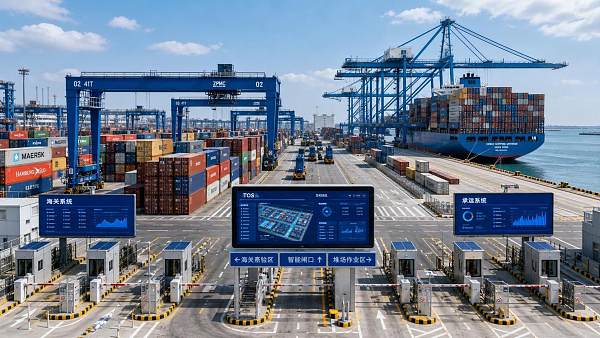
The same summary also states that this capability has already been connected to Tianjin Port's TOS system and that API access is being provided to foreign trade enterprises.
Where the rule impact may begin to appear
For exporters managing multi-market shipments
From an industry perspective, exporters may be among the first groups affected because AEO mutual recognition terms can influence how customs treatment is interpreted across destination markets. The operational impact is likely to be felt in pre-shipment review, customs document alignment, and route selection. What deserves closer attention is whether internal compliance teams can match their declarations, supporting files, and delivery planning to the rule logic reflected by the connected system.
For importers and procurement teams working with time-sensitive cargo
Analysis shows that procurement-driven import operations may also need to pay attention, especially where delivery timing depends on predictable customs handling. If a port-based model is generating compliance clearance path suggestions based on AEO terms, procurement and supply planning teams may need to monitor whether document readiness, supplier submissions, and shipment scheduling are sufficient to support that process without creating avoidable review gaps.
For logistics and supply chain service providers
Observably, logistics providers, customs support teams, and other supply chain service participants may see changes in how they prepare client-facing workflows. The relevant business links are likely to include data handoff, document coordination, and system integration. Because the capability is connected to the port TOS and exposed through an API, service providers may need to pay closer attention to how compliance interpretation is operationalized in digital interfaces rather than handled only through case-by-case manual communication.
For compliance and certification-related functions
Companies responsible for internal trade compliance, audit preparation, or certification coordination may also be affected because the new capability centers on AEO protocol interpretation and mutual recognition terms. The main area to watch is not a newly announced certification requirement in itself, but the possibility that rule comparison and mapping become more visible and more structured within transaction execution.
What companies should watch in practice now
Consistency between internal documents and digital rule mapping
Analysis shows that businesses using Tianjin Port-related trade flows should closely review whether customs-facing information, internal shipment records, and supporting compliance documents are sufficiently consistent for machine-assisted interpretation. The event summary confirms an automated semantic and mapping function, but it does not describe detailed review standards, so companies should treat documentation consistency as a near-term watchpoint rather than assume fully standardized outcomes.
How API access may affect workflow design
Because the provided information states that API access is available to foreign trade enterprises, companies should pay attention to whether their existing trade, logistics, or compliance systems are prepared to receive and use such outputs. What deserves closer attention is not only technical connectivity, but also who inside the company is responsible for validating any suggested compliant clearance pathway before it influences shipment execution.
Differences across destination rule sets
The summary explicitly mentions real-time comparison of AEO mutual recognition terms involving the European Union, Singapore, and RCEP member states. Observably, this suggests that companies shipping to multiple markets should pay attention to market-by-market rule interpretation, document matching, and declaration preparation. It is more appropriate to understand this as a prompt to refine cross-market compliance review, not as proof that all destination-side execution differences have been resolved.
Follow-up changes in operational wording and implementation scope
The confirmed information establishes that the capability is live and connected to the port system, but it does not provide detailed implementation language from customs authorities, bid documents, or trading counterparties. For that reason, businesses should continue monitoring whether later operational statements, service requirements, or transaction documents begin to reference this kind of digital compliance routing more explicitly.
Why this looks more like an execution signal than a finished rule outcome
Analysis shows that the significance of this event lies less in announcing a new statute and more in showing that existing AEO-related trade rules and mutual recognition terms are being embedded into a working digital port process. That is an execution signal worth tracking because once rule interpretation is translated into system logic, the practical burden on exporters, logistics coordinators, and compliance teams may shift toward data quality, document alignment, and process readiness.
At the same time, it would be premature to treat this as a complete market-wide rule settlement. The provided information does not define how different enterprises will use the API, how suggested clearance paths will be reviewed in practice, or whether other ports and trade nodes will adopt similar workflows on the same timetable. Continued industry attention should therefore focus on implementation detail, enterprise uptake, and feedback from actual shipment handling.
How this development is best understood at this stage
At this stage, this development is best understood as a concrete operational move linking AEO-related rule interpretation with port-side digital execution. For the industry, the most relevant implication is that compliance routing may become more structured and more system-driven in cross-border logistics handled through this environment.
A neutral reading is appropriate: the launch indicates live deployment and practical integration, but the broader impact on trade efficiency, documentation practice, and supply chain coordination still depends on how the tool is used, how enterprises respond, and how follow-up execution language develops.
Basis of this article and points that still require verification
This article is generated from the user-provided news title, event date, and event summary. The analysis is limited to those confirmed inputs and does not rely on additional unverified data, policy numbers, market figures, or external claims.
For events of this type, source categories that are usually relevant include official company announcements, customs or trade authority releases, industry association updates, standard-setting documents, and reporting by authoritative media. However, a specific official source link was not provided in the input, so later verification is still necessary.
What still requires ongoing observation includes any detailed implementation wording, later compliance guidance, possible changes in operational documents or tender requirements, market feedback from enterprises using the API, and how execution practices evolve after the initial launch.
Related News
 Reefer Monitoring Price Explained: Cost Drivers, Subscription Models, and ROI BenchmarksReefer monitoring price explained clearly: compare cost drivers, subscription models, hidden fees, and ROI benchmarks to choose a smarter cold-chain monitoring solution.
 How to Choose a Temperature Monitoring System for Cold Chain Compliance and Audit ReadinessTemperature monitoring system selection affects compliance, product quality, and audit outcomes. Learn how to compare alerts, calibration, data integrity, and reporting for cold chain readiness.
 Port Infrastructure Planning Checklist: What to Evaluate for Capacity, Yard Flow, and ExpansionFreight Capital & Infra Investment EconomicsPort infrastructure planning checklist covering real capacity, yard flow, equipment fit, connectivity, and expansion readiness—use it to spot hidden bottlenecks and make smarter investment decisions.
 Container Port Automation vs Conventional Operations: Which KPIs Matter Before You Invest?Port Digital Twin ArchitectContainer port automation vs conventional operations: discover the KPIs that truly shape ROI, throughput, yard efficiency, labor productivity, and resilience before you invest.
 Autonomous Delivery for Hospitals: Best Use Cases, Workflow Design, and Safety CheckpointsSpatial Computing & Machine Vision GeekAutonomous Delivery for hospitals: explore the best use cases, workflow design steps, and safety checkpoints to improve hospital logistics, traceability, and efficiency.
 Shipping Map Puts China Port AI at the CenterPort Digital Twin ArchitectShipping Map puts China Port AI at the center of global supply chain resilience. Learn how smarter port dispatch may reshape routing, transshipment, and delivery reliability.
 Red Sea Diversions Lift Rates as LNG Boxship Orders JumpZero-Carbon Powertrain FellowRed Sea diversions lift rates as LNG boxship orders jump, reshaping Asia-Europe freight, vessel specs, and delivery planning. See what shippers and buyers should do next.
 EU Starts Low-Value Parcel Tax Rule in JulyGlobal Routing & Distribution StrategistEU low-value parcel tax rule starts in July 2026: learn how IOSS VAT and AEO pre-declaration may impact customs timing, costs, and compliance for e-commerce exporters.
 Last Mile Routing Provider Comparison: SLA, API, Coverage, and Pricing FactorsSpatial Computing & Machine Vision GeekLast mile routing provider comparison guide: evaluate SLA performance, API depth, coverage, and pricing factors to reduce delivery risk, improve integration, and choose a partner that scales.
 Port Data Integration Problems: How to Connect TOS, Customs, Yard, and Carrier SystemsPort Digital Twin ArchitectPort data integration challenges can delay cargo, distort visibility, and raise costs. Learn how to connect TOS, customs, yard, and carrier systems with a practical framework.
 Automated Cranes in Singapore Ports: Key Specs, Throughput Metrics, and Site FitPort Digital Twin ArchitectAutomated cranes Singapore projects require more than bold specs. Explore key performance metrics, site-fit factors, and integration insights to choose smarter port automation solutions.
 How to Choose Temperature-Controlled Logistics Packaging for Transit Time and Product RiskTemperature-controlled logistics packaging selection starts with transit time and product risk. Learn how to compare options, reduce spoilage, control cost, and choose with confidence.