Reefer Monitoring Price Explained: Cost Drivers, Subscription Models, and ROI Benchmarks




Why does reefer monitoring price vary so much?
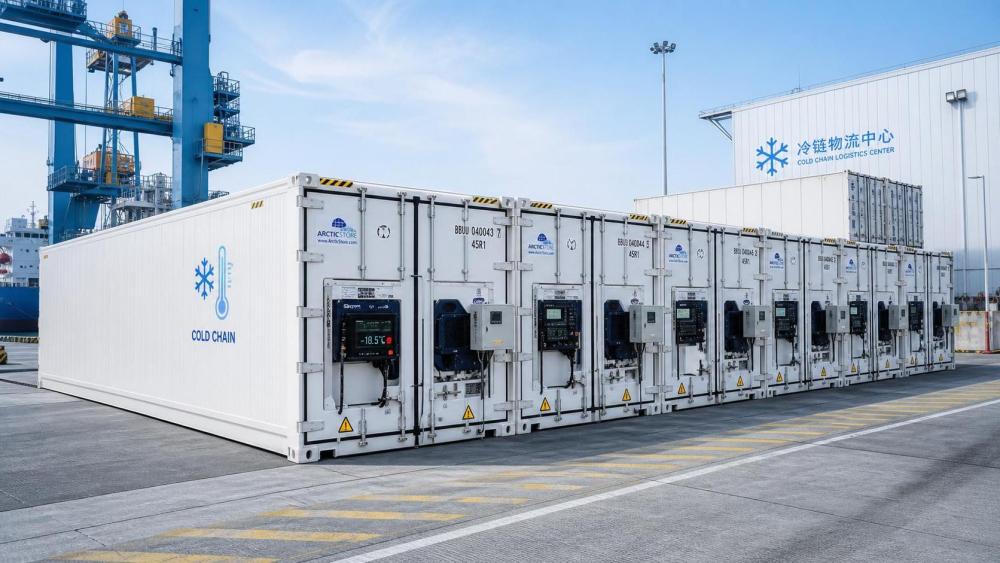
Reefer monitoring price can look confusing at first because vendors rarely package the same scope in the same way.
Some quotes include only basic telemetry. Others add alerts, analytics, compliance reporting, and integration with broader cold-chain or terminal systems.
In practical terms, the price reflects how much visibility, control, and risk reduction the service actually delivers.
That matters across global trade networks, where reefer containers move through ports, yards, warehouses, inland depots, and final distribution nodes.
On platforms such as G-WLP, reefer monitoring is not viewed as a stand-alone gadget.
It sits inside a larger logistics stack that includes port automation, yard planning, customs timing, warehouse operations, and compliance-sensitive cold-chain execution.
So when comparing reefer monitoring price, the better question is not only “What does it cost?”
A more useful question is “What operating risk does this cost remove, and where does value appear over time?”
Which cost drivers usually have the biggest impact?
The biggest cost drivers are usually hardware architecture, connectivity, sensor performance, software depth, and support requirements.
Hardware comes first because device quality changes field life, battery replacement cycles, and resistance to harsh marine or inland transport conditions.
A lower device price may look attractive, yet weak enclosure design can raise replacement rates within one or two seasons.
Sensor accuracy also affects reefer monitoring price. Pharmaceutical, food export, and high-value perishables often need tighter tolerances and audit-ready records.
Connectivity is another major factor. Cellular, satellite, LoRaWAN, Bluetooth gateway, and hybrid designs carry different recurring costs and coverage profiles.
More frequent data transmission usually improves visibility, but it also pushes subscription fees higher.
Then comes software scope. A dashboard with simple location and temperature plotting is cheaper than a platform with alarm escalation, SLA logic, and API integration.
Implementation complexity can add meaningful cost too, especially where reefer data must connect with TOS, WMS, ERP, or customer reporting tools.
- Device type: reusable asset tracker, container-installed sensor, or gateway-based monitoring.
- Data interval: every few minutes costs more than hourly or exception-based reporting.
- Alert logic: simple threshold alarms are cheaper than multi-stage escalation workflows.
- Compliance reporting: audit trails for food safety or pharma add software and storage demands.
- Deployment footprint: multi-country roaming and port-to-door coverage increase service complexity.
How are vendors structuring reefer monitoring price today?
Most suppliers use a mix of upfront hardware fees and recurring platform charges, but the details vary more than many expect.
Some sell devices outright and charge a monthly subscription per container, per trip, or per reporting asset.
Others offer bundled pricing that folds hardware, SIM usage, software access, and support into one annual contract.
Trip-based pricing can work well for seasonal cargo or project shipments.
Fleet subscriptions often fit continuous reefer flows moving through ports, intermodal corridors, and cold storage hubs.
The hidden issue is not the headline rate. It is what triggers extra charges.
Data overages, custom integrations, extra users, premium support, and historical data retention can change total cost quickly.
A simple comparison table helps separate pricing style from actual value.
When reviewing reefer monitoring price, contract mechanics often matter as much as the base number.
What does a realistic ROI benchmark look like?
ROI is rarely driven by one dramatic saving. More often, it comes from preventing repeated small losses and occasional major claims.
A realistic benchmark starts with spoilage exposure, detention risk, labor time, customer disputes, and compliance reporting effort.
If a reefer load carries seafood, biologics, dairy, or specialty produce, even one temperature excursion can outweigh months of subscription fees.
In port and inland logistics, faster exception handling also reduces unnecessary plug checks, manual calls, and avoidable dwell time.
That is why reefer monitoring price should be tested against operating impact, not only against equipment budget lines.
Common ROI indicators include claim reduction, lower product loss, fewer emergency interventions, and better visibility for handoffs between partners.
For networks handling regulated cargo, digital audit trails can also reduce documentation friction and support insurance conversations.
- Low ROI case: low-value cargo, short domestic routes, and weak operational follow-up on alerts.
- Medium ROI case: regular export lanes with moderate claims and frequent manual monitoring.
- High ROI case: temperature-sensitive cargo, multi-stop transfers, and expensive service failures.
A useful benchmark period is six to twelve months, because it captures seasonal variation, route disruptions, and actual exception rates.
Where do buyers misread reefer monitoring price?
The most common mistake is treating reefer monitoring price as a hardware comparison only.
That approach misses service uptime, sensor reliability, onboarding effort, and the quality of alarm workflows.
Another frequent issue is assuming more data always means more value.
In reality, very short reporting intervals can create noise if teams lack clear escalation rules or system integration.
There is also a tendency to ignore cross-functional costs.
For example, a low subscription rate may still require internal IT time, extra dashboard training, and manual reconciliation with shipment events.
The table below highlights the gaps that usually distort price comparisons.
How should reefer monitoring price be evaluated before signing?
A strong evaluation starts with lane mapping, cargo sensitivity, and exception history rather than a generic request for quote.
It helps to separate must-have functions from nice-to-have functions before discussing vendor packaging.
For example, some operations need continuous condition visibility from port arrival to final delivery.
Others mainly need alerting during long dwell periods, cross-border delays, or handoffs between logistics partners.
A useful shortlist should compare more than the reefer monitoring price itself.
- Define the monitoring window, from stuffing point to port, yard, warehouse, or final consignee.
- Match reporting intervals to response capability, not to abstract visibility goals.
- Request sample reports, alert flows, and exception logs from similar cold-chain operations.
- Check whether battery service, calibration, and replacements are included.
- Model total annual cost under normal volume and disruption volume.
- Run a pilot on a few representative lanes before full rollout.
In broader smart-logistics environments, the best decisions usually connect reefer data with operational context.
That includes berth timing, yard congestion, handover delays, warehouse receiving capacity, and documentation milestones.
This is where industry intelligence from ecosystems like G-WLP becomes useful.
It helps frame reefer monitoring price inside larger infrastructure, compliance, and resilience decisions rather than isolated device spending.
So what is the smart next step?
The smart next step is to build a comparison sheet that links reefer monitoring price to risk exposure, route conditions, and system requirements.
That keeps the discussion grounded in actual cold-chain performance rather than headline subscription rates.
Shortlist vendors by service scope, not by device price alone.
Then test how each option handles sensor accuracy, alarm response, integration effort, and total operating cost over time.
When reefer monitoring price is evaluated against spoilage prevention, compliance confidence, and network visibility, the better choice usually becomes much clearer.
From there, a focused pilot and a structured cost model provide the strongest basis for final sourcing decisions.
Related News
 Where Autonomous Freight Vehicles Deliver the Most Value in Port OperationsPort Digital Twin ArchitectAutonomous freight vehicles ports: discover where automation delivers the highest value in quay-to-yard, rail, and logistics workflows—improving throughput, safety, and reliability.
 How to Size High-Rate Sortation Capacity for Peak Parcel VolumesGlobal Routing & Distribution StrategistHigh-rate sortation capacity planning: learn how to size peak parcel throughput, reduce recirculation, protect carrier cut-offs, and build a resilient operation.
 How to Calculate Rail-Sea Intermodal Logistics Costs Before Choosing a RouteZero-Carbon Powertrain FellowRail-sea intermodal logistics cost: learn to compare all-in freight, rail, port, customs, and risk costs before choosing a route for smarter sourcing decisions.
 What Should Ports Evaluate Before Selecting a Digital Port Platform?Port Digital Twin ArchitectDigital port platform selection guide: evaluate integration, data governance, automation readiness, cybersecurity, and pilots to choose a resilient solution that improves port operations.
 How to Compare Rail-Sea Intermodal Providers for Port-to-Inland Freight ReliabilityZero-Carbon Powertrain FellowCompare rail-sea intermodal providers with a practical guide to lane reliability, capacity, visibility, costs, and contingency planning for resilient port-to-inland freight.
 How to Select Autonomous Mobile Robots for Subzero Cold Storage OperationsPort Digital Twin ArchitectAutonomous mobile robots cold storage teams can rely on: evaluate batteries, navigation, safety, charging, and service for proven subzero performance.
 How Real-Time Route Optimization Reduces Delays Across Multi-Stop Freight OperationsChief Logistics AI & Fluid Dynamics ScientistReal time route optimization helps multi-stop freight teams cut delays, protect delivery windows, and respond faster to port, warehouse, and traffic disruptions.
 How to Build a Logistics Tender Workflow That Improves Bid Quality and ControlFreight Capital & Infra Investment EconomicsLogistics tender workflow guide: improve bid quality, compare total costs, assess suppliers, and strengthen contract control for better logistics outcomes.
 How Should UAE Businesses Evaluate Drone Logistics Systems for Last-Mile Delivery?Spatial Computing & Machine Vision GeekDrone logistics systems UAE: learn how to evaluate regulatory readiness, route safety, integration, reliability, and total cost for smarter last-mile delivery.
 How to Evaluate Port Automation Systems for Container Terminal Efficiency and ROIPort Digital Twin ArchitectPort Automation Systems for terminals: evaluate efficiency, TOS integration, supplier risk, and ROI to choose scalable solutions that improve throughput and resilience.
 How to Use Freight Benchmark Pricing to Compare Carrier Rates and Control CostsFreight Capital & Infra Investment EconomicsFreight benchmark pricing helps procurement teams compare carrier rates, control total transport costs, uncover surcharges, and negotiate better freight deals with confidence.
 Container Yard Management: How to Cut Truck Turn Times and Improve Slot UtilizationPort Digital Twin ArchitectContainer yard management strategies to cut truck turn times, optimize slot utilization, reduce rehandles, and improve yard flow with smarter appointments, planning, and real-time control.