Freight Corridor Decarbonization in Europe: Compliance Options and Mode Shift Strategies




Freight Corridor Decarbonization in Europe: Compliance Options and Mode Shift Strategies
Freight corridor decarbonization Europe is moving from policy discussion to project-level execution. Managers now need practical choices, not abstract climate targets.
The real issue is balance. Teams must reduce emissions, stay compliant, protect service levels, and avoid costly disruption across ports, terminals, rail hubs, and road networks.
In practice, freight corridor decarbonization Europe depends on phased infrastructure upgrades, better modal design, smarter asset use, and cleaner energy choices that fit corridor conditions.
Why freight corridor decarbonization Europe has become urgent
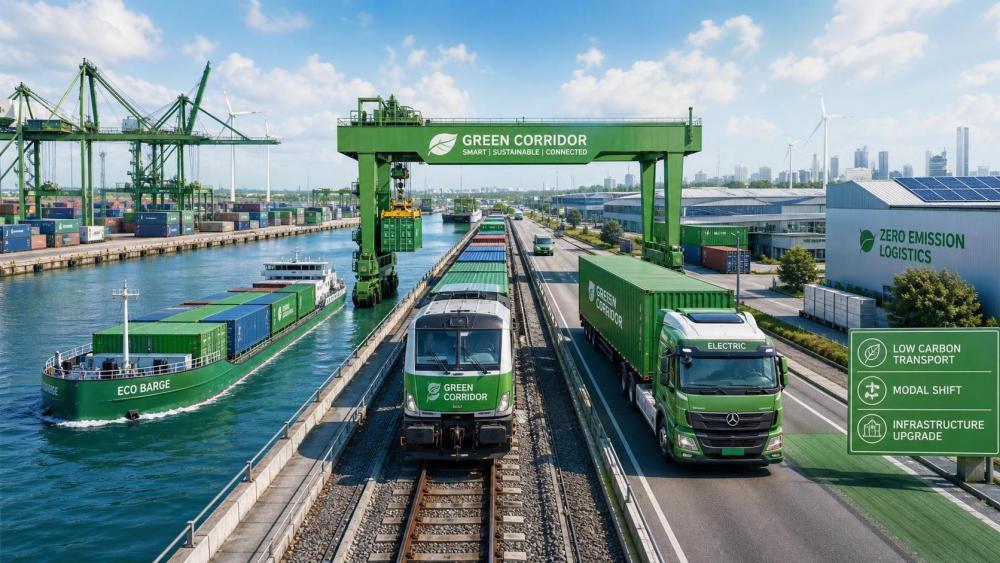
Recent policy signals are clearer than before. Emission rules now affect fleet investment, terminal planning, customs timing, and cross-border operating models.
That matters because freight corridors are not single assets. They are linked systems involving ports, inland terminals, road carriers, rail operators, warehouses, and digital control layers.
A corridor can miss decarbonization goals even when one node performs well. Emissions often shift upstream or downstream when project teams optimize only one segment.
More importantly, customers increasingly expect measurable carbon performance. Tender scoring, financing conditions, and procurement reviews now include emissions data alongside cost and transit time.
So freight corridor decarbonization Europe is no longer a branding exercise. It is becoming an operational requirement tied to competitiveness and long-term asset value.
Key compliance options project teams can apply
The best compliance path usually combines technical upgrades with reporting discipline. A single technology switch rarely solves the whole corridor challenge.
1. Fleet and equipment transition
Road fleets can move through staged replacement. Battery-electric trucks fit shorter, repeatable routes. Hydrogen options may suit heavier duty cycles where range pressure is higher.
Inside terminals, electric yard tractors, automated handling equipment, and smart charging systems often provide faster emission gains than long-haul fleet renewal.
2. Energy and fueling compliance
Freight corridor decarbonization Europe also depends on where energy comes from. Low-carbon power sourcing, charging access, and fuel traceability must be planned early.
Without grid capacity or certified fuel supply, projects can look compliant on paper but fail during ramp-up.
3. Data and emissions reporting
Reliable data is now part of compliance. Teams need corridor-level visibility across transport mode, cargo type, dwell time, empty movements, and energy consumption.
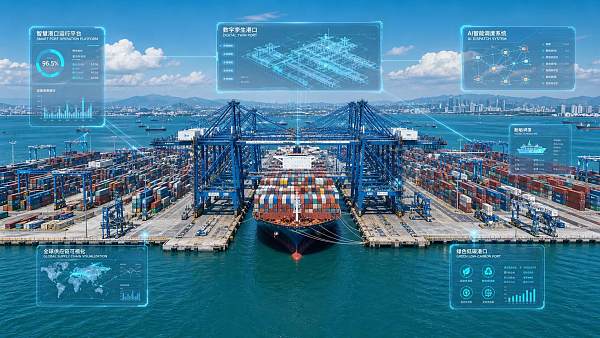
This is where digital twins, TOS integrations, fleet platforms, and shipment tracking systems become practical decarbonization tools, not just software upgrades.
4. Infrastructure readiness reviews
Before major spending, teams should test physical constraints. Common blockers include substation limits, rail slot availability, yard redesign needs, and customs process bottlenecks.
In actual projects, compliance delays often come from site readiness, not from technology selection.
How mode shift strategies support freight corridor decarbonization Europe
Mode shift is central to freight corridor decarbonization Europe, but it only works when service reliability stays credible for shippers and operators.
The most effective shifts usually move freight from road to rail, barge, or short-sea links where corridor density and timing profiles support them.
When rail shift makes sense
Rail works best on stable, high-volume lanes with predictable handoff windows. It is especially useful between seaports, inland terminals, and large distribution clusters.
However, rail mode shift fails when first-mile and last-mile design is weak. Poor drayage coordination can erase both carbon and cost benefits.
When barge or inland waterway fits
Waterway options suit bulky cargo, containers, and less time-sensitive freight. They are often valuable where road congestion and urban emission controls are becoming tighter.
Still, waterborne mode shift needs dependable terminal interfaces. If crane windows, storage capacity, or customs flow are unstable, the corridor will underperform.
When road remains necessary
Not every lane should shift modes. For fragmented networks, urgent loads, or weak rail access, cleaner road transport may deliver better results.
That means freight corridor decarbonization Europe is not about eliminating trucks. It is about assigning each mode to the right job with the lowest realistic emissions.
A practical project framework for corridor decarbonization
A workable project structure keeps climate goals connected to engineering decisions. The following sequence helps teams avoid expensive misalignment.
- Map the corridor by node, mode, asset type, and energy source.
- Measure current emissions, dwell losses, empty moves, and service risks.
- Separate quick wins from heavy-capex infrastructure changes.
- Match each lane with the best compliance option and mode shift path.
- Run pilot lanes before corridor-wide rollout.
- Track performance through shared digital reporting and adjustment cycles.
This approach is useful because decarbonization failures often come from sequence errors. Some teams buy equipment first, then discover energy or terminal constraints later.
A corridor-first method lowers that risk. It also makes investment conversations easier with operators, regulators, lenders, and technology partners.
Common risks that slow freight corridor decarbonization Europe
Even well-funded programs can stall. The risk pattern is usually operational rather than conceptual.
- Infrastructure mismatch between vehicles, chargers, substations, and terminal layouts.
- Weak data quality that undermines compliance evidence and carbon reporting.
- Mode shift plans that ignore border waiting time and handling bottlenecks.
- Supplier fragmentation across ports, rail, road, warehousing, and energy partners.
- Overestimating demand stability on lanes with volatile cargo mix.
From a delivery standpoint, the biggest warning sign is a corridor strategy built without realistic transition windows. Assets, labor, and customs processes need time to adapt.
That is why freight corridor decarbonization Europe should be managed as a phased portfolio, not as a single procurement event.
What strong execution looks like
Successful programs usually share a few traits. They connect engineering, operations, energy planning, and digital governance from the start.
They also focus on lane economics, not just technology headlines. The winning question is simple: which corridor changes cut emissions without damaging throughput or service certainty?
For many organizations, the answer is a blended model. Use cleaner road fleets where flexibility matters, rail where density supports it, and terminal automation to reduce idle emissions.
Freight corridor decarbonization Europe works best when decisions are grounded in cargo flow reality, not generic sustainability targets.
The next practical step is to assess one priority corridor, identify compliance gaps, test one mode shift scenario, and build a phased investment roadmap around measurable operational results.
Related News
 Reefer Monitoring Price Explained: Cost Drivers, Subscription Models, and ROI BenchmarksReefer monitoring price explained clearly: compare cost drivers, subscription models, hidden fees, and ROI benchmarks to choose a smarter cold-chain monitoring solution.
 How to Choose a Temperature Monitoring System for Cold Chain Compliance and Audit ReadinessTemperature monitoring system selection affects compliance, product quality, and audit outcomes. Learn how to compare alerts, calibration, data integrity, and reporting for cold chain readiness.
 Port Infrastructure Planning Checklist: What to Evaluate for Capacity, Yard Flow, and ExpansionFreight Capital & Infra Investment EconomicsPort infrastructure planning checklist covering real capacity, yard flow, equipment fit, connectivity, and expansion readiness—use it to spot hidden bottlenecks and make smarter investment decisions.
 Container Port Automation vs Conventional Operations: Which KPIs Matter Before You Invest?Port Digital Twin ArchitectContainer port automation vs conventional operations: discover the KPIs that truly shape ROI, throughput, yard efficiency, labor productivity, and resilience before you invest.
 Autonomous Delivery for Hospitals: Best Use Cases, Workflow Design, and Safety CheckpointsSpatial Computing & Machine Vision GeekAutonomous Delivery for hospitals: explore the best use cases, workflow design steps, and safety checkpoints to improve hospital logistics, traceability, and efficiency.
 Shipping Map Puts China Port AI at the CenterPort Digital Twin ArchitectShipping Map puts China Port AI at the center of global supply chain resilience. Learn how smarter port dispatch may reshape routing, transshipment, and delivery reliability.
 Red Sea Diversions Lift Rates as LNG Boxship Orders JumpZero-Carbon Powertrain FellowRed Sea diversions lift rates as LNG boxship orders jump, reshaping Asia-Europe freight, vessel specs, and delivery planning. See what shippers and buyers should do next.
 EU Starts Low-Value Parcel Tax Rule in JulyGlobal Routing & Distribution StrategistEU low-value parcel tax rule starts in July 2026: learn how IOSS VAT and AEO pre-declaration may impact customs timing, costs, and compliance for e-commerce exporters.
 Last Mile Routing Provider Comparison: SLA, API, Coverage, and Pricing FactorsSpatial Computing & Machine Vision GeekLast mile routing provider comparison guide: evaluate SLA performance, API depth, coverage, and pricing factors to reduce delivery risk, improve integration, and choose a partner that scales.
 Port Data Integration Problems: How to Connect TOS, Customs, Yard, and Carrier SystemsPort Digital Twin ArchitectPort data integration challenges can delay cargo, distort visibility, and raise costs. Learn how to connect TOS, customs, yard, and carrier systems with a practical framework.
 Automated Cranes in Singapore Ports: Key Specs, Throughput Metrics, and Site FitPort Digital Twin ArchitectAutomated cranes Singapore projects require more than bold specs. Explore key performance metrics, site-fit factors, and integration insights to choose smarter port automation solutions.
 How to Choose Temperature-Controlled Logistics Packaging for Transit Time and Product RiskTemperature-controlled logistics packaging selection starts with transit time and product risk. Learn how to compare options, reduce spoilage, control cost, and choose with confidence.