Yiwu Gains First Ocean Liner License




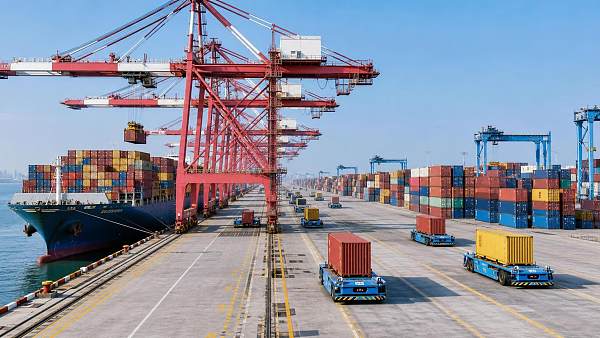
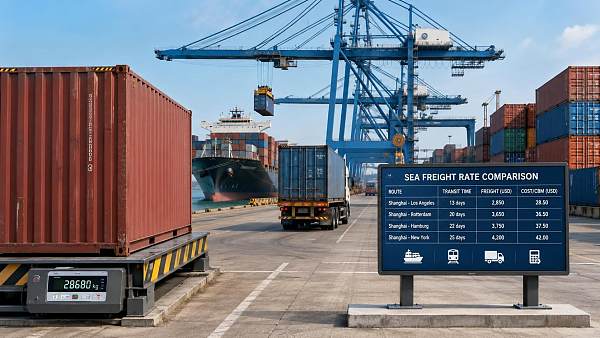
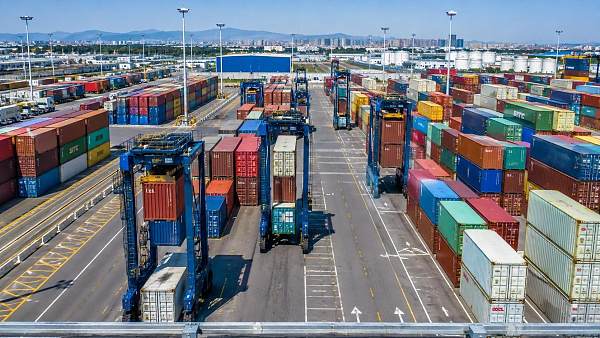
On June 16, 2026, a subsidiary of China Commodities City obtained an international liner transport operating qualification issued by the Ministry of Transport, marking the first local authorization in Yiwu for a cross-border supply chain company to carry out long-haul route planning, sailing schedule coordination, and freight rate filing. For exporters, overseas buyers, and supply chain service providers, the development is worth watching because it points to a concrete change in who can legally organize key ocean shipping functions and how delivery control may be structured for emerging-market trade lanes.
A new compliance threshold in Yiwu's ocean shipping chain
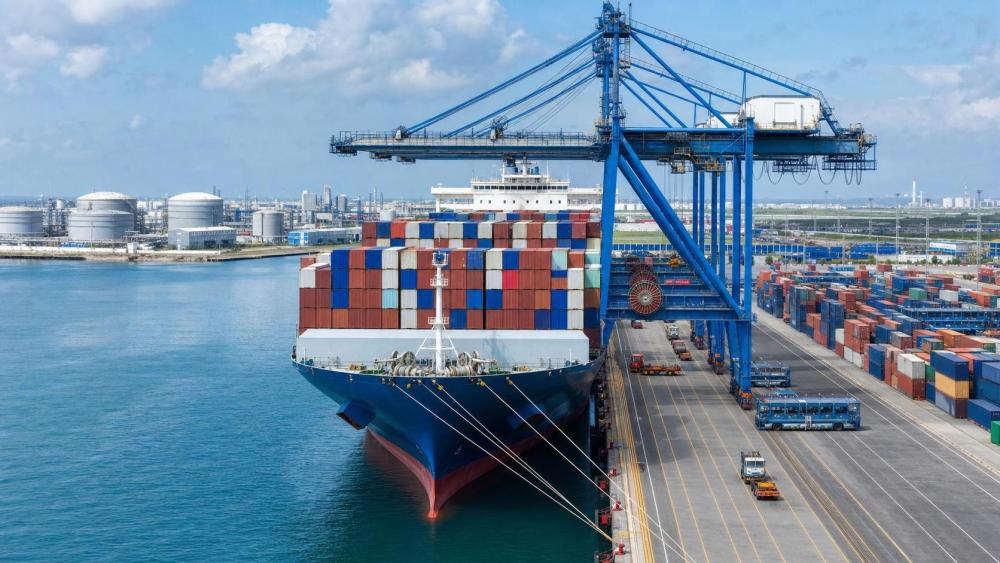
According to the provided event summary, Zhejiang Zhijie Yuangang International Supply Chain Technology Co., Ltd., under China Commodities City, formally received the international liner transport operating qualification from the Ministry of Transport on June 16, 2026. The company is described as the first local cross-border supply chain enterprise in Yiwu to hold the qualification for long-haul route planning, sailing schedule coordination, and freight rate filing.
The same summary states that the qualification directly supports overseas buyers in obtaining end-to-end ocean freight control, shortens booking response time, and improves delivery certainty for emerging markets including Southeast Asia, the Middle East, and Latin America.
Where the practical impact may appear first
Export-oriented trading companies may reassess shipping control points
From an industry perspective, export trading companies may be affected because route planning, schedule coordination, and freight rate filing are not only logistics functions but also compliance-linked execution points in cross-border delivery. What deserves closer attention is whether shippers and trading firms need to adjust how they select service partners, review booking arrangements, and confirm responsibility allocation for ocean transport execution.
Overseas buyers may pay closer attention to end-to-end shipment visibility
Analysis shows that the stated benefit of stronger end-to-end ocean freight control is particularly relevant for buyers that depend on predictable delivery into emerging markets. The practical effect may appear in booking responsiveness, shipment coordination, and handoff clarity, but companies should treat those effects as operational possibilities rather than as automatically realized outcomes in every transaction.
Supply chain service providers may face a sharper licensing and documentation focus
Observably, the licensing element is central to this development. Service providers involved in export fulfillment may need to pay closer attention to qualification status, service scope, and the supporting documentation used in shipping arrangements, especially where route design, schedule coordination, or freight rate filing responsibilities are part of the commercial offering.
What companies should monitor now
Check whether partner qualifications match the service scope
Companies using integrated shipping solutions should review whether the provider's stated role aligns with the activities covered by the qualification referenced in the event summary. The immediate issue is not broad strategy, but whether service descriptions, procurement terms, and internal review processes reflect the correct compliance boundary.
Watch for changes in booking documents and operating language
Analysis shows that if market participants begin to rely on licensed local capabilities for ocean shipping coordination, the wording used in booking records, service agreements, operating instructions, and related trade documents may gradually become more important. Businesses should therefore monitor how these functions are described in practice rather than assume that current documentation conventions will remain unchanged.
Review delivery planning for emerging-market routes
The provided summary specifically mentions Southeast Asia, the Middle East, and Latin America. For companies serving these routes, what deserves closer attention is whether procurement timing, shipment planning, and delivery commitments need to be reviewed in light of potentially shorter booking response cycles and a different allocation of shipping control responsibilities.
Continue tracking official wording and execution practice
Because the input does not provide detailed implementation rules, companies should avoid assuming a fully standardized market response at this stage. It is more appropriate to monitor subsequent official wording, execution practice, and counterpart requirements before treating this development as a settled operating norm across all transactions.
Why this reads as an execution signal
Observably, this development is more than a routine corporate update because the core point is the formal acquisition of a transport qualification tied to specific ocean shipping functions. Analysis shows that the event is best understood as an execution-level signal that regulatory authorization and supply chain service capability are becoming more directly linked in actual trade operations.
At the same time, it would be premature to read the event as proof of a broad market-wide shift in all shipping arrangements. What deserves closer attention is how quickly this type of licensed capability influences procurement behavior, service selection, and shipping documentation in real transactions.
How the market may best read this development
For the industry, the immediate significance lies in the formalization of ocean shipping authority within a local cross-border supply chain enterprise in Yiwu. A balanced reading is that this is a confirmed compliance and operating development with clear relevance to trade execution, but its broader market effect still depends on how the qualification is applied, recognized, and reflected in day-to-day business practice.
Basis of this article
This article is generated from the user-provided news title, event date, and event summary. For this type of development, source categories typically worth checking include official notices, transport or trade regulator releases, customs or trade authority information, industry association updates, standard-setting documents, and reporting from established professional media.
A specific official source link was not provided in the input, so further verification remains necessary. Observably, follow-up attention should remain on detailed implementation language, compliance interpretation, tender or procurement document changes, market feedback, and how companies actually apply the qualification in export and delivery operations.
Related News
 Where Autonomous Freight Vehicles Deliver the Most Value in Port OperationsPort Digital Twin ArchitectAutonomous freight vehicles ports: discover where automation delivers the highest value in quay-to-yard, rail, and logistics workflows—improving throughput, safety, and reliability.
 How to Size High-Rate Sortation Capacity for Peak Parcel VolumesGlobal Routing & Distribution StrategistHigh-rate sortation capacity planning: learn how to size peak parcel throughput, reduce recirculation, protect carrier cut-offs, and build a resilient operation.
 How to Calculate Rail-Sea Intermodal Logistics Costs Before Choosing a RouteZero-Carbon Powertrain FellowRail-sea intermodal logistics cost: learn to compare all-in freight, rail, port, customs, and risk costs before choosing a route for smarter sourcing decisions.
 What Should Ports Evaluate Before Selecting a Digital Port Platform?Port Digital Twin ArchitectDigital port platform selection guide: evaluate integration, data governance, automation readiness, cybersecurity, and pilots to choose a resilient solution that improves port operations.
 How to Compare Rail-Sea Intermodal Providers for Port-to-Inland Freight ReliabilityZero-Carbon Powertrain FellowCompare rail-sea intermodal providers with a practical guide to lane reliability, capacity, visibility, costs, and contingency planning for resilient port-to-inland freight.
 How to Select Autonomous Mobile Robots for Subzero Cold Storage OperationsPort Digital Twin ArchitectAutonomous mobile robots cold storage teams can rely on: evaluate batteries, navigation, safety, charging, and service for proven subzero performance.
 How Real-Time Route Optimization Reduces Delays Across Multi-Stop Freight OperationsChief Logistics AI & Fluid Dynamics ScientistReal time route optimization helps multi-stop freight teams cut delays, protect delivery windows, and respond faster to port, warehouse, and traffic disruptions.
 How to Build a Logistics Tender Workflow That Improves Bid Quality and ControlFreight Capital & Infra Investment EconomicsLogistics tender workflow guide: improve bid quality, compare total costs, assess suppliers, and strengthen contract control for better logistics outcomes.
 How Should UAE Businesses Evaluate Drone Logistics Systems for Last-Mile Delivery?Spatial Computing & Machine Vision GeekDrone logistics systems UAE: learn how to evaluate regulatory readiness, route safety, integration, reliability, and total cost for smarter last-mile delivery.
 How to Evaluate Port Automation Systems for Container Terminal Efficiency and ROIPort Digital Twin ArchitectPort Automation Systems for terminals: evaluate efficiency, TOS integration, supplier risk, and ROI to choose scalable solutions that improve throughput and resilience.
 How to Use Freight Benchmark Pricing to Compare Carrier Rates and Control CostsFreight Capital & Infra Investment EconomicsFreight benchmark pricing helps procurement teams compare carrier rates, control total transport costs, uncover surcharges, and negotiate better freight deals with confidence.
 Container Yard Management: How to Cut Truck Turn Times and Improve Slot UtilizationPort Digital Twin ArchitectContainer yard management strategies to cut truck turn times, optimize slot utilization, reduce rehandles, and improve yard flow with smarter appointments, planning, and real-time control.