Arcapita Buys Freightliner to Expand Intermodal Reach




On June 13, 2026, Bahrain-based investment bank Arcapita completed its acquisition of 100% of the equity in the UK’s Freightliner Group for GBP 340 million. The transaction matters beyond ownership change because the new controller has explicitly linked the deal to a broader rail freight push into bulk commodity hubs such as Australia and to stronger connections between China-Europe rail services and maritime transfer points. For exporters, logistics providers, and equipment-related suppliers, the development is worth watching as it may influence how rail-sea intermodal capacity and equipment standardization evolve across routes connecting China, the UK, Australia, Asia, and Europe.
What the transaction confirms at this stage
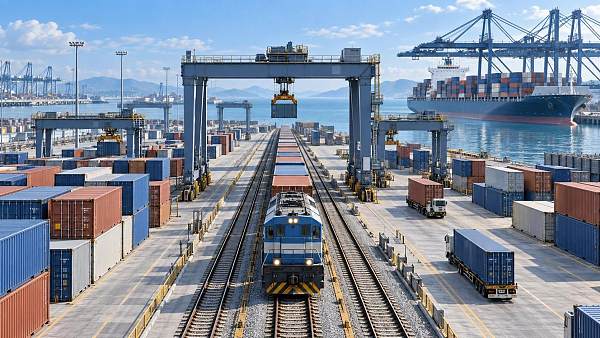
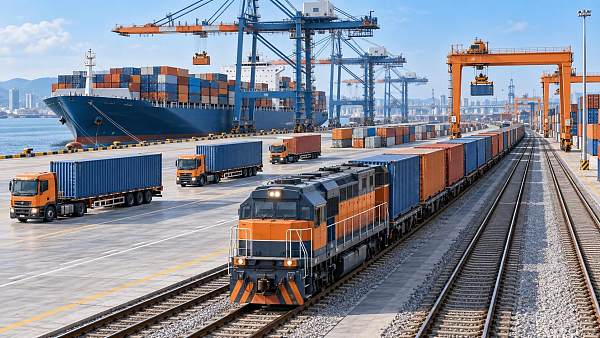
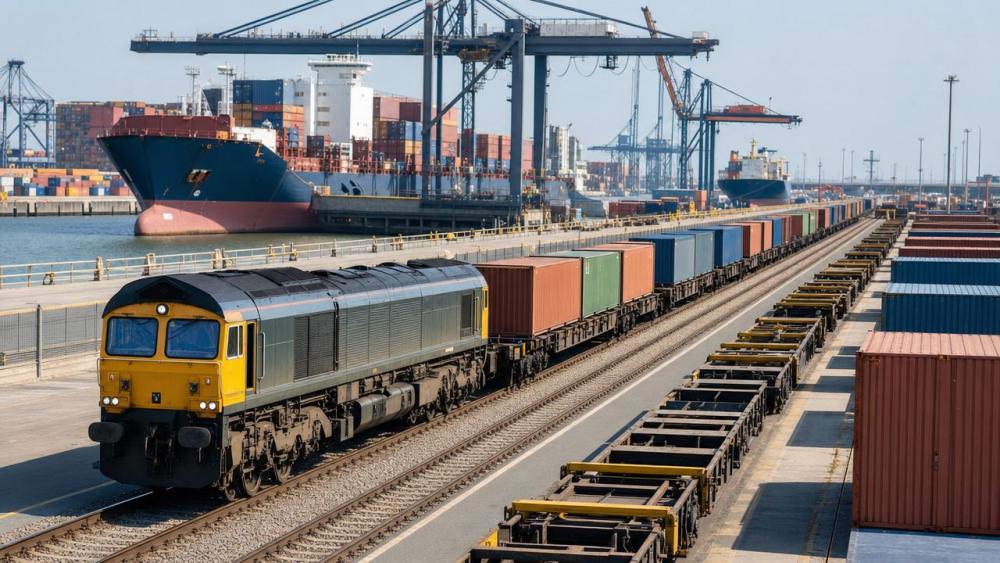
Confirmed information shows that Arcapita completed the full acquisition of Freightliner Group on June 13, 2026, with a reported transaction value of GBP 340 million. The new owner has stated that it intends to expand rail freight capabilities toward bulk commodity hubs including Australia, while also strengthening connection nodes between China-Europe rail services and ocean shipping. The information provided further indicates that this direction points to faster progress in the standardization and supply of rail-sea intermodal equipment, including Rail-Sea Intermodal Container Chassis, and may support more stable cross-continental transport options for China’s heavy equipment and new energy vehicle exports.
Why different parts of the logistics chain may pay attention
Exporters shipping heavy equipment and vehicles
From an industry perspective, companies exporting heavy machinery and new energy vehicles may be among the most attentive observers because the stated focus is not only on rail freight expansion, but also on the interfaces between rail corridors and maritime handover points. The potential impact is most relevant in route planning, equipment matching, and delivery stability. What deserves closer attention is whether future service design improves consistency for cargoes that require dependable intermodal handling.
Intermodal service providers and equipment-related suppliers
Supply chain service companies, especially those involved in rail-sea transfer operations and related equipment, may also feel the effects. Analysis shows that when a network owner signals stronger cross-region intermodal integration, equipment standardization becomes a practical issue rather than a technical side note. For these businesses, the key business links are chassis compatibility, allocation efficiency, and the ability to support handoffs between rail and sea without added friction.
Buyers and channel operators managing cross-continental flows
Procurement teams, distributors, and channel operators with cargo moving between China, Europe, the UK, and Australia may need to monitor how this network strategy develops. The direct impact may appear in transport option selection, lead-time planning, and communication with logistics partners. Observably, the transaction does not yet confirm a final operating outcome, but it does increase the relevance of intermodal routing choices in commercial planning.
What companies should monitor next
Follow official wording beyond the deal close
Businesses should pay close attention to how Arcapita and Freightliner describe subsequent steps after the acquisition closing. The practical value will depend less on the ownership transfer itself and more on whether later statements clarify implementation priorities around Australia-facing rail freight capability and China-Europe-to-sea connection points.
Review cargo categories that depend on stable transfer links
Companies handling heavy equipment, vehicle exports, or other cargoes sensitive to transfer reliability should reassess which shipments may benefit most if rail-sea intermodal capacity becomes more standardized. The issue is not simply more transport supply, but whether the handoff between modes becomes more predictable for specific cargo types.
Prepare for documentation and execution alignment
Service users and logistics partners should align on documentation, equipment requirements, and execution timelines early. Analysis shows that when intermodal chains become more integrated, operational details such as equipment suitability, booking coordination, and delivery commitments often become more important than headline route announcements.
Separate strategic direction from immediate operating change
What deserves closer attention is the difference between stated expansion intent and confirmed near-term service availability. Companies should avoid treating the acquisition alone as proof of immediate network change, while still preparing internal routing and supplier discussions in case intermodal options begin to shift.
How this development is best understood for now
Analysis shows that this news is best read as a strategic signal rather than a fully realized market outcome. The confirmed facts point to an owner with a clear interest in linking rail freight growth, maritime interface strength, and intercontinental cargo flows more closely together. At the same time, the available information does not yet establish the pace, scale, or operational form of those changes. That is why the development deserves continued attention from companies exposed to cross-border industrial cargo movement.
A measured reading of the market signal
At this stage, the acquisition is more appropriate to understand as an important directional move in intermodal logistics than as a completed restructuring of transport patterns. Its significance lies in the combination of network expansion intent, focus on rail-sea connection points, and the implication that equipment standardization and capacity coordination may accelerate. For the industry, the practical question is not whether the transaction happened, but how quickly the stated strategy turns into repeatable transport options.
Basis of this article and points for continued verification
This article is based on the user-provided news title, event date, and event summary. For this type of development, relevant source categories typically include official company announcements, transaction disclosures, industry association updates, authoritative media coverage, and documents related to equipment or intermodal standards. A specific official source link was not provided in the input, so further verification remains necessary. Continued observation should focus on later official statements, any clearer description of rail freight expansion toward Australia, and any concrete updates on rail-sea connection nodes and equipment standardization.
Related News
 Where Autonomous Freight Vehicles Deliver the Most Value in Port OperationsPort Digital Twin ArchitectAutonomous freight vehicles ports: discover where automation delivers the highest value in quay-to-yard, rail, and logistics workflows—improving throughput, safety, and reliability.
 How to Size High-Rate Sortation Capacity for Peak Parcel VolumesGlobal Routing & Distribution StrategistHigh-rate sortation capacity planning: learn how to size peak parcel throughput, reduce recirculation, protect carrier cut-offs, and build a resilient operation.
 How to Calculate Rail-Sea Intermodal Logistics Costs Before Choosing a RouteZero-Carbon Powertrain FellowRail-sea intermodal logistics cost: learn to compare all-in freight, rail, port, customs, and risk costs before choosing a route for smarter sourcing decisions.
 What Should Ports Evaluate Before Selecting a Digital Port Platform?Port Digital Twin ArchitectDigital port platform selection guide: evaluate integration, data governance, automation readiness, cybersecurity, and pilots to choose a resilient solution that improves port operations.
 How to Compare Rail-Sea Intermodal Providers for Port-to-Inland Freight ReliabilityZero-Carbon Powertrain FellowCompare rail-sea intermodal providers with a practical guide to lane reliability, capacity, visibility, costs, and contingency planning for resilient port-to-inland freight.
 How to Select Autonomous Mobile Robots for Subzero Cold Storage OperationsPort Digital Twin ArchitectAutonomous mobile robots cold storage teams can rely on: evaluate batteries, navigation, safety, charging, and service for proven subzero performance.
 How Real-Time Route Optimization Reduces Delays Across Multi-Stop Freight OperationsChief Logistics AI & Fluid Dynamics ScientistReal time route optimization helps multi-stop freight teams cut delays, protect delivery windows, and respond faster to port, warehouse, and traffic disruptions.
 How to Build a Logistics Tender Workflow That Improves Bid Quality and ControlFreight Capital & Infra Investment EconomicsLogistics tender workflow guide: improve bid quality, compare total costs, assess suppliers, and strengthen contract control for better logistics outcomes.
 How Should UAE Businesses Evaluate Drone Logistics Systems for Last-Mile Delivery?Spatial Computing & Machine Vision GeekDrone logistics systems UAE: learn how to evaluate regulatory readiness, route safety, integration, reliability, and total cost for smarter last-mile delivery.
 How to Evaluate Port Automation Systems for Container Terminal Efficiency and ROIPort Digital Twin ArchitectPort Automation Systems for terminals: evaluate efficiency, TOS integration, supplier risk, and ROI to choose scalable solutions that improve throughput and resilience.
 How to Use Freight Benchmark Pricing to Compare Carrier Rates and Control CostsFreight Capital & Infra Investment EconomicsFreight benchmark pricing helps procurement teams compare carrier rates, control total transport costs, uncover surcharges, and negotiate better freight deals with confidence.
 Container Yard Management: How to Cut Truck Turn Times and Improve Slot UtilizationPort Digital Twin ArchitectContainer yard management strategies to cut truck turn times, optimize slot utilization, reduce rehandles, and improve yard flow with smarter appointments, planning, and real-time control.