Reefer Container Capacity Explained: How to Calculate Payload, Pallet Count, and Cube




Why Reefer Container Capacity Deserves Closer Attention
Reefer container capacity is more than a size label on a refrigerated box.
It determines how much product can move safely, legally, and profitably through the cold chain.
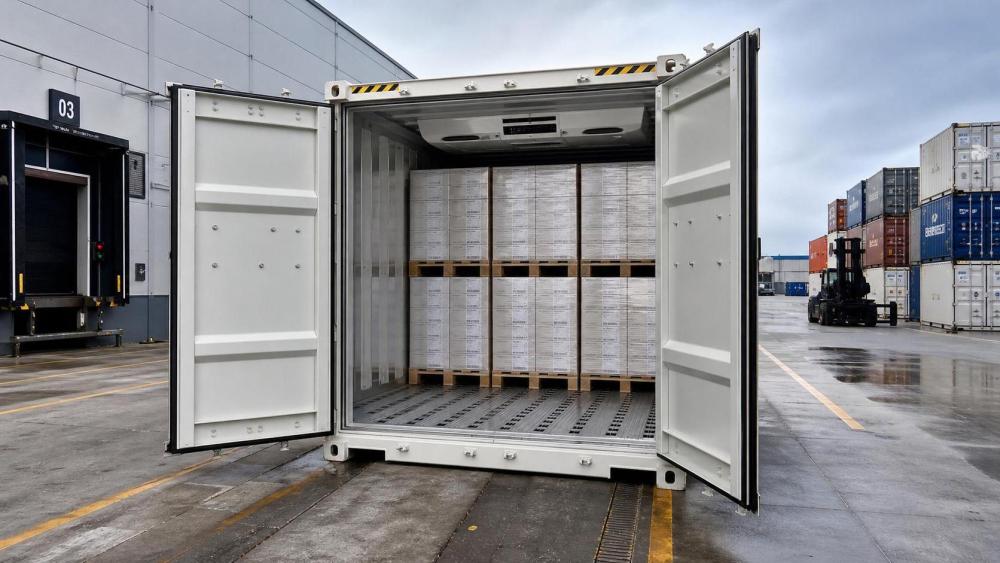
For temperature-sensitive cargo, loading decisions affect airflow, power efficiency, handling speed, and product integrity.
That makes capacity planning important not only for shippers, but also for terminals, forwarders, carriers, and warehouse teams.
In a logistics environment shaped by automation, compliance, and tighter margins, reefer container capacity has become an operational planning issue.
Platforms such as G-WLP increasingly connect this topic with port efficiency, cold-chain resilience, and data-led freight decisions.
The practical challenge is simple to describe but easy to misjudge.
A container may look large enough by volume, yet fail on payload, pallet fit, ventilation space, or door clearance.
That is why the best calculations consider weight, footprint, and usable cube together rather than separately.
What Reefer Container Capacity Really Means
In practical terms, reefer container capacity has three working dimensions: payload, pallet count, and cube.
Payload is the maximum cargo weight the unit can carry after subtracting the tare weight from the gross weight limit.
Pallet count refers to how many pallets can be loaded while still allowing proper stowage and airflow.
Cube means the internal loading volume that is actually usable for cargo.
Usable cube is often lower than nominal cubic capacity.
The reefer machinery, internal lining, floor channels, and air circulation requirements all reduce available space.
This is a key difference between dry containers and refrigerated equipment.
Even when two units share the same external dimensions, their internal loading behavior can differ noticeably.
How to Calculate Payload Without Guesswork
Payload calculation starts with the container data plate or specification sheet.
The formula is straightforward:
Maximum payload = maximum gross weight − tare weight.
If a 40-foot high cube reefer has a gross weight of 34,000 kg and a tare weight of 4,800 kg, payload is 29,200 kg.
That number is only the starting point.
Road limits, axle restrictions, port handling rules, and destination regulations may reduce the practical payload further.
This matters in cross-border movements and intermodal transfers, where the legal transport limit may be lower than the container rating.
Cargo density also changes the picture.
Frozen meat, seafood, juice concentrate, or pharmaceuticals may hit payload limits long before the cube is full.
Lighter cargo, such as packaged produce, often reaches cube or pallet constraints first.
Practical payload checks
- Confirm gross and tare values for the exact container model.
- Add pallet weight, packaging, slip sheets, and dunnage.
- Check corridor, port, and destination road weight restrictions.
- Avoid uneven loading that may affect handling stability.
Pallet Count Is a Layout Decision, Not Just a Number
Many loading errors happen because pallet count is treated as a standard figure without checking pallet type or cargo profile.
A reefer may accept a certain number of Euro pallets, but fewer ISO or North American pallets.
Door opening, internal wall contour, and load height can also limit the plan.
In real operations, pallet count should be based on internal length and width, then adjusted for airflow and handling tolerance.
For example, a 40-foot reefer may commonly load 20 Euro pallets or fewer larger footprints, depending on arrangement.
But if cargo overhangs the pallet, the theoretical count may no longer work.
The same applies when cartons are stacked high enough to block return air paths.
This is why pallet count and reefer container capacity should always be reviewed together.
Common pallet count influences
Usable Cube Is More Important Than Advertised Volume
When people discuss reefer container capacity, they often focus on cubic meters shown in brochures.
Operationally, usable cube is the more useful measure.
Nominal internal volume assumes the whole interior is available.
A refrigerated load rarely works that way.
Floor T-bars must remain open for air delivery.
Space near the refrigeration unit may be restricted.
Some cargo also needs top clearance or side breathing space.
The result is that actual loadable cube can be meaningfully lower than the catalog figure.
This matters in chilled produce, flowers, dairy, and pharmaceutical shipments, where airflow performance can be as important as physical fit.
A simple cube calculation method
Start with internal length × internal width × internal height.
Then subtract the space lost to equipment intrusion and required air gaps.
Finally, compare the result with the real dimensions of the unitized cargo, not only carton dimensions.
That gives a much more reliable view of usable cube and practical reefer container capacity.
Where Capacity Planning Becomes a Business Issue
Capacity planning affects far more than loading efficiency.
It influences booking accuracy, slot utilization, cargo claims, energy use, and terminal throughput.
For ports and depots, poor reefer container capacity planning can create yard congestion and longer plug-in dwell times.
For cross-border e-commerce and food logistics, miscalculated loads may lead to split shipments or rejected bookings.
For pharmaceutical and high-value perishables, loading beyond airflow tolerance can raise product risk even when temperature setpoints look correct.
That is why digital planning tools, reefer monitoring, and equipment visibility are becoming more relevant across the supply chain.
The broader G-WLP perspective is useful here.
Reefer container capacity is not an isolated equipment topic.
It connects with terminal operating systems, cold-chain compliance, inland transport constraints, and data governance around shipment planning.
How to Match Capacity to Different Cargo Profiles
Different commodities reach different limits first.
That is a practical way to interpret reefer container capacity in daily work.
Usually, the most efficient load plan comes from identifying the first constraint instead of maximizing one metric in isolation.
Checks That Improve Real-World Loading Decisions
A sound loading plan combines container specifications with cargo behavior and route conditions.
That approach reduces surprises at the terminal gate, warehouse dock, or destination handoff.
- Use the exact reefer model dimensions, not generic 20-foot or 40-foot assumptions.
- Validate pallet pattern with door opening and internal machine profile.
- Reserve airflow space according to cargo sensitivity and packaging design.
- Check whether weight distribution supports safe lifting and chassis transport.
- Review route and border rules before finalizing the payload target.
- Record actual loading outcomes to improve future reefer container capacity estimates.
Over time, this creates a more repeatable standard for planning by lane, cargo type, and equipment class.
A Better Next Step Than Relying on Rules of Thumb
Reefer container capacity is best understood as a balance between legal weight, pallet geometry, and functional cube.
When those three numbers are aligned, refrigerated shipments are easier to plan and less likely to fail in transit.
A useful next step is to build a lane-specific checklist using actual container specs, pallet standards, cargo density, and local transport limits.
That creates a more reliable basis for booking, loading, and cold-chain risk control than generic assumptions alone.
For teams tracking broader cold-chain infrastructure and smart logistics trends, it also helps connect equipment decisions with port performance, compliance, and network efficiency.
Related News
 Where Robotics and Automation Deliver the Fastest Warehouse Throughput GainsGlobal Routing & Distribution StrategistRobotics and automation in logistics can unlock faster warehouse throughput. Discover where AMRs, goods-to-person systems, sortation, and smarter flow design deliver the biggest gains.
 Where Autonomous Freight Vehicles Deliver the Most Value in Port OperationsPort Digital Twin ArchitectAutonomous freight vehicles ports: discover where automation delivers the highest value in quay-to-yard, rail, and logistics workflows—improving throughput, safety, and reliability.
 How to Size High-Rate Sortation Capacity for Peak Parcel VolumesGlobal Routing & Distribution StrategistHigh-rate sortation capacity planning: learn how to size peak parcel throughput, reduce recirculation, protect carrier cut-offs, and build a resilient operation.
 How to Calculate Rail-Sea Intermodal Logistics Costs Before Choosing a RouteZero-Carbon Powertrain FellowRail-sea intermodal logistics cost: learn to compare all-in freight, rail, port, customs, and risk costs before choosing a route for smarter sourcing decisions.
 What Should Ports Evaluate Before Selecting a Digital Port Platform?Port Digital Twin ArchitectDigital port platform selection guide: evaluate integration, data governance, automation readiness, cybersecurity, and pilots to choose a resilient solution that improves port operations.
 How to Compare Rail-Sea Intermodal Providers for Port-to-Inland Freight ReliabilityZero-Carbon Powertrain FellowCompare rail-sea intermodal providers with a practical guide to lane reliability, capacity, visibility, costs, and contingency planning for resilient port-to-inland freight.
 How to Select Autonomous Mobile Robots for Subzero Cold Storage OperationsPort Digital Twin ArchitectAutonomous mobile robots cold storage teams can rely on: evaluate batteries, navigation, safety, charging, and service for proven subzero performance.
 How Real-Time Route Optimization Reduces Delays Across Multi-Stop Freight OperationsChief Logistics AI & Fluid Dynamics ScientistReal time route optimization helps multi-stop freight teams cut delays, protect delivery windows, and respond faster to port, warehouse, and traffic disruptions.
 How to Build a Logistics Tender Workflow That Improves Bid Quality and ControlFreight Capital & Infra Investment EconomicsLogistics tender workflow guide: improve bid quality, compare total costs, assess suppliers, and strengthen contract control for better logistics outcomes.
 How Should UAE Businesses Evaluate Drone Logistics Systems for Last-Mile Delivery?Spatial Computing & Machine Vision GeekDrone logistics systems UAE: learn how to evaluate regulatory readiness, route safety, integration, reliability, and total cost for smarter last-mile delivery.
 How to Evaluate Port Automation Systems for Container Terminal Efficiency and ROIPort Digital Twin ArchitectPort Automation Systems for terminals: evaluate efficiency, TOS integration, supplier risk, and ROI to choose scalable solutions that improve throughput and resilience.
 How to Use Freight Benchmark Pricing to Compare Carrier Rates and Control CostsFreight Capital & Infra Investment EconomicsFreight benchmark pricing helps procurement teams compare carrier rates, control total transport costs, uncover surcharges, and negotiate better freight deals with confidence.