Tianjin Port Launches AI Dispatch System




On June 14, 2026, Tianjin Port officially put into operation a domestically built full-stack trusted computing version of its port AI Dispatch Brains system, a move that is best understood not only as a technology deployment but also as an execution signal for emerging operational rules around standardized, auditable, and embeddable digital coordination in port logistics. For shipping lines, cargo owners, supply chain service providers, procurement teams, and export businesses, the development deserves attention because it links scheduling performance with multilingual API connectivity and verifiable interface standards that can affect delivery planning, data handover, system compatibility, and compliance review in cross-border logistics workflows.

What has been confirmed at Tianjin Port
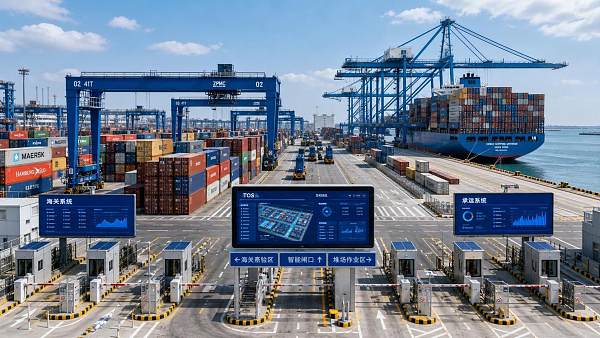
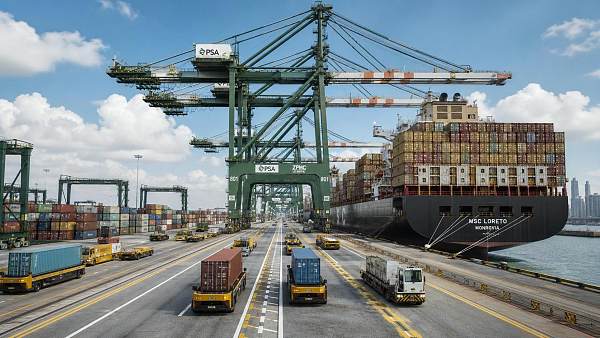
Tianjin Port announced the formal operation of its full-stack trusted computing edition of the AI Dispatch Brains system, identified as JTOS, on June 14, 2026. According to the provided information, the system enables millisecond-level closed-loop decision-making across container vessel berthing schedules, quay crane allocation, AGV route planning, and yard coordination.
The reported operating results show a direct berthing rate of 99.2% for vessels and an average waiting time reduced to 11 minutes. The same information states that the system has already connected with the TMS platforms of 12 international liner companies, including COSCO Shipping, Maersk, and CMA CGM, and supports multilingual API integration.
The summary further indicates that the platform provides a standardized interface for Chinese ports to offer overseas clients smart dispatching capabilities described as verifiable, embeddable, and auditable.
Why this matters for logistics rules and commercial execution
For carriers and vessel scheduling teams
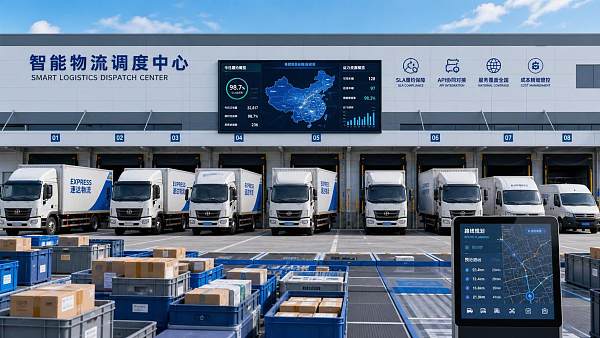
From an industry perspective, the most immediate impact is on how shipping lines and scheduling teams may need to align operational data with standardized port-side interfaces. Because the system is already connected to multiple liner company TMS platforms and supports multilingual APIs, carriers may need to pay closer attention to interface consistency, data transmission requirements, and auditability of scheduling exchanges. The practical effect is likely to appear in berth planning, arrival coordination, exception handling, and internal documentation for digital handoffs.
For exporters, importers, and cargo owners
For cargo owners and trading companies, the relevance is less about the AI system itself and more about what it may change in execution discipline. If vessel berthing and yard coordination become more tightly linked to standardized digital inputs, shippers may need to focus more carefully on the timeliness and accuracy of booking, cargo readiness, and related logistics data. Analysis shows that any move toward verifiable and auditable dispatch processes can raise expectations for traceable records in delivery coordination, especially where shipment timing affects contract performance or downstream receiving arrangements.
For supply chain service providers and system integrators
Freight forwarders, terminal service partners, and logistics technology vendors may be affected through integration and service delivery requirements. What deserves closer attention is whether multilingual API connectivity and auditable interfaces begin to function as practical entry requirements in certain service scenarios. That does not yet establish a new formal rule by itself, but it may influence how service providers prepare technical documents, interface specifications, onboarding materials, and client-facing compliance representations.
For procurement and vendor qualification functions
Procurement teams involved in logistics services, port collaboration tools, or digital supply chain solutions should watch for shifts in tender language and supplier qualification criteria. Observably, once a port platform emphasizes features such as verifiability, embeddability, and auditability, buyers may increasingly examine whether vendors can support compatible interfaces, traceable operational records, and multilingual technical documentation. At this stage, that should be treated as a practical watchpoint rather than a confirmed mandatory standard.
What companies should monitor next
Interface documents and technical alignment
Companies that exchange operational data with ports or carriers should monitor whether more detailed interface requirements, technical specifications, or onboarding documents emerge from this kind of deployment. In practical terms, attention should go to API compatibility, data fields, language support, and the evidence needed to demonstrate reliable system integration.
Auditability and record retention expectations
Because the published description highlights auditable smart dispatching capability, businesses should review whether their current records can support later verification of scheduling instructions, handover points, and execution changes. Analysis shows this is especially relevant for firms that may need to explain delays, allocation changes, or service performance in commercial or compliance reviews.
Procurement files and supplier credentials
Procurement, tendering, and vendor management teams should pay attention to whether future bid documents begin to reference embedded integration capability, system traceability, or multilingual technical support more explicitly. The available information does not confirm such changes have already been imposed, but it does suggest that digital interoperability may become a more visible point in supplier assessment.
Delivery planning and exception management
Exporters, logistics coordinators, and after-sales teams should also watch how tighter dispatch coordination may affect delivery windows and exception response procedures. It is more appropriate to understand this as an area for operational follow-up rather than a settled outcome, particularly where internal planning still depends on older manual coordination practices.
How to read the signal at this stage
Analysis shows this development is best read as an execution signal rather than a standalone policy announcement. The confirmed facts point to a port-side operating model that combines domestic full-stack deployment, measurable dispatch performance, and standardized external interfaces. For the market, the more meaningful question is whether these characteristics begin to influence how compliance, procurement, integration, and service documentation are written across the logistics chain.
Observably, the wording around verifiable, embeddable, and auditable capabilities is commercially important because it frames smart dispatching as something that can be checked, connected, and reviewed by external participants. Even so, it would be premature to treat this alone as proof of a fully established industry-wide rule change. Further observation is still needed on implementation language, market response, and whether similar requirements appear in operational documents or service agreements.
What this development currently indicates
In sum, the Tianjin Port rollout indicates that digital port coordination is being presented in a more standardized and externally connectable form, with clear implications for shipping coordination, system integration, procurement review, and delivery execution. The confirmed performance data and existing carrier connections make the event commercially relevant, but the broader rule impact should still be assessed cautiously.
At the current stage, it is more appropriate to understand this news as a concrete operational deployment with potential rule-setting implications, rather than as a finalized industry mandate. Companies involved in trade, logistics, and related digital services should therefore treat it as an important signal to monitor for follow-on documentation, execution standards, and market adoption patterns.
Basis of this article and points for continued verification
This article is based on the user-provided news title, event date, and event summary. In reporting and assessing developments of this type, commonly relevant source categories may include official port announcements, regulator releases, customs or trade authority information, industry association updates, standard-setting documents, and reporting by established business or industry media.
No specific official source link was provided in the input, so the precise official publication path still needs further verification. What should continue to be monitored includes any subsequent implementation details, compliance interpretations, certification-related wording, tender document changes, market feedback, and the extent to which companies adopt or respond to the stated interface and auditability features.
Related News
 Reefer Monitoring Price Explained: Cost Drivers, Subscription Models, and ROI BenchmarksReefer monitoring price explained clearly: compare cost drivers, subscription models, hidden fees, and ROI benchmarks to choose a smarter cold-chain monitoring solution.
 How to Choose a Temperature Monitoring System for Cold Chain Compliance and Audit ReadinessTemperature monitoring system selection affects compliance, product quality, and audit outcomes. Learn how to compare alerts, calibration, data integrity, and reporting for cold chain readiness.
 Port Infrastructure Planning Checklist: What to Evaluate for Capacity, Yard Flow, and ExpansionFreight Capital & Infra Investment EconomicsPort infrastructure planning checklist covering real capacity, yard flow, equipment fit, connectivity, and expansion readiness—use it to spot hidden bottlenecks and make smarter investment decisions.
 Container Port Automation vs Conventional Operations: Which KPIs Matter Before You Invest?Port Digital Twin ArchitectContainer port automation vs conventional operations: discover the KPIs that truly shape ROI, throughput, yard efficiency, labor productivity, and resilience before you invest.
 Autonomous Delivery for Hospitals: Best Use Cases, Workflow Design, and Safety CheckpointsSpatial Computing & Machine Vision GeekAutonomous Delivery for hospitals: explore the best use cases, workflow design steps, and safety checkpoints to improve hospital logistics, traceability, and efficiency.
 Shipping Map Puts China Port AI at the CenterPort Digital Twin ArchitectShipping Map puts China Port AI at the center of global supply chain resilience. Learn how smarter port dispatch may reshape routing, transshipment, and delivery reliability.
 Red Sea Diversions Lift Rates as LNG Boxship Orders JumpZero-Carbon Powertrain FellowRed Sea diversions lift rates as LNG boxship orders jump, reshaping Asia-Europe freight, vessel specs, and delivery planning. See what shippers and buyers should do next.
 EU Starts Low-Value Parcel Tax Rule in JulyGlobal Routing & Distribution StrategistEU low-value parcel tax rule starts in July 2026: learn how IOSS VAT and AEO pre-declaration may impact customs timing, costs, and compliance for e-commerce exporters.
 Last Mile Routing Provider Comparison: SLA, API, Coverage, and Pricing FactorsSpatial Computing & Machine Vision GeekLast mile routing provider comparison guide: evaluate SLA performance, API depth, coverage, and pricing factors to reduce delivery risk, improve integration, and choose a partner that scales.
 Port Data Integration Problems: How to Connect TOS, Customs, Yard, and Carrier SystemsPort Digital Twin ArchitectPort data integration challenges can delay cargo, distort visibility, and raise costs. Learn how to connect TOS, customs, yard, and carrier systems with a practical framework.
 Automated Cranes in Singapore Ports: Key Specs, Throughput Metrics, and Site FitPort Digital Twin ArchitectAutomated cranes Singapore projects require more than bold specs. Explore key performance metrics, site-fit factors, and integration insights to choose smarter port automation solutions.
 How to Choose Temperature-Controlled Logistics Packaging for Transit Time and Product RiskTemperature-controlled logistics packaging selection starts with transit time and product risk. Learn how to compare options, reduce spoilage, control cost, and choose with confidence.