Russia Tightens Border Freight Clearance Rules




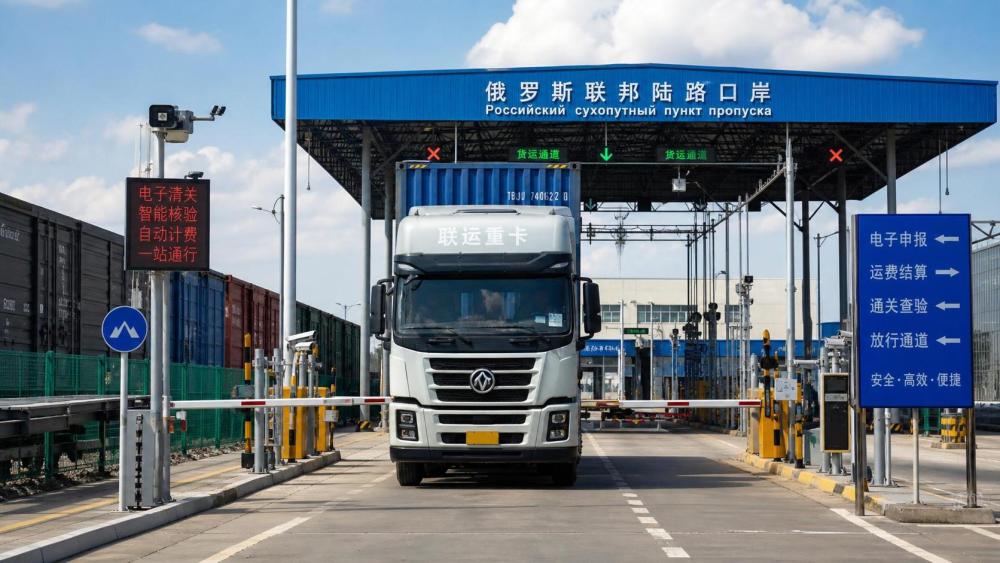
On September 1, 2026, Russia is set to implement stricter cross-border freight controls for trucks entering its territory. The reported change centers on real-time settlement of road tolls, border service charges, and pre-authorized fees linked to the E-Customs Portal, with unpaid balances triggering automatic interception and blocking entry or transit. For exporters using overland routes to Russia, rail-related logistics operators connected to cross-border delivery chains, and distributors handling goods inside Russia, this is worth close attention because it directly connects payment status with border movement and delivery continuity.
What the new control measure confirms
According to the provided event summary, the new measure takes effect on September 1, 2026. It applies to freight vehicles entering Russia and requires relevant charges to be cleared in real time.
The charges specifically mentioned are road tolls, border service fees, and pre-authorized payments on the digital customs clearance platform known as the E-Customs Portal.
The summary also states that if an account is not fully cleared, an automatic interception mechanism will be triggered. In that case, the vehicle will not be allowed to enter or proceed.
The reported direct impact concerns Chinese exporters shipping to Russia by road, China-Europe rail service operators involved in related cargo movements, and distributors operating in Russia whose delivery timing and compliance costs may be affected.
Where the pressure is likely to appear first
Overland exporters may face tighter dispatch coordination
From an industry perspective, exporters relying on truck-based delivery into Russia may be affected because the rule ties border access to immediate payment clearance rather than only to cargo movement planning. The pressure is likely to show up in dispatch timing, coordination with carriers, and shipment release readiness. What deserves closer attention is whether payment confirmation, customs-related documentation flow, and transport handoff processes are aligned closely enough to avoid a vehicle arriving at the border with an uncleared balance.
Logistics and rail-linked operators may need stronger payment visibility
For carriers and logistics providers connected to cross-border cargo flows, including operators serving China-Europe rail-linked trade chains, the issue is not only transport capacity but also operational visibility over fees tied to vehicle movement. Analysis shows that even when cargo demand remains unchanged, delivery schedules may come under pressure if payment status, pre-authorization, and vehicle release procedures are managed in separate systems or by different parties.
In-country distributors may need to reassess delivery commitments
Distributors in Russia may also feel the impact because any interruption at entry or transit directly affects inbound replenishment. Observably, the practical concern is less about the policy text itself and more about whether suppliers, carriers, and local receiving teams can maintain predictable delivery windows once fee settlement becomes a hard movement condition. Procurement scheduling, warehouse intake planning, and customer delivery commitments may therefore require closer review.
What companies should monitor in day-to-day operations
Check whether fee clearance is built into shipment release control
Companies should pay attention to whether their internal shipping approval process includes confirmation that tolls, border service fees, and E-Customs Portal pre-authorized charges have been settled before vehicles approach the border. The provided information confirms the payment requirement, but it does not provide further execution detail, so this should be treated as a key compliance checkpoint rather than an already standardized operating outcome.
Review document and platform handoff responsibilities
What deserves closer attention is the division of responsibility among exporters, freight forwarders, carriers, customs-related service providers, and receiving parties. Where payment, platform handling, and transport documents are managed by different actors, companies may need to recheck who verifies account status, who handles pre-authorization, and how exceptions are escalated before departure.
Revisit lead-time assumptions in contracts and procurement
Analysis shows that the rule may affect delivery timing not only at the border but also upstream in procurement and order planning. Businesses with fixed delivery windows, replenishment cycles, or time-sensitive trade commitments may want to review whether current lead-time assumptions still allow for payment verification and possible clearance-related delays.
Watch for later clarification in implementation language
The summary confirms the direction of the rule change, but not the full operational wording that market participants may eventually rely on in practice. Companies should therefore monitor later clarification on execution standards, platform procedures, documentary expectations, and any market-facing guidance that could shape how the rule is applied in daily freight operations.
Why this looks like an execution signal, not just a policy headline
Analysis shows that this development is more appropriately understood as an execution-oriented control signal rather than a general statement about border administration. The key feature is that unpaid balances are linked directly to automatic interception and movement restriction. That makes the issue operational for the supply chain, because compliance is no longer separate from physical transit.
At the same time, it is also appropriate to treat this as a rule change that still requires continued observation. The provided information confirms the core mechanism, but not the full range of implementation details that companies often need in order to adjust contracts, workflows, documentation checks, and delivery commitments with confidence.
How the market is likely to read this development for now
From an industry perspective, the immediate significance of this update lies in the tighter connection between border access, digital pre-clearance handling, and fee settlement discipline. It points to a more compliance-driven freight process for cargo entering Russia by road.
A balanced reading is that this is already a concrete operating change in direction, while the practical burden on different businesses will still depend on how execution is interpreted and managed in real transactions. For now, it is more appropriate to understand the development as a landed compliance signal with follow-up implementation details still worth tracking closely.
Basis of this article and what still needs verification
This article is based on the user-provided news title, event date, and event summary. No specific official source link was provided in the input, so the underlying official publication path still requires continued verification.
For events of this type, market participants would typically continue checking source categories such as official notices, regulator releases, customs or trade authority updates, industry association communications, standard-setting documents, and reporting by established news organizations.
Further observation is still needed on detailed implementation language, practical compliance interpretation, possible changes in tender or contract wording, market feedback from logistics participants, and how companies ultimately execute the new requirements in live cross-border operations.
Related News
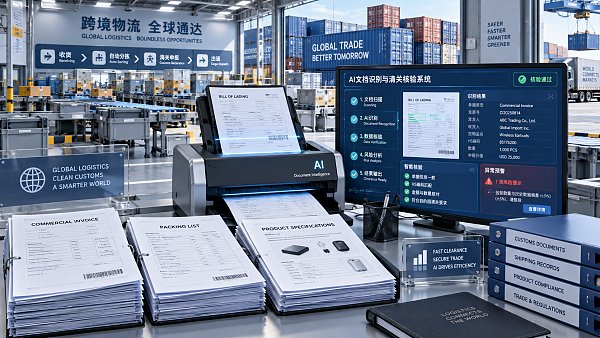
 Where AI Delivers the Biggest Gains in Customs Clearance OperationsGlobal Routing & Distribution StrategistWhat are the benefits of integrating AI into customs clearance? Discover how AI reduces delays, improves data accuracy, prioritizes risks, and streamlines exceptions.
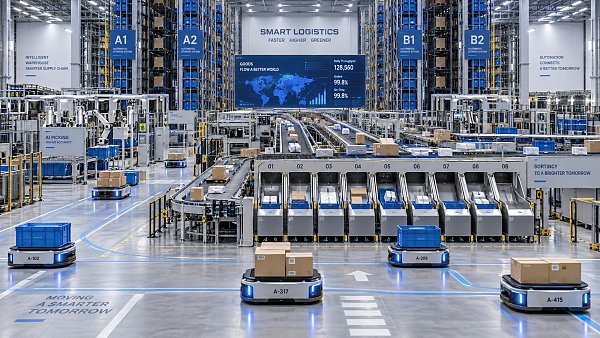
 Where Robotics and Automation Deliver the Fastest Warehouse Throughput GainsGlobal Routing & Distribution StrategistRobotics and automation in logistics can unlock faster warehouse throughput. Discover where AMRs, goods-to-person systems, sortation, and smarter flow design deliver the biggest gains.
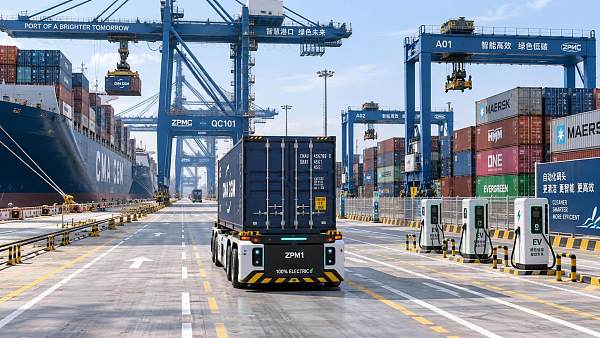
 Where Autonomous Freight Vehicles Deliver the Most Value in Port OperationsPort Digital Twin ArchitectAutonomous freight vehicles ports: discover where automation delivers the highest value in quay-to-yard, rail, and logistics workflows—improving throughput, safety, and reliability.
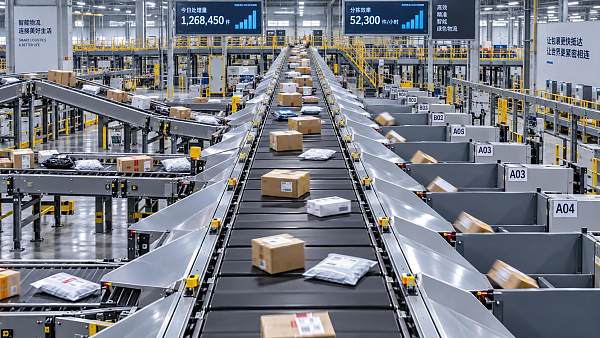
 How to Size High-Rate Sortation Capacity for Peak Parcel VolumesGlobal Routing & Distribution StrategistHigh-rate sortation capacity planning: learn how to size peak parcel throughput, reduce recirculation, protect carrier cut-offs, and build a resilient operation.
 How to Calculate Rail-Sea Intermodal Logistics Costs Before Choosing a RouteZero-Carbon Powertrain FellowRail-sea intermodal logistics cost: learn to compare all-in freight, rail, port, customs, and risk costs before choosing a route for smarter sourcing decisions.
 What Should Ports Evaluate Before Selecting a Digital Port Platform?Port Digital Twin ArchitectDigital port platform selection guide: evaluate integration, data governance, automation readiness, cybersecurity, and pilots to choose a resilient solution that improves port operations.
 How to Compare Rail-Sea Intermodal Providers for Port-to-Inland Freight ReliabilityZero-Carbon Powertrain FellowCompare rail-sea intermodal providers with a practical guide to lane reliability, capacity, visibility, costs, and contingency planning for resilient port-to-inland freight.
 How to Select Autonomous Mobile Robots for Subzero Cold Storage OperationsPort Digital Twin ArchitectAutonomous mobile robots cold storage teams can rely on: evaluate batteries, navigation, safety, charging, and service for proven subzero performance.
 How Real-Time Route Optimization Reduces Delays Across Multi-Stop Freight OperationsChief Logistics AI & Fluid Dynamics ScientistReal time route optimization helps multi-stop freight teams cut delays, protect delivery windows, and respond faster to port, warehouse, and traffic disruptions.
 How to Build a Logistics Tender Workflow That Improves Bid Quality and ControlFreight Capital & Infra Investment EconomicsLogistics tender workflow guide: improve bid quality, compare total costs, assess suppliers, and strengthen contract control for better logistics outcomes.
 How Should UAE Businesses Evaluate Drone Logistics Systems for Last-Mile Delivery?Spatial Computing & Machine Vision GeekDrone logistics systems UAE: learn how to evaluate regulatory readiness, route safety, integration, reliability, and total cost for smarter last-mile delivery.
 How to Evaluate Port Automation Systems for Container Terminal Efficiency and ROIPort Digital Twin ArchitectPort Automation Systems for terminals: evaluate efficiency, TOS integration, supplier risk, and ROI to choose scalable solutions that improve throughput and resilience.