How Reefer Container Technology Systems Maintain Temperature Stability in Long-Haul Freight




Temperature Stability Is a System Outcome, Not Just a Refrigeration Setting
Long-haul cold-chain freight is often described as a simple requirement: set the container to the required temperature and keep it there. In practice, that view misses most of the operational risk. A reefer can leave an origin terminal correctly pre-cooled, then encounter tropical heat on the quay, a missed vessel connection, a rail dwell period, a generator changeover, or a destination inspection that keeps the doors open longer than planned. The refrigeration unit matters, but cargo protection depends on the entire chain of equipment, controls, power availability, airflow, handling discipline, and data visibility.
Modern Reefer Container Technology systems are designed to manage this complexity. They combine a refrigeration machine with a microprocessor controller, temperature probes, airflow management, alarm logic, event recording, and—in many fleets—remote telematics. For technical evaluators, the useful question is not whether a reefer can reach a setpoint in an empty-yard test. It is whether the system can hold a defensible cargo environment through real intermodal conditions across ocean, road, rail, port terminals, and inland depots.
The Refrigeration Unit Controls Air, While the Cargo Responds More Slowly
A reefer container does not cool each carton individually. It conditions air and moves that air through the cargo stow. That distinction explains why a controller display can show an acceptable value while product temperatures are still drifting, especially after loading, door openings, or a power interruption.
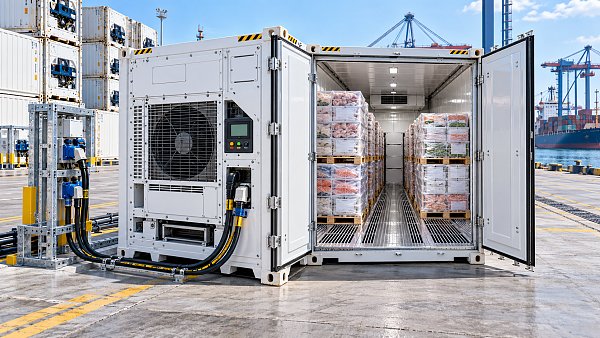
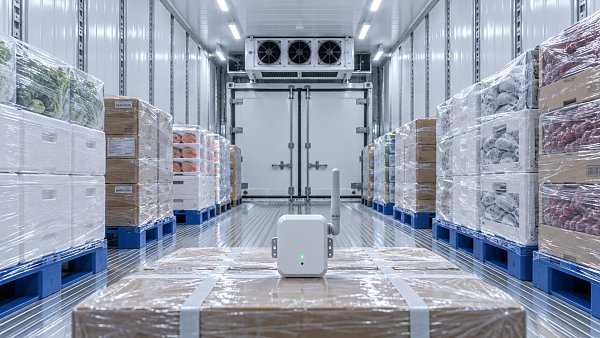
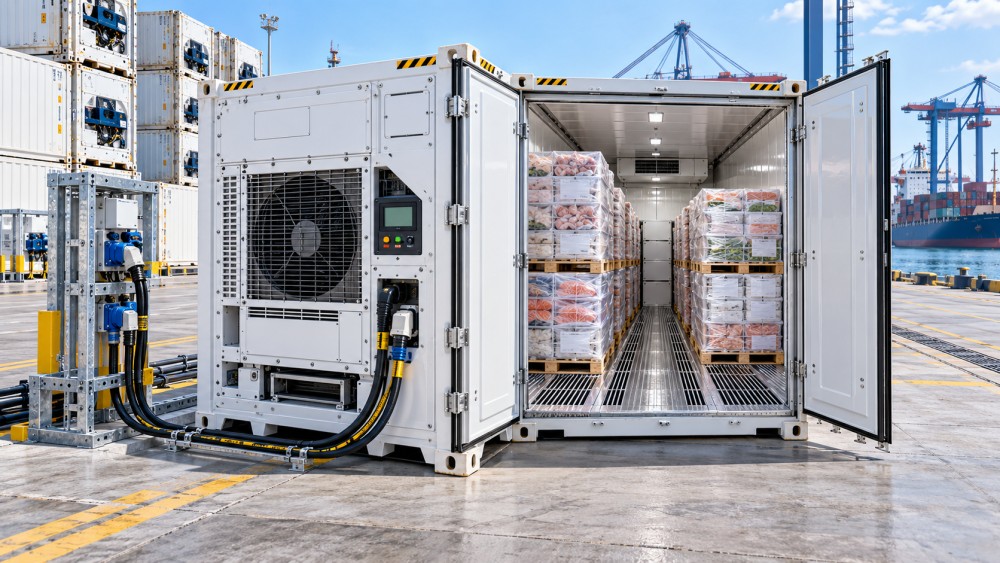
Most integral reefers use a unit mounted at the front end of the container. The machine draws return air from the cargo space, removes heat through its refrigeration cycle, and sends conditioned supply air beneath the load through a T-bar floor. Air is intended to rise through or around the cargo, absorb heat, and return to the evaporator. The controller uses one or more sensors to compare actual conditions with the selected setpoint and then adjusts compressor operation, fans, heating functions, and defrost routines.
The setpoint is therefore a control target, not a guarantee that every point in the load has the same temperature. Dense pallet patterns, blocked floor channels, damaged packaging, liner placement, poor pallet alignment, and cartons stacked against air outlets can all disrupt circulation. For chilled produce, airflow may be as critical as refrigeration capacity. For frozen products, airflow problems can still matter, but the immediate concern is often avoiding sustained warming rather than achieving rapid pull-down.
One of the most persistent misunderstandings in reefer operations is expecting the container to compensate for cargo loaded warm. A reefer is primarily intended to maintain properly pre-cooled cargo. Some equipment can remove heat after loading, but loading warm product turns the container into a slow and uneven cooling environment rather than a stable transport environment. Evaluators should ask whether the cargo temperature at stuffing is measured, documented, and compatible with the voyage plan—not merely whether the container was pre-cooled before loading.
Supply Air, Return Air, and Cargo Probes Tell Different Parts of the Story
Temperature records are valuable only when their measurement point is understood. Supply-air temperature indicates the condition of air delivered by the reefer unit. Return-air temperature reflects air coming back after passing through the load. Cargo probes, when used, provide closer evidence of product conditions, though their placement and handling must be controlled carefully.
A widening gap between supply and return air can be normal during recovery from loading or after a door opening. It can also indicate a heavy heat load, restricted airflow, or cargo that is not at the intended temperature. Conversely, a narrow gap does not automatically prove uniform cargo temperature; it may simply show that air is bypassing the load. This is why data interpretation needs stowage information, loading temperatures, ambient exposure history, and operating mode rather than a single graph viewed in isolation.
For sensitive pharmaceutical, biotech, floral, or high-value food shipments, an independent data logger may be placed within the cargo. That logger serves a different purpose from the reefer’s own controller record. The unit log helps assess machine operation and alarms; the shipment logger can help demonstrate the product environment at a defined location. Neither is automatically superior. Their usefulness depends on calibration status, time synchronization, sensor placement, logging interval, and whether the shipper’s temperature specification defines acceptable excursion limits.
Why Defrost, Heating, and Humidity Management Need Careful Review
Reefer systems must periodically manage frost accumulation on the evaporator. Frost reduces heat exchange and eventually restricts airflow, so defrost is a normal operating function rather than evidence of failure. During a defrost cycle, local air-temperature readings can behave differently from their steady-state pattern. A technical review should distinguish a scheduled and completed defrost event from a persistent temperature deviation caused by a refrigeration fault or inadequate airflow.
Heating capability is also relevant. On cold routes, or where cargo needs protection from overcooling, the controller may use heaters to maintain the selected condition. This is particularly important for cargoes that should remain above a low-temperature threshold but travel through winter climates or sit in exposed inland terminals. A specification review that focuses only on low-temperature capacity can overlook this requirement.
Humidity is more nuanced. Reefers influence moisture through evaporator operation, ventilation settings, cargo respiration, packaging, and door activity. They are not all precision humidity chambers. Some cargo programs may require humidity-related settings, fresh-air exchange, or controlled-atmosphere capability, but these functions must be evaluated against the actual equipment configuration and commodity protocol. Fresh-air ventilation, for example, can support certain produce shipments by removing gases, yet it also changes the thermal and moisture balance. Opening ventilation because it “sounds safer” can create an avoidable control problem.
Power Continuity Is Often the Real Weak Point in Intermodal Freight
At sea, a reefer normally receives power from vessel sockets. In a terminal, it may be connected to a reefer rack. During road transport, it may rely on a genset or an electrically powered chassis arrangement. Rail operations introduce another set of handoffs. The refrigeration unit can be technically sound and still fail to protect cargo if these transitions are poorly managed.
Technical evaluators should look beyond nominal plug compatibility. The practical questions include who verifies connection status, how power loss is alarmed, whether a terminal has enough energized reefer positions during congestion, how generators are fueled and monitored, and what happens during maintenance, customs holds, or unplanned transshipment. A reefer disconnected for a short period may not create a product loss, particularly for a stable frozen load. But duration, ambient temperature, cargo thermal mass, prior operating condition, and the next recovery window all matter.
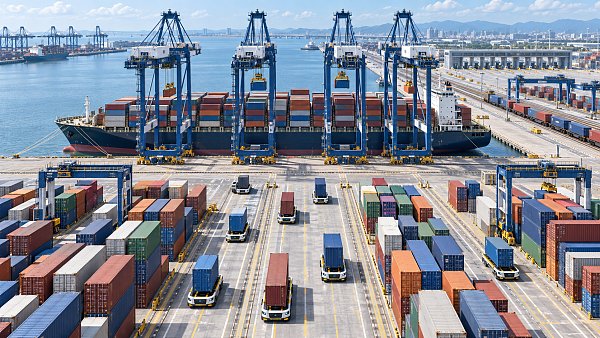
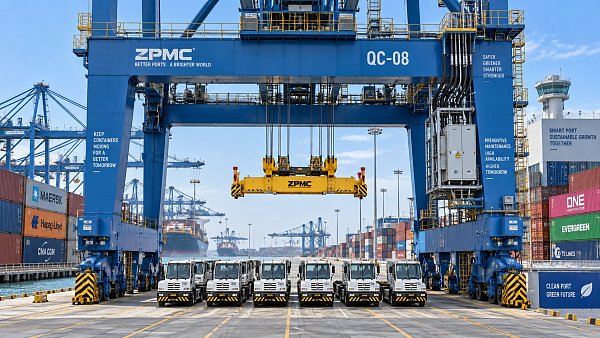
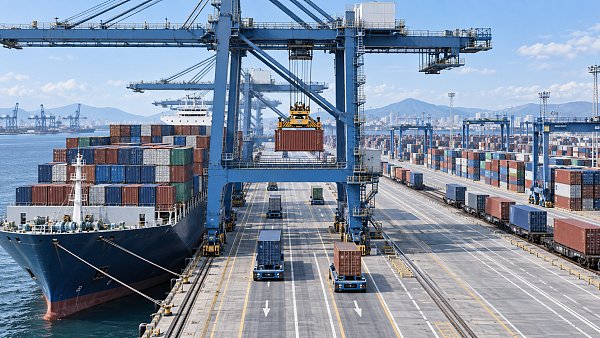
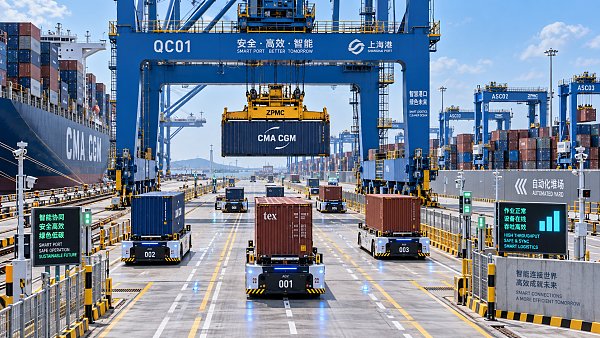
In automated or high-throughput terminals, reefer management increasingly intersects with terminal operating systems, equipment control, and yard-planning data. A container’s location, booking status, required power connection, alarm condition, and planned departure need to remain visible as it moves between stacking areas and transport interfaces. This is where smart-port infrastructure becomes directly relevant to cold-chain reliability: not as a branding exercise, but as a way to reduce the chance that a powered asset becomes operationally invisible in a busy yard.
Remote Monitoring Helps Only When Alarm Workflows Are Credible
Telematics have made reefer fleets more observable. Depending on the equipment and service arrangement, remote systems may transmit setpoint, supply and return temperatures, operating mode, alarms, power status, location-related information, and machine events. This improves exception management, especially when cargo owners, carriers, forwarders, and cold-chain operators need a common view of a shipment moving across jurisdictions.
Yet remote visibility should not be confused with remote control certainty. Communication can be intermittent at sea, in stacked yards, or during handovers between networks. Data may arrive late, and a dashboard may show a condition without confirming that a technician has physically inspected the unit. A sound alarm process defines severity, notification recipients, response times, escalation authority, inspection requirements, and evidence capture. Without these elements, an alarm platform can generate a large volume of attention but little practical protection.
Alarm thresholds also deserve discipline. If the temperature band is configured too tightly, ordinary defrost behavior or brief operational changes can produce nuisance alarms. If thresholds are too broad, the team may miss the early signal of a genuine excursion. The correct configuration comes from the cargo profile and risk assessment, not from copying settings across all commodities.
Pre-Trip Inspection Is a Readiness Check, Not a Substitute for Voyage Control
A pre-trip inspection, commonly called PTI, is an essential checkpoint before a reefer enters service. The exact scope can vary by operator and equipment type, but the objective is straightforward: confirm that the unit is fit to operate, that key components and sensors function as expected, and that faults requiring service are identified before loading. Door seals, drains, air passages, wiring condition, controller status, structural integrity, and refrigeration performance all deserve attention.
PTI does not validate the shipper’s packaging design, confirm correct stowage, or eliminate the need for monitoring during a long voyage. It also cannot predict every failure mode that may emerge under sustained operation. A useful technical evaluation separates equipment readiness from shipment readiness. The first concerns the container. The second includes commodity condition, packaging, airflow clearances, route, dwell exposure, documentation, power arrangements, and response ownership.
Standards and Compliance Should Be Mapped to the Shipment, Not Treated as a Generic Checklist
Reefer containers operate within a wider framework of container construction requirements, carrier procedures, food safety controls, pharmaceutical quality expectations, customs processes, and destination-market rules. ISO standards may be relevant to container design, identification, and handling, while cargo-specific programs can introduce separate requirements for calibration, traceability, sanitation, data retention, or lane qualification. The applicable mix depends on the commodity, contractual obligations, transport mode, and markets involved.
For pharmaceutical cargo, it is particularly risky to assume that a reefer’s setpoint record alone satisfies a quality agreement. Shippers may require defined temperature mapping, shipment-specific monitoring, deviation management, and documented handover procedures. For food cargo, sanitation, pre-cooling, packaging integrity, and evidence of cold-chain continuity may be equally important. Relevant guidance should be checked against the governing customer specification and local requirements rather than inferred from a generic equipment brochure.
A Practical Evaluation Frame for Reefer Technology
When comparing Reefer Container Technology systems, start with the shipment rather than the machine specification. A deep-frozen protein load on a predictable ocean lane has a different risk profile from fresh berries moving through multiple inland gateways, and both differ from a temperature-controlled medical shipment with strict evidence requirements.
- Confirm the required cargo temperature range, permitted deviations, and whether the requirement refers to air temperature or product temperature.
- Review airflow compatibility between the container floor design, pallet base, packaging, and planned stowage pattern.
- Assess power continuity at every transfer point, including contingencies for delay, inspection, and equipment substitution.
- Verify what the controller records, how long data are retained, and whether records can be retrieved in a usable format after an incident.
- Test alarm ownership: who receives the alert, who can authorize intervention, and who documents the outcome.
- Check whether maintenance and PTI practices are consistent across the actual origin and destination service network.
For organizations assessing cold-chain infrastructure alongside port automation, intermodal equipment, and freight visibility, reefer performance should be treated as a connected operational system. The strongest arrangement is rarely the one with the longest feature list. It is the one in which refrigeration control, physical handling, power infrastructure, data governance, and exception response remain aligned when the shipment stops behaving like the schedule said it would.
That is the practical standard for long-haul temperature stability: not a perfect screen reading at departure, but a traceable and manageable cargo environment throughout the journey.
Related News
 How Reefer Container Technology Systems Maintain Temperature Stability in Long-Haul FreightReefer Container Technology systems ensure long-haul temperature stability through airflow, power continuity, smart monitoring, and reliable alarm response.
 How Port Operators Use TEU Throughput Analytics to Identify Capacity BottlenecksPort Digital Twin ArchitectTEU throughput analytics helps port operators pinpoint capacity bottlenecks across berths, yards, gates, and equipment—turning operational data into smarter investment decisions.
 How to Select Rail Transfer Equipment for Heavy Loads and Restricted Track LayoutsPort Digital Twin ArchitectRail transfer equipment selection guide for heavy loads and restricted layouts—optimize safety, throughput, rail design, and long-term lifecycle performance.
 A Preventive Maintenance Plan for Container Terminal Equipment That Reduces DowntimePort Digital Twin ArchitectContainer terminal equipment maintenance: build a preventive plan that cuts downtime, improves asset availability, and keeps terminal operations moving reliably.
 Using Crane Productivity Analytics to Cut Container Dwell Time at Busy TerminalsPort Digital Twin ArchitectCrane productivity analytics helps busy terminals cut container dwell time by linking berth performance, yard flow, and real-time operational decisions.
 How to Evaluate Autonomous Freight Vehicle Software for Highway Trucking FleetsSpatial Computing & Machine Vision GeekAutonomous freight vehicles software evaluation guide for highway fleets—compare safety, ODD coverage, integration, cybersecurity, and scalability.
 Wireless Temperature Tracking for Cold Chains: How to Prevent ExcursionsWireless temperature tracking helps cold-chain teams detect excursions early, protect product quality, and respond with confidence across storage and transit.
 How Singapore B2B Firms Can Evaluate Technical Content Publishing PartnersFreight Capital & Infra Investment EconomicsTechnical content publishing Singapore: learn how B2B firms can choose credible partners with technical depth, targeted reach, SEO value, and measurable commercial impact.
 How to Evaluate Unmanned Container Terminal Systems for Throughput and SafetyPort Digital Twin ArchitectEvaluate unmanned container terminal systems for reliable throughput, safer operations, TOS integration, exception recovery, and resilient terminal performance.
 How Port Community System Software Improves Cargo Visibility and Customs CoordinationGlobal Routing & Distribution StrategistPort community system software connects cargo milestones, customs releases, and delivery authorizations in one trusted view—reducing delays, improving coordination, and enabling faster, more confident cargo movements.
 How to Evaluate a Warehouse Management Software Provider for Multi-Site FulfillmentGlobal Routing & Distribution StrategistWarehouse management software provider evaluation guide for multi-site fulfillment—compare integration, scalability, automation, governance, and rollout readiness.
 Evaluating Dredging Equipment for Port Berth Deepening ProjectsFreight Capital & Infra Investment EconomicsExplore how to evaluate dredging equipment for port berth deepening, balancing material conditions, precision, environmental compliance, production, and procurement risk.