Wireless Temperature Tracking for Cold Chains: How to Prevent Excursions




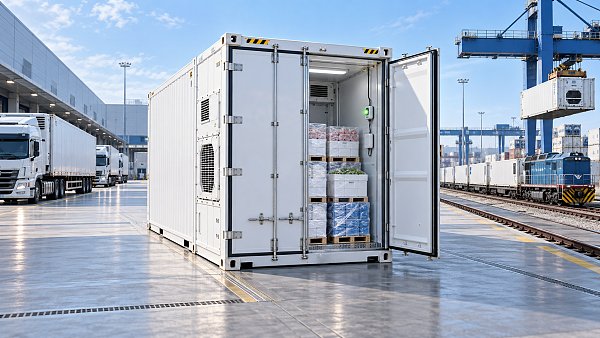
A reefer container can leave a terminal within its setpoint, pass a gate check, and still arrive at a distribution center with product quality in doubt. The problem is often not a dramatic refrigeration failure. A door may have remained open during transfer, airflow may have been blocked by loading patterns, a power connection may have dropped briefly, or a cold-room zone may have drifted outside its permitted range overnight. By the time a manual check reveals the issue, the useful response window may have already closed.
Wireless temperature tracking prevents excursions most effectively when it is designed as an operational response system, not merely a data-collection tool. Sensors need to be placed where cargo risk actually exists, readings must reach the right people quickly, alert thresholds must reflect the product specification, and every alarm needs an assigned action. The goal is not simply to prove that a deviation occurred. It is to detect a developing deviation early enough to protect the shipment, preserve traceability, and support a defensible release or disposition decision.
Why temperature excursions are missed in otherwise controlled shipments
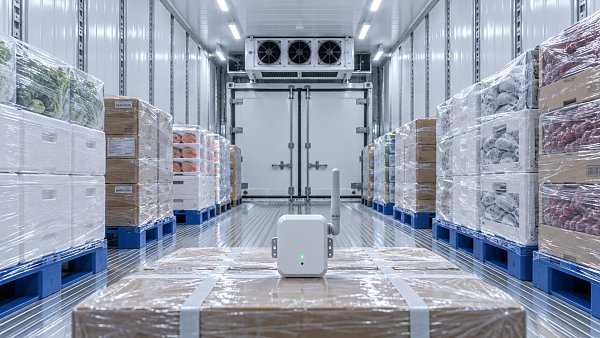
Temperature-controlled logistics includes multiple handoffs: pre-cooling, loading, port staging, ocean or road transit, cross-docking, storage, picking, and final delivery. Each handoff changes the conditions around the cargo. A reefer unit may report that its supply air is functioning normally while cartons near the doors, ceiling, or return-air area experience a different temperature profile. A warehouse control panel may show a room-level reading that does not reveal a warm pocket behind densely stacked pallets.
Manual temperature checks remain useful, but they are snapshots. They can confirm conditions at the moment of inspection without showing what happened between inspections. That gap matters when a short event has a long effect: a delayed door closure, a failed defrost cycle, exposure on a loading dock, or a trailer that was not pre-cooled before loading.
Wireless temperature tracking closes this visibility gap by collecting readings at defined intervals and transmitting them to a monitoring platform or gateway. Properly applied, it can show the onset, duration, extent, and recovery pattern of an excursion. Those details are essential. A brief reading near a threshold is not assessed in the same way as a sustained deviation affecting multiple locations in a load.
Start with the cargo’s actual acceptance criteria
The first design decision is not which sensor to buy. It is defining what counts as a meaningful event for the product being moved. Teams sometimes set alerts using equipment setpoints alone. That can be misleading because the unit setpoint, air temperature, product temperature, and permitted product range are not interchangeable.
A monitoring plan should document the following before devices are deployed:
- The required temperature range for the product and whether upper and lower limits differ by transport stage.
- Whether the relevant measurement is ambient air, package surface, simulated product temperature, or internal product temperature.
- The acceptable duration outside the range, where such limits are defined by the product owner or handling procedure.
- Whether temporary deviations are expected during loading, unloading, defrost, or inspection.
- The people authorized to acknowledge alarms, investigate conditions, and decide on product segregation or release.
This prevents a familiar operational failure: a monitoring system generates frequent alarms that staff learn to dismiss because its thresholds do not account for normal handling conditions. Excessive nuisance alarms reduce attention when a genuine event occurs. At the same time, overly broad thresholds create a false sense of security. The practical answer is not to silence alerts; it is to align alert logic with the validated handling process and product requirements.
Map the route before selecting the hardware
A shipment’s route determines the monitoring architecture. A sensor that performs well in a continuously powered cold room may be unsuitable for a sealed ocean container, a cross-border truck lane with intermittent mobile coverage, or a parcel shipment moving through several fulfillment facilities. Connectivity, battery life, physical protection, recording capacity, and data recovery all need to match the journey.
A network connection should not be confused with data integrity. Live transmission is valuable because it supports intervention during transit, but a device should continue recording when it moves outside gateway or cellular coverage. On reconnection, the system should clearly show whether data were stored and uploaded without gaps. For long international movements, this offline resilience is often more important than an attractive dashboard.
Place sensors to reveal the cargo condition, not the easiest location
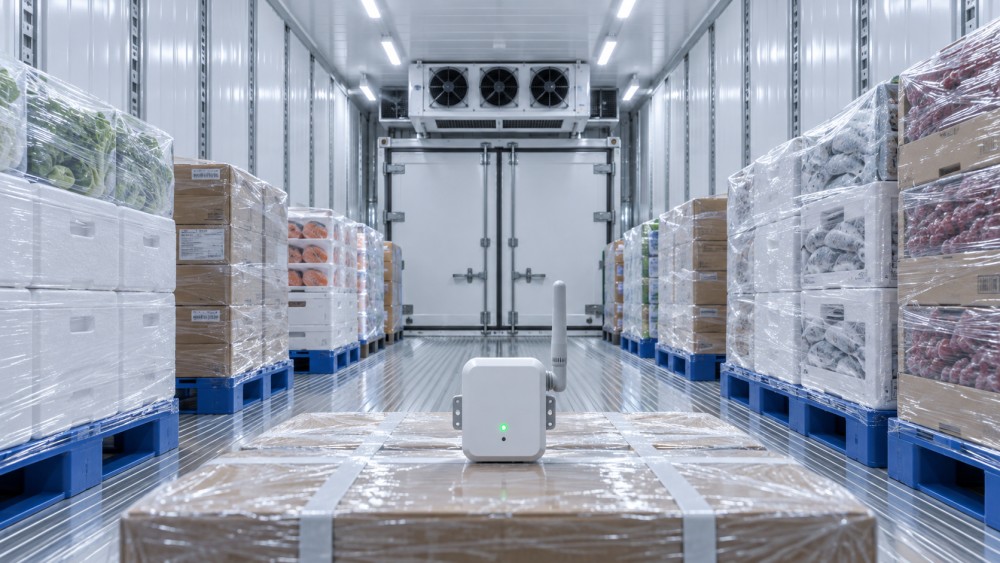
Sensor placement is where a technically capable system can fail operationally. Installing one device near a reefer controller, doorway, or warehouse wall may produce a clean dataset while missing the part of the load most exposed to risk. The right location depends on airflow, package density, pallet arrangement, door exposure, and the thermal mass of the product.
In a cold room, map the space before deciding on permanent locations. Areas near evaporators, doors, ceilings, corners, and densely loaded racks can behave differently. In reefer transport, consider whether the device should represent supply-air conditions, return-air conditions, or cargo located in a known risk zone. A sensor buried too deeply may respond slowly to ambient changes; one placed too close to an air outlet may react quickly but not represent the wider load.
The monitoring objective should be explicit: are you trying to detect equipment failure, verify room conditions, assess pallet exposure, or support product disposition? One placement plan may not serve all four purposes. Higher-risk shipments may require more than one sensor location, especially where partial loads, mixed products, or unusual loading patterns disrupt normal airflow.
Do not mistake air readings for product readings
Air temperature changes faster than the temperature of a frozen food carton, a vial pack, or a palletized product with significant thermal mass. An air-temperature alarm may provide valuable early warning, but it does not automatically establish product impact. Conversely, air may return to range before the product has recovered. Investigation procedures should account for this lag rather than treating every sensor trace as a direct measure of product condition.
Where product-temperature representation is necessary, use an approach appropriate to the handling process, such as a buffered probe, simulated product medium, or validated placement within a representative load. The method should be documented so that later reviewers understand what the recorded value means.
Build alerts around action windows
An alarm without an owner is just another notification. Before activating wireless devices, define how an alert moves from detection to decision. This is especially important outside normal operating hours, during port dwell, and when responsibility shifts between carrier, warehouse, consignee, and product owner.
- Detect: Configure a warning threshold that gives staff time to investigate before the permitted range is exceeded, where the process allows it.
- Notify: Send the alert to a monitored role or escalation group rather than relying on a single individual’s inbox or phone.
- Verify: Confirm whether the reading is credible by checking nearby sensors, device status, door activity, refrigeration status, and current handling location.
- Contain: Close doors, restore power, move cargo, adjust airflow, stop loading, or segregate affected units according to the relevant procedure.
- Document: Record what happened, when it started, the response taken, and the evidence available for later review.
The warning threshold and critical threshold should serve different purposes. A warning indicates that conditions are approaching an unacceptable state or that an abnormal pattern needs attention. A critical event triggers a more formal response, potentially including product hold. The precise limits must come from approved product and quality requirements rather than generic sensor settings.
Alert delay also deserves careful treatment. A very short delay may flood operators with notices every time a door opens. A long delay can hide a rapid refrigeration failure. Review real handling durations, planned loading activities, and the thermal sensitivity of the cargo when setting delays. Test the workflow with actual operating staff before relying on it for high-value or regulated loads.
Investigate an excursion in the right order
When a temperature alert occurs, the first question should not be “Was the product lost?” The first task is to establish whether there was a genuine excursion, what it affected, and whether exposure is still continuing. Rushing to a disposition conclusion without reliable facts can lead either to unnecessary waste or to an unsupported release decision.
Begin with the data record. Check the sensor’s time synchronization, battery status, calibration status where applicable, and any transmission gaps. Compare the trace with other available evidence: fixed room sensors, reefer unit logs, vehicle telematics, door-open records, loading times, power events, and warehouse activity. A single isolated spike may point to handling exposure, device placement, or sensor disturbance. A gradual upward trend across multiple sensors is more consistent with a system-level issue.
Then establish the exposure profile. Note the highest or lowest measured value, time outside the applicable range, rate of change, affected locations, and whether the reading recovered. Product-specific assessment may also require information about packaging, payload configuration, thermal mass, and the shipment stage when the event occurred. Segregate potentially affected cargo when required by the internal procedure, preserving the logger and all relevant records.
Do not overwrite the original trace or rely only on a screenshot. The audit record should retain raw or exportable data, device identification, event timestamps, alarm acknowledgements, corrective actions, and the basis for the final decision. This creates a usable chain of evidence during customer review, internal investigation, or compliance assessment.
Calibration, time, and device control are part of the cold chain
Wireless systems are often introduced as an operational convenience, but their value depends on disciplined device management. A sensor with an unknown accuracy status, incorrect clock, depleted battery, or reused identifier can create more uncertainty than it removes. Establish a register that links each device to its serial number, assigned location or shipment, battery condition, firmware status if relevant, calibration or verification status, and deployment date.
The needed level of calibration control depends on the product risk and governing quality system. What matters is that the chosen approach is defined, repeatable, and appropriate for the measurement purpose. A logger used for general warehouse trend detection may not require the same controls as one used to support a product-release decision. In either case, devices should be protected from damage, condensation, unauthorized relocation, and accidental removal during loading or unloading.
Time synchronization is equally important. If a reefer event, a warehouse door record, and a sensor alarm use different clocks, reconstructing the sequence becomes difficult. Use a common time reference wherever possible and verify timestamps after long deployments or device replacement.
Where monitoring programs lose credibility
The most common weakness is treating installation as completion. Devices are mounted, dashboards are available, and alerts are configured, yet no one reviews whether the system detects the risks it was intended to detect. A useful program periodically examines alarm patterns, missed transmissions, recurring hot spots, acknowledgement times, and the gap between alert receipt and corrective action.
Another weakness is relying solely on refrigeration equipment displays. Those displays are important operational indicators, but they may not represent cargo exposure throughout a compartment or room. Independent sensing provides a separate layer of evidence and can expose conditions caused by loading, airflow obstruction, or handling practices rather than a mechanical fault.
Finally, avoid using monitoring records only after a complaint or rejection. Trend review can identify recurring door-open exposure, poor staging discipline, warm zones in a room, or routes where handoffs regularly exceed planned duration. Those findings support preventive changes: revised sensor placement, tighter pre-cooling verification, improved loading patterns, clearer escalation coverage, or a different monitoring interval.
Questions that arise during deployment
Is real-time tracking always necessary?
Not always. A downloadable logger may be sufficient when intervention during transit is not feasible and the main requirement is trip verification. Real-time or near-real-time visibility becomes more valuable when staff can act on the alert, such as redirecting a vehicle, checking a reefer power supply, reducing dwell time, or moving cargo within a facility. For critical routes, a device that records locally while transmitting when connected provides stronger continuity.
How often should temperature be recorded?
The interval should be short enough to capture meaningful changes without creating unnecessary data volume or shortening battery life beyond the trip requirement. Rapidly changing environments, frequent door openings, and highly sensitive products generally justify more frequent readings than stable long-term storage. The selected interval should also support the way excursion duration is assessed.
Can one logger validate an entire trailer or container?
One logger can provide evidence for its own location, but it cannot automatically represent every pallet. A single-device approach may be reasonable for low-variation loads with a well-understood configuration. Use additional locations when airflow is uncertain, the load is large or mixed, door exposure is likely, or the product owner needs evidence from specific risk zones.
- Last One:No more articles
- Next Article:How Singapore B2B Firms Can Evaluate Technical Content Publishing Partners2026-09-24
Related News
 Wireless Temperature Tracking for Cold Chains: How to Prevent ExcursionsWireless temperature tracking helps cold-chain teams detect excursions early, protect product quality, and respond with confidence across storage and transit.
 How Singapore B2B Firms Can Evaluate Technical Content Publishing PartnersFreight Capital & Infra Investment EconomicsTechnical content publishing Singapore: learn how B2B firms can choose credible partners with technical depth, targeted reach, SEO value, and measurable commercial impact.
 How to Evaluate Unmanned Container Terminal Systems for Throughput and SafetyPort Digital Twin ArchitectEvaluate unmanned container terminal systems for reliable throughput, safer operations, TOS integration, exception recovery, and resilient terminal performance.
 How Port Community System Software Improves Cargo Visibility and Customs CoordinationGlobal Routing & Distribution StrategistPort community system software connects cargo milestones, customs releases, and delivery authorizations in one trusted view—reducing delays, improving coordination, and enabling faster, more confident cargo movements.
 How to Evaluate a Warehouse Management Software Provider for Multi-Site FulfillmentGlobal Routing & Distribution StrategistWarehouse management software provider evaluation guide for multi-site fulfillment—compare integration, scalability, automation, governance, and rollout readiness.
 Evaluating Dredging Equipment for Port Berth Deepening ProjectsFreight Capital & Infra Investment EconomicsExplore how to evaluate dredging equipment for port berth deepening, balancing material conditions, precision, environmental compliance, production, and procurement risk.
 How to Evaluate Autonomous Warehouse Operations Software for Multi-Shift FulfillmentGlobal Routing & Distribution StrategistEvaluate autonomous warehouse operations software for multi-shift fulfillment with proven criteria for integration, uptime, safety, fleet orchestration, and scalable peak performance.
 How to Evaluate Reefer Monitoring Suppliers for Multi-Route Cold Chain FleetsCryogenic & Thermodynamics ScientistChoose a reefer monitoring supplier with reliable data, actionable alerts, route-ready connectivity, and support for complex cold chain fleets.
 Where AI Delivers the Biggest Gains in Customs Clearance OperationsGlobal Routing & Distribution StrategistWhat are the benefits of integrating AI into customs clearance? Discover how AI reduces delays, improves data accuracy, prioritizes risks, and streamlines exceptions.
 Where Robotics and Automation Deliver the Fastest Warehouse Throughput GainsGlobal Routing & Distribution StrategistRobotics and automation in logistics can unlock faster warehouse throughput. Discover where AMRs, goods-to-person systems, sortation, and smarter flow design deliver the biggest gains.
 Where Autonomous Freight Vehicles Deliver the Most Value in Port OperationsPort Digital Twin ArchitectAutonomous freight vehicles ports: discover where automation delivers the highest value in quay-to-yard, rail, and logistics workflows—improving throughput, safety, and reliability.
 How to Size High-Rate Sortation Capacity for Peak Parcel VolumesGlobal Routing & Distribution StrategistHigh-rate sortation capacity planning: learn how to size peak parcel throughput, reduce recirculation, protect carrier cut-offs, and build a resilient operation.