Flatbed Trailer Buying Guide: How Global Freight Buyers Can Choose Equipment That Holds Value Beyond the First Shipment




Global freight buyers are no longer treating trailer procurement as a simple price comparison. When a distributor, contractor, port-side operator, or long-haul carrier evaluates a Flatbed Semi Trailer, the real decision includes payload behavior, route conditions, cargo diversity, documentation quality, export packing, spare parts support, and the cost of downtime after delivery. A low purchase price may look attractive on a quotation sheet, but equipment that does not match the buyer's road environment, loading workflow, or compliance expectations can become expensive within months.
The procurement question is therefore practical: how can buyers select a trailer that fits their transport business rather than only matching a headline specification? The answer starts with understanding the cargo profile. Steel coils, palletized building materials, containers, timber, machinery, agricultural equipment, and oversized project cargo do not create the same stress on a deck, frame, suspension, axle group, or lashing point. Buyers who define their operating pattern before requesting a quotation usually receive more useful technical recommendations and fewer unsuitable offers.
Why Trailer Procurement Is Becoming More Strategic
Freight demand is becoming more fragmented across regions. Infrastructure projects, mining support routes, construction material delivery, agricultural distribution, and cross-border trade all use open-deck transport, but their requirements are not identical. Some buyers need frequent loading by forklift. Others need compatibility with cranes, container locks, side stakes, removable boards, or reinforced points for heavy machinery. In many markets, the trailer must also withstand rough road sections, hot climates, seasonal rain, or long storage periods near ports.
This makes procurement more strategic than ordering a standard catalog product. A buyer needs to ask whether the supplier can explain the relationship between design and application. The frame height, main beam structure, cross member spacing, deck thickness, suspension type, tire configuration, kingpin position, and braking system all influence how the unit behaves under load. If these details are treated as generic options, the buyer may miss the chance to build a configuration that protects cargo, drivers, and long-term resale value.
Start With the Cargo Profile, Not the Price List
The most useful procurement discussion begins with cargo. A buyer should prepare a short profile covering typical cargo weight, cargo dimensions, loading method, trip distance, road condition, and expected annual usage. This gives the supplier a basis for recommending a frame structure and accessories. For example, a buyer carrying containerized cargo may need twist locks and a deck layout that supports frequent yard handling. A contractor transporting machinery may need stronger ramps, reinforced rear sections, and lashing points positioned for irregular loads.
Buyers should also identify the load pattern. A 40-ton rating does not tell the whole story if the weight is concentrated in a small area. Concentrated loads can stress cross members and deck plates differently from evenly distributed palletized goods. For project cargo, it may be better to discuss load diagrams, tie-down strategy, and local road restrictions before confirming the order. A serious supplier should be able to translate the cargo profile into a practical configuration rather than only repeating capacity numbers.
Frame Strength and Weight Balance
The frame is the core of trailer value. Buyers often focus on rated payload, but a procurement team should also consider steel thickness, beam structure, welding quality, cross member spacing, and stress distribution. A stronger structure may add weight, while an overly light structure may not provide enough durability for difficult routes. The best selection depends on the balance between payload efficiency and operating environment.
For long-distance freight, unnecessary dead weight can reduce revenue payload and increase fuel use. For rough jobsites, weak structural choices can lead to cracks, uneven deck wear, and repair downtime. A buyer should therefore avoid asking only for the lowest tare weight or the highest payload rating. The better question is whether the design matches the actual working cycle. If the trailer will be used on mixed paved and unpaved roads, the supplier should explain how the frame, suspension, and tires work together to control fatigue.
Axles, Suspension, Tires, and Braking
Running gear decisions affect maintenance cost and driver confidence. Axle brand, axle quantity, suspension type, tire size, brake chamber quality, and air line layout should be reviewed before purchase. A buyer serving remote areas may value parts availability as much as technical performance. If common replacement parts are difficult to source locally, a small component failure can idle the whole unit.
Mechanical suspension may be preferred in some heavy-duty or cost-sensitive regions because it is familiar and easier to maintain. Air suspension may be useful where ride comfort, cargo protection, axle load distribution, or road compliance is more important. Neither choice is automatically better. The right answer depends on cargo sensitivity, route condition, local repair capability, and the fleet's maintenance discipline.
Braking systems should never be treated as minor accessories. Buyers should confirm whether the system layout meets destination market expectations and whether parts can be replaced without long lead times. Documentation should identify major components clearly enough for fleet managers to plan maintenance after the first operating season.
Deck, Lashing, Side Protection, and Loading Workflow
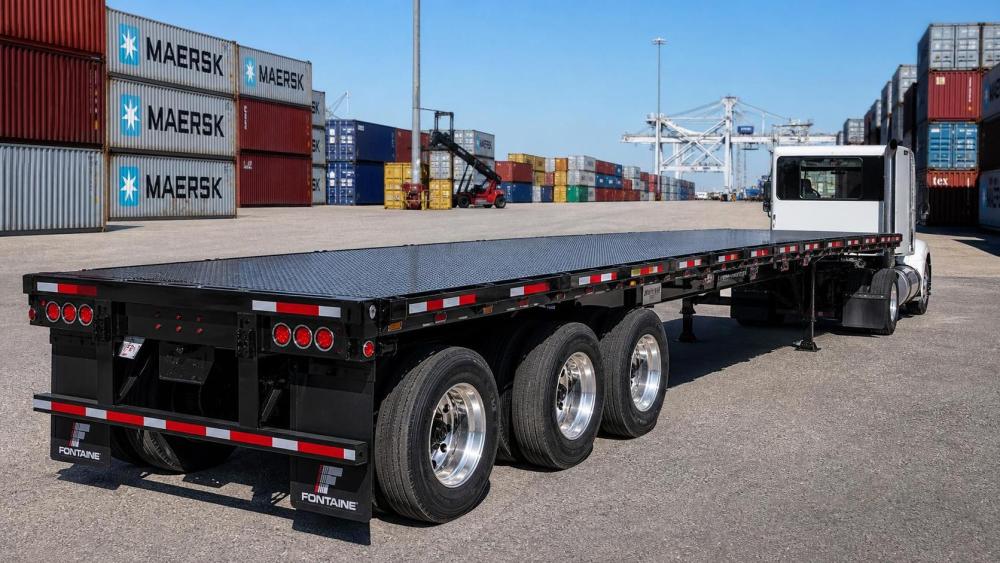
Open-deck equipment is valuable because it can handle different cargo types, but that flexibility depends on the deck and accessory design. Buyers should consider anti-slip surface treatment, deck plate thickness, side stake pockets, rope hooks, toolboxes, container locks, and removable side boards. The goal is not to add every possible accessory. The goal is to choose details that match daily loading behavior.
For forklift loading, deck surface and edge strength matter. For crane loading, lashing points and cargo positioning are more important. For container transport, twist locks must be placed accurately and be easy to operate under yard conditions. For building materials, side protection may reduce cargo movement and make loading safer. If the trailer is expected to carry mixed cargo, buyers should ask for a layout that supports multiple loading patterns without creating unnecessary weight or complexity.
Supplier Evaluation: What to Ask Before Ordering
A strong supplier conversation should include more than quotation and delivery time. Buyers should ask for product drawings or configuration sheets, recommended spare parts, warranty boundaries, packaging method, export documents, and communication process during production. These details reveal whether the supplier is prepared for cross-border equipment trade or only focused on making a quick sale.
Procurement teams should also review the supplier's ability to customize responsibly. Customization is useful when it solves a real operating need, but it can create problems when every buyer request is accepted without engineering judgment. A professional supplier should be willing to explain tradeoffs, such as why a thicker deck may increase durability but reduce payload, or why a certain suspension choice may be easier to maintain in one market but less suitable in another.
- Ask for a written configuration summary before deposit payment.
- Confirm dimensions, axle layout, tire size, kingpin position, and brake system details.
- Request photos or inspection updates during production when possible.
- Check whether the supplier can provide export documents required by the destination market.
- Prepare a spare parts plan for wear items before the first shipment arrives.
Export Handling and Arrival Readiness
International buyers should consider how the trailer will be shipped, unloaded, assembled if needed, and introduced into fleet service. Some equipment may be shipped by bulk vessel, flat rack, or other arrangements depending on destination, size, and freight cost. The supplier should give clear handling guidance so the buyer can plan port pickup, insurance, inspection, and local registration steps.
Arrival readiness also includes operator training and maintenance planning. Drivers and workshop teams should understand tire pressure discipline, brake inspection routines, lubrication points, torque checks, and early-stage inspection after initial use. Many trailer problems begin as small issues that are easy to correct if detected early. A simple receiving checklist can prevent avoidable damage during the first month of operation.
Lifecycle Cost Beats the Lowest Purchase Price
For commercial fleets, the best procurement decision is rarely the cheapest visible offer. A trailer that costs slightly less but requires frequent welding repair, tire replacement, brake adjustment, or downtime may become more expensive than a better-matched unit. Buyers should estimate lifecycle cost by looking at usable payload, fuel impact, tire life, maintenance intervals, parts access, resale value, and the cost of missed deliveries.
This approach is especially important for buyers in developing freight markets, where road conditions and service networks vary widely. A practical procurement plan should match the equipment to the available maintenance environment. If the local workshop is familiar with certain axle or suspension components, that familiarity can reduce downtime. If the route includes high heat, dust, or long descents, tires and braking should receive extra attention before the purchase is finalized.
Recommended Procurement Workflow
A disciplined workflow helps buyers compare suppliers fairly. First, define the operating scenario in writing. Second, request quotations based on the same configuration assumptions. Third, compare technical details rather than only total price. Fourth, clarify production lead time, inspection steps, and export documents. Fifth, confirm spare parts and maintenance support. Finally, review whether the selected unit can support future cargo types as the buyer's business expands.
This process gives procurement teams a stronger basis for negotiation. It also reduces misunderstanding between buyer and supplier. When both sides are discussing the same cargo profile, route, and configuration, the final order is more likely to meet real fleet needs. In cross-border purchasing, that clarity is often worth as much as a small discount.
FAQ
Should buyers choose the strongest possible frame?
Not always. A stronger frame can improve durability for difficult roads or concentrated cargo, but it may also increase tare weight. Buyers should match frame strength to cargo pattern, route condition, and revenue payload needs.
Is a standard configuration enough for mixed cargo?
A standard configuration may work for general freight, but buyers carrying containers, machinery, or heavy construction materials should review deck layout, lashing points, and accessory options before ordering.
What documents should be checked for export procurement?
Buyers should confirm the commercial invoice, packing information, product specification sheet, any destination-specific documents, and clear component details for future maintenance planning.
How can buyers reduce post-delivery downtime?
They can request a spare parts recommendation, train drivers on inspection routines, check tires and brakes after early operation, and keep configuration records for future part replacement.
Final Buying Perspective
Trailer procurement rewards buyers who think beyond the first shipment. The right unit should fit cargo, roads, loading workflow, local service capacity, and long-term fleet economics. By treating the purchase as an equipment lifecycle decision rather than a single transaction, global freight buyers can reduce avoidable repair risk, protect operating schedules, and build a fleet that remains useful as market demand changes.
This article is buyer-facing guidance for transportation equipment procurement. It avoids fabricated prices, unsupported performance claims, and invented case numbers. Final upload should be checked against the destination portal's house style, category settings, and publishing workflow.Editorial Review Note
Related News
 Where Autonomous Freight Vehicles Deliver the Most Value in Port OperationsPort Digital Twin ArchitectAutonomous freight vehicles ports: discover where automation delivers the highest value in quay-to-yard, rail, and logistics workflows—improving throughput, safety, and reliability.
 How to Size High-Rate Sortation Capacity for Peak Parcel VolumesGlobal Routing & Distribution StrategistHigh-rate sortation capacity planning: learn how to size peak parcel throughput, reduce recirculation, protect carrier cut-offs, and build a resilient operation.
 How to Calculate Rail-Sea Intermodal Logistics Costs Before Choosing a RouteZero-Carbon Powertrain FellowRail-sea intermodal logistics cost: learn to compare all-in freight, rail, port, customs, and risk costs before choosing a route for smarter sourcing decisions.
 What Should Ports Evaluate Before Selecting a Digital Port Platform?Port Digital Twin ArchitectDigital port platform selection guide: evaluate integration, data governance, automation readiness, cybersecurity, and pilots to choose a resilient solution that improves port operations.
 How to Compare Rail-Sea Intermodal Providers for Port-to-Inland Freight ReliabilityZero-Carbon Powertrain FellowCompare rail-sea intermodal providers with a practical guide to lane reliability, capacity, visibility, costs, and contingency planning for resilient port-to-inland freight.
 How to Select Autonomous Mobile Robots for Subzero Cold Storage OperationsPort Digital Twin ArchitectAutonomous mobile robots cold storage teams can rely on: evaluate batteries, navigation, safety, charging, and service for proven subzero performance.
 How Real-Time Route Optimization Reduces Delays Across Multi-Stop Freight OperationsChief Logistics AI & Fluid Dynamics ScientistReal time route optimization helps multi-stop freight teams cut delays, protect delivery windows, and respond faster to port, warehouse, and traffic disruptions.
 How to Build a Logistics Tender Workflow That Improves Bid Quality and ControlFreight Capital & Infra Investment EconomicsLogistics tender workflow guide: improve bid quality, compare total costs, assess suppliers, and strengthen contract control for better logistics outcomes.
 How Should UAE Businesses Evaluate Drone Logistics Systems for Last-Mile Delivery?Spatial Computing & Machine Vision GeekDrone logistics systems UAE: learn how to evaluate regulatory readiness, route safety, integration, reliability, and total cost for smarter last-mile delivery.
 How to Evaluate Port Automation Systems for Container Terminal Efficiency and ROIPort Digital Twin ArchitectPort Automation Systems for terminals: evaluate efficiency, TOS integration, supplier risk, and ROI to choose scalable solutions that improve throughput and resilience.
 How to Use Freight Benchmark Pricing to Compare Carrier Rates and Control CostsFreight Capital & Infra Investment EconomicsFreight benchmark pricing helps procurement teams compare carrier rates, control total transport costs, uncover surcharges, and negotiate better freight deals with confidence.
 Container Yard Management: How to Cut Truck Turn Times and Improve Slot UtilizationPort Digital Twin ArchitectContainer yard management strategies to cut truck turn times, optimize slot utilization, reduce rehandles, and improve yard flow with smarter appointments, planning, and real-time control.