Temperature-Controlled Logistics: Preventing Temperature Excursions During Handoffs




Temperature-Controlled Logistics: Preventing Temperature Excursions During Handoffs
A shipment can remain within specification for days, then face a temperature excursion during a brief transfer between a reefer container, loading dock, and delivery vehicle. For quality control and safety managers, these handoffs demand more than a temperature reading: they require clear custody responsibilities, verified transfer conditions, and actionable monitoring data.
Temperature-controlled logistics depends on controlling these vulnerable transitions. The practical challenge is to keep cargo protected while equipment, personnel, and responsibility change—and to retain enough evidence for a defensible release or quarantine decision if something goes wrong.
The weak point is often the space between controlled environments
A refrigerated vehicle and a cold room may both operate correctly while the transfer between them remains uncontrolled. Pallets wait for receiving clearance. A truck arrives before its compartment is ready. A reefer is disconnected before a terminal tractor becomes available. Each activity appears routine, but together they create exposure that nobody explicitly owns.
The first distinction is between equipment temperature and product condition. Supply-air readings, return-air readings, dock ambient measurements, and package-level logger data answer different questions. A brief air-temperature spike does not automatically prove product damage; a normal refrigeration display does not prove that every pallet remained within its approved limits.
Cargo also responds differently. Chilled foods, freeze-sensitive pharmaceuticals, frozen ingredients, and temperature-sensitive chemicals cannot share a generic acceptance rule. Their limits must come from applicable product specifications, stability evidence, food-safety plans, or other approved requirements. Returning cargo to the correct temperature does not erase its exposure history.
Define the handoff before setting a transfer-time limit
“Unload quickly” is not an operational control. A useful procedure defines when exposure begins, when it ends, which conditions are permitted, and who can stop the movement. For one route, exposure may begin when a pallet leaves a controlled chamber. At a port, the critical interval may begin when reefer power is disconnected.
Those are different risks and may need separate clocks. Record unpowered time, time outside controlled storage, and door-open time where each affects the assessment. Combining everything into a single “transfer completed” timestamp can hide the actual failure point.
A defensible maximum transfer time should reflect packaging performance, load configuration, starting temperature, ambient conditions, and handling sequence. Thermal qualification or route studies should cover credible adverse conditions, not only a smooth transfer on a mild day. Partial loads, damaged insulation, direct sunlight, and exposed pallet edges deserve attention.
Set an operational intervention point before the supported exposure limit is exhausted. Staff need enough time to return cargo to approved storage or activate a qualified contingency. Reaching the limit should not be the first moment anyone looks for an alternative.
Make readiness a condition of unloading
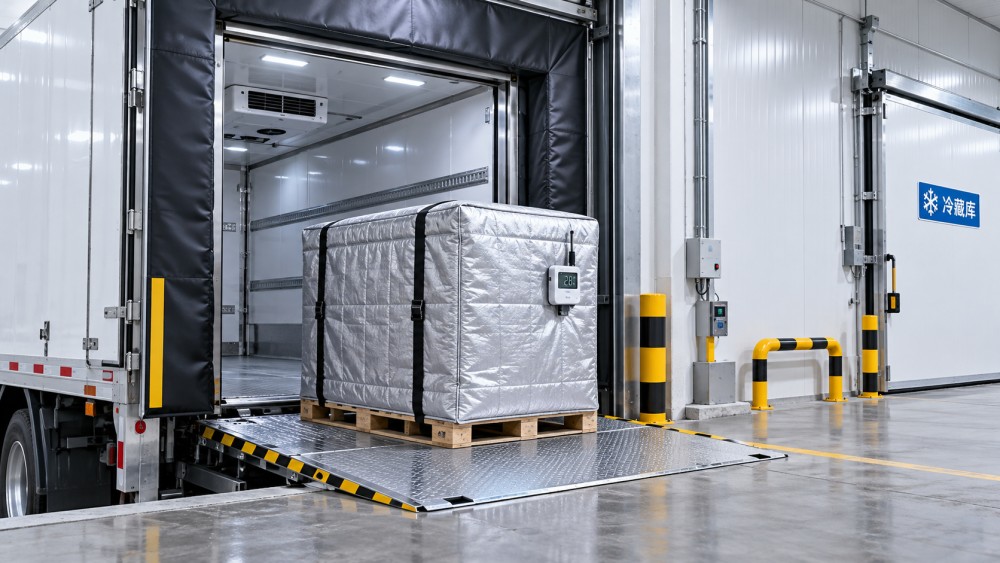
The receiving side should confirm readiness before cargo leaves its existing protection. That means checking the destination compartment, available storage capacity, transfer route, handling equipment, and people—not simply confirming that a vehicle has reached the dock.
- Destination condition: Confirm the compartment has reached the required operating condition, with suitable airflow and no unresolved refrigeration alarms.
- Transfer access: Verify that the dock, cold-room entrance, and staging position are clear and suitable for the cargo.
- Shipment identity: Match product, lot, seal, transport documentation, and monitoring-device identity before mixing shipments.
- Exception capacity: Identify where cargo can remain under approved conditions if acceptance is delayed.
Pre-cooling is not a substitute for checking load temperature. Transport refrigeration generally maintains appropriately conditioned cargo; it should not be assumed capable of correcting an unsuitable incoming load within the required time. Loading patterns must also preserve specified airflow paths.
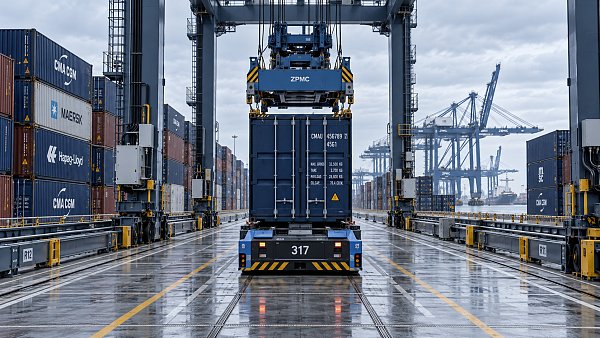
At container terminals, readiness includes reefer plug availability, compatible power connections, safe connection procedures, and confirmation that refrigeration has restarted without unresolved alarms. A dispatch record showing “container delivered” is not equivalent to verified restoration of temperature control.
Use monitoring that can explain the event
The objective is not to collect the largest volume of temperature data. It is to determine what happened, which cargo was affected, and whether intervention arrived in time.
Sensor placement should follow thermal mapping or a justified risk assessment. A logger deep inside a pallet may miss exposure at the outer cartons, while a sensor near an open door may record an air spike that does not represent product temperature. Where decisions depend on that distinction, use a qualified monitoring arrangement rather than improvising after an alarm.
Select measurement accuracy, operating range, response characteristics, and recording intervals for the product and the duration of expected events. A device suitable for long ocean transit may not provide sufficient detail for a short dock transfer if its recording interval is too coarse. Calibration should be traceable and cover the relevant measurement range; its status must remain valid under the applicable quality procedure.
Time alignment matters just as much. Logger records, warehouse scans, vehicle telematics, and terminal events need a consistent time basis, including clear time-zone handling. Otherwise, investigators may be unable to establish whether warming occurred before unloading, during inspection, or after loading.
Live connectivity is useful, but metal containers and enclosed facilities can interrupt transmission. Local recording and store-and-forward capability protect the evidence. A missing signal should trigger a connectivity response, not an assumption that cargo temperature is acceptable.
Separate early warnings from disposition decisions
An operational warning can prompt staff to close a door, reconnect power, or move cargo to protected storage. A disposition decision determines whether the product can be released. These should not be treated as the same process.
Warning thresholds may sit inside approved limits to allow intervention, provided the approach is justified. Alarm delays must also be justified: suppressing every brief spike can conceal a meaningful event. Every actionable alarm needs a named responder, an acknowledgement requirement, and a fallback contact when the first person is unavailable.
Turn custody transfer into an evidence checkpoint
Commercial delivery, physical custody, and quality acceptance may occur at different times. Contracts and operating procedures should make those boundaries explicit. Otherwise, the sender may consider its task finished while the receiver believes temperature control remains someone else’s responsibility.
The handoff record should connect shipment identity to the transfer location, timestamps, responsible parties, relevant temperature evidence, equipment condition, and exceptions. Where a seal is broken for inspection, record the reason and subsequent resealing details. A signature without this context offers limited help during an investigation.
Acceptance checks should also distinguish “received into custody” from “released for use.” If complete logger data are unavailable, the procedure should specify whether conditional receipt into controlled quarantine is permitted. It should never turn an unread device into an automatic pass.
For regulated shipments, documentation and responsibilities must align with the applicable jurisdiction and product requirements. Pharmaceutical good distribution practice and food-safety controls are not interchangeable. Similarly, an air-cargo certification such as IATA CEIV Pharma can support supplier evaluation, but it does not replace shipment-specific evidence or cover every subcontracted activity automatically.
When a deviation occurs, protect the cargo and preserve the facts
The immediate response should restore approved protective conditions where safe, identify affected units, and prevent unauthorized release. Preserve original monitoring files, alarm histories, handling timestamps, and relevant equipment records. Record corrective actions without overwriting the original event.
Quality assessment then considers the actual temperature profile, exposure duration, sensor location, measurement uncertainty, packaging condition, and previous excursions. The responsible quality function or product owner should evaluate the evidence against approved criteria. A carrier’s explanation may inform that decision, but should not substitute for it.
Avoid using average temperature to dismiss a short extreme event. Mean kinetic temperature may be appropriate for some pharmaceutical assessments under justified conditions, but it is not a universal release tool and does not resolve freezing damage or every food-safety hazard.
The investigation should identify the failed control, not stop at “operator delay.” Was storage unavailable? Did an appointment system release too many vehicles? Was power restoration recorded but never verified? Corrective action needs to change the condition that made the deviation possible.
Evaluate the whole transfer system, not just the refrigerator
Cold-chain reliability depends on coordination between infrastructure and information. Terminal operating systems, warehouse platforms, reefer monitoring, and transport dispatch should expose the events that matter: cargo ready, destination ready, power disconnected, transfer started, power restored, and acceptance pending.
This is the cross-system perspective covered by Global Smart-Logistics & Port Infrastructure (G-WLP), connecting cold-chain equipment analysis with port automation, intermodal operations, supplier evaluation, and supply chain data governance. For a handoff project, the useful question is whether these systems support timely decisions and auditable responsibility—not whether each platform has a dashboard.
Start improvement work with one vulnerable transfer. Observe the actual sequence, validate its exposure limits, assign ownership, and test the fallback under realistic conditions. Then review response times, unexplained data gaps, and repeat deviations. A handoff is controlled only when the team knows when to stop, where to protect the cargo, and who can authorize what happens next.
Related News
 How Container Port Automation Coordinates Cranes, AGVs, and Yard OperationsPort Digital Twin ArchitectDiscover how container port automation coordinates cranes, AGVs and yard operations—and what to look for when evaluating integration, safety and performance.
 Guangzhou Nansha Phase IV Automated Terminal Opens for Foreign TradePort Digital Twin ArchitectGuangzhou Nansha Phase IV Automated Terminal opens for foreign trade. Discover how automated operations and tailored clearance support international cargo.
 Customs Compliance Checklist: What to Verify Before Filing Import DeclarationsGlobal Routing & Distribution StrategistCustoms compliance starts before filing. Use this practical checklist to verify tariff codes, valuation, origin, and permits—and help avoid costly import delays.
 Aurora and Charger Logistics Sign MOU for Up to 500 Autonomous TrucksSpatial Computing & Machine Vision GeekAurora and Charger Logistics plan up to 500 autonomous trucks under a non-binding MOU. Explore the proposed delivery timeline and fleet planning implications.
 Port Automation Systems in the Netherlands: How to Assess TOS CompatibilityPort Digital Twin ArchitectPort Automation Systems Netherlands: Assess TOS compatibility, integration risks, recovery testing, and upgrade support. Discover how to shortlist solutions with confidence.
 US Announces $498M for Ports, Including Corpus Christi Digital TwinPort Digital Twin ArchitectExplore $498M in U.S. port funding, including $7.15M for Corpus Christi’s digital twin, sensors and LiDAR, and learn what it could mean for smarter port operations.
 Choosing a Delivery Drone Manufacturer: Payload, Range, and After-Sales SupportSpatial Computing & Machine Vision GeekChoose a delivery drones manufacturer with proven payload, range, and after-sales support. Learn how to verify performance, reduce downtime, and protect your fleet investment.
 Charger Logistics and Aurora Plan to Expand Autonomous Truck Fleet to 500Spatial Computing & Machine Vision GeekCharger Logistics and Aurora plan up to 500 autonomous trucks for U.S. freight, with deliveries in 2027–2028. Explore what this expansion could mean for carriers and shippers.
 Supply Chain Resilience Tools: Evaluating Risk Alerts and Recovery PlanningFreight Capital & Infra Investment EconomicsCompare supply chain resilience tools for accurate risk alerts, shipment visibility, and actionable recovery plans. Discover how to test vendors and choose with confidence.
 Sichuan Modern Integrated Logistics Technology Innovation Center InauguratedChief Logistics AI & Fluid Dynamics ScientistExplore Sichuan Modern Integrated Logistics Technology Innovation Center’s AI, waterway and multimodal equipment priorities—and discover potential opportunities for your business.
 Choosing a Customs Technology Provider: Coverage, Integration, and Audit TrailsGlobal Routing & Distribution StrategistChoose a customs technology provider with proven coverage, reliable integrations, and audit-ready records. Discover practical tests to reduce filing risks and select with confidence.
 U.S. Trucking Contract Rates Rise About 13% as Shippers Reset AgreementsFreight Capital & Infra Investment EconomicsU.S. trucking contract rates rise about 13% as shippers renew agreements. Explore SONAR data and what higher renewal rates could mean for your freight budget.