Reefer Container Compliance: Which Standards Matter for Food and Pharma Shipments?




Meta Title: Reefer Container Compliance for Food and Pharma Shipments: Standards That Actually Matter
If you are responsible for product quality or shipment release, the hard part is usually not finding a list of cold-chain rules. It is figuring out which ones genuinely affect cargo acceptance, temperature integrity, and audit exposure. In practice, reefer container compliance for food and pharmaceutical shipments comes down to a small group of standards and controls: container condition, temperature capability, calibration and monitoring, sanitation, documented handling, and the regulatory framework tied to the product itself. Miss any one of these, and a reefer that looks fine on paper can still fail in the field.
A short answer: for food, the key concern is whether the refrigerated container and the operating process can maintain safe product conditions under HACCP-style controls and applicable food transport rules. For pharma, the bar is higher. You also need documented qualification, traceability, data integrity, and alignment with GDP or lane-specific requirements. The container is only one part of compliance; the evidence around it matters just as much.
What reefer container compliance really means in day-to-day operations
Many teams treat compliance as a document pack: PTI passed, setpoint entered, seal closed, done. That is one of the most common mistakes.
A reefer container can be technically serviceable and still be non-compliant for the cargo loaded into it. Food cargo may be exposed if the interior is clean but odor-tainted, if air circulation is blocked by poor stowage, or if return air temperatures are misunderstood. Pharmaceutical cargo may be exposed if the reefer unit is functioning normally but there is no acceptable evidence of temperature control, alarm response, or calibration status for the monitoring devices used in the shipment.
So when people ask which standards matter, the better question is: which standards prove that the container, the cargo environment, and the handling process are suitable for this exact product?
For food shipments, start with sanitary transport and temperature control basics
Food shipments do not all face the same compliance burden. Frozen seafood, chilled dairy, fresh produce, and processed foods have different tolerances. Still, there are a few areas that matter almost every time.
First is suitability of the container. The reefer box should be structurally sound, free from contamination, free from pest evidence, and appropriate for the temperature range needed. Door gaskets, drain function, floor condition, and internal liner condition are not cosmetic issues. They directly affect heat ingress, hygiene, and airflow.
Second is temperature performance. A reefer container is designed to maintain temperature, not to rescue poorly conditioned cargo. That point gets ignored too often. If product requiring pre-cooling is loaded warm, the unit may never bring the cargo mass down evenly within the transit window. Compliance failure then shows up later as product claim, receiver rejection, or unexplained shelf-life loss.
Third is process control. In many food programs, documented pre-trip inspection, sanitation checks, loading discipline, seal control, and temperature record retention are what protect the shipment during audits and disputes. Depending on trade lane and regulatory scope, operators may need to align with food safety systems such as HACCP-based controls and official sanitary transport requirements issued by the relevant authority.
That is why “food-safe reefer” is not a formal universal status. It is a combination of equipment fitness, cleaning, correct operation, and records.
Pharma shipments raise the standard from “working” to “qualified”
Pharmaceutical cold chain is where many logistics teams discover that general reefer experience is not enough. A reefer container used for medicines, vaccines, APIs, or clinical material is judged less by whether it cooled and more by whether control can be demonstrated.
The standards that usually shape expectations here include Good Distribution Practice (GDP), lane-specific shipper quality agreements, and in air-connected or multimodal programs, frameworks such as IATA CEIV Pharma where relevant. On the equipment side, shippers may ask for evidence that the container model is suitable for the expected ambient range, that monitoring devices are calibrated, and that excursion handling is defined before departure.
In other words, pharma compliance is built on documented control. If your records cannot show who set the temperature, how it was verified, what device captured the data, whether that device was within calibration, and how alarms or deviations are escalated, you have a weak compliance position even if the product arrives looking acceptable.
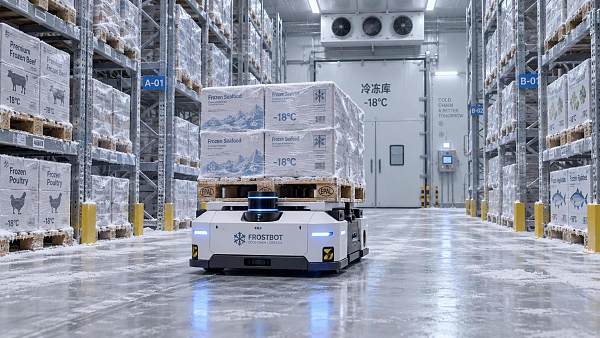
Another practical difference: in pharma, setpoint alone is rarely the whole story. Some products need strict band control, some need protection from freezing, some need stability-supported exposure limits, and some require proof that packaging plus container plus route profile were evaluated together. The container is part of a validated transport system, not an isolated machine.
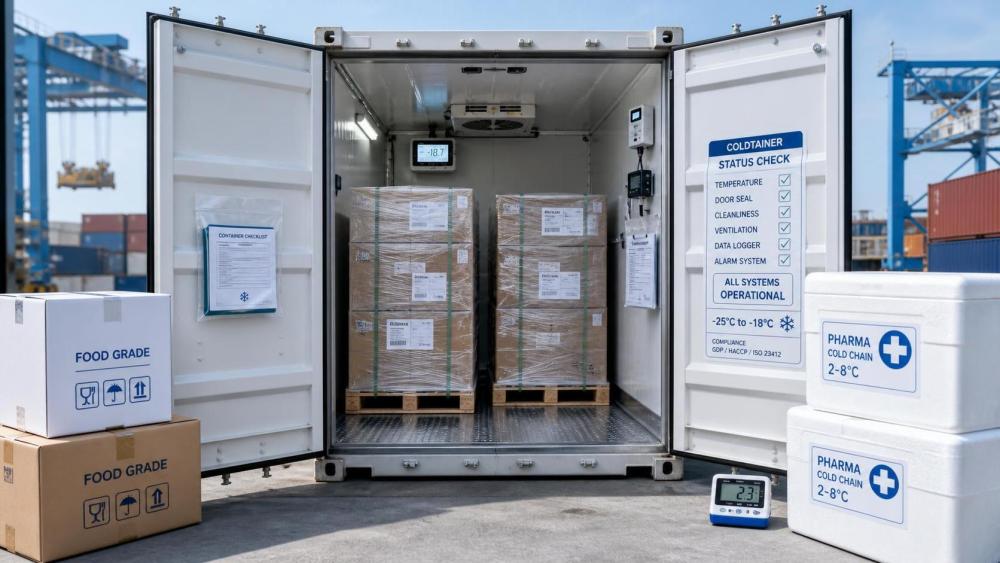
Which standards matter most under the phrase “reefer container compliance”
People often expect one master standard that settles the issue. There is no single global rulebook covering every reefer use case. What matters is the stack of standards and guidance that applies to your cargo, route, and customer requirement.
1. ISO framework for freight containers and refrigeration equipment
At the container level, ISO-related standards matter because they define dimensions, ratings, identification, and certain technical expectations for intermodal equipment. These do not by themselves prove food or pharma suitability, but they establish the baseline equipment language used by carriers, depots, and shippers.
2. PTI and equipment maintenance standards
Pre-trip inspection is operationally critical. A passed PTI helps confirm the reefer unit is functioning before release, but it is not a blanket guarantee for cargo quality. Teams should understand what the PTI covered, when it was performed, and whether any issues were corrected or simply noted.
3. Calibration and temperature monitoring controls
This is where many disputes are won or lost. The controller display on the reefer unit is not always enough for high-value cargo. Independent data loggers, telemetry, and calibration records may be required by SOP or customer quality agreement. For pharma, this area is often non-negotiable.
4. Food safety transport regulations and HACCP-aligned practices
For food, sanitary condition, segregation, cleaning records, and temperature management are usually more important than broad claims about “certified cold chain.” Regulatory expectations vary by country, so actual compliance needs to be checked against origin, destination, and product category.
5. GDP and customer quality requirements for pharmaceuticals
GDP does not certify the reefer container by itself; it governs how medicinal products are distributed. But in practice, GDP drives many reefer requirements: documented procedures, training, deviation handling, qualification logic, and retained evidence.
6. Product-specific and lane-specific requirements
A frozen meat lane, a biologics lane, and a nutraceutical lane can all use reefers while needing very different controls. This is where many generic compliance checklists fail. They are too broad to manage the real risk.
What quality and safety teams should check before approving a reefer
A useful review is not very long, but it has to be disciplined.
- Container identification matches the booking and records.
- PTI status is current and traceable.
- Interior is clean, dry where required, odor-free, and free of visible damage.
- Doors, seals, gaskets, floor channels, and drains are in acceptable condition.
- Setpoint, ventilation setting, humidity setting, and defrost parameters match product needs where applicable.
- Pre-cooling responsibility is clear: cargo, container, or both, depending on product and SOP.
- Monitoring devices are available, positioned correctly, and within calibration where required.
- Loading pattern protects airflow rather than blocking it.
- Alarm, excursion, and communication procedures are defined before departure.
- All evidence is retained in a way that supports audit or claim review.
That list looks basic, but weak execution usually happens in the gaps between these points. For example, a team may confirm the setpoint and forget to verify that pallet wrap or slip sheets are obstructing airflow. Or they may place a data logger in a convenient spot instead of a location justified by risk.
Where companies get reefer compliance wrong
One recurring mistake is confusing carrier acceptance with full compliance. A shipping line may accept the booking and provide a serviceable reefer, but that does not mean the setup meets your internal quality standard or your customer’s product requirement.
Another is relying on a clean PTI result as if it were a product qualification document. PTI checks equipment readiness. It does not replace route assessment, packaging review, stability considerations, sanitation verification, or customer-specific documentation.
A third is treating food and pharma as variations of the same cold-chain process. They overlap, but not enough to share one checklist without changes. Pharma expects stronger documentation logic, stronger data integrity, and tighter deviation governance.
There is also a practical misunderstanding around reefer telemetry. Remote visibility is useful, sometimes extremely useful, but visibility alone does not equal compliance. A stream of temperature data is helpful only if it is trusted, reviewed, and tied to an action process.
How to make the standards workable instead of burdensome
The best compliance systems are usually boring. They remove guesswork. They define which standards are baseline, which are customer-driven, and which are product-specific exceptions. They also separate “required for every shipment” from “required only for high-risk cargo.”
For mixed portfolios, a tiered approach works better than a single heavy SOP. A frozen food program may mainly need sanitation discipline, PTI verification, loader training, and retained temperature records. A pharma program may need approved lane mapping, calibrated independent monitoring, documented deviation review, and a stronger release decision process.
This is also where a specialist intelligence source can help. Platforms such as Global Smart-Logistics & Port Infrastructure (G-WLP) are most useful when teams need to benchmark reefer technology, understand cold-chain compliance trends, or compare how equipment, monitoring, and infrastructure choices affect operational control. That kind of input supports decision-making, but it should sit beside official regulations, shipper quality agreements, and validated internal procedures.
So which standards should you prioritize first?
If you need a practical order of operations, use this:
- Start with the product requirement: temperature range, sensitivity, and any non-negotiable handling rules.
- Check legal and customer requirements for the route and product category.
- Verify the reefer container is suitable, serviceable, and clean.
- Add monitoring and calibration controls appropriate to cargo risk.
- Confirm documentation, deviation handling, and record retention before shipment release.
That sequence keeps teams from over-focusing on the container while under-managing the process around it.
Near the end of most audits, the same question appears in different wording: can you prove this shipment stayed within acceptable conditions, using equipment and procedures appropriate for the product? Good reefer container compliance gives you a defensible answer. Not just a cold box, but a controlled shipment.
FAQ
Is a passed PTI enough to approve a reefer for pharmaceutical cargo?
No. PTI confirms equipment readiness, not full pharma suitability. Pharma shipments often need additional controls such as calibrated independent monitoring, documented SOPs, and GDP-aligned records.
Do food and pharma shipments need the same reefer compliance checklist?
Not usually. Some basics overlap, such as cleanliness, temperature capability, and correct loading. Pharma generally needs tighter documentation and deviation control.
Does reefer telemetry replace data loggers?
Sometimes it supports them, but it does not automatically replace them. The answer depends on customer requirements, internal quality rules, and whether the telemetry data is accepted as compliant evidence.
Who is responsible for pre-cooling: the cargo or the container?
It depends on product and SOP. Many cargoes must be pre-cooled before loading because a reefer container is primarily designed to maintain temperature, not rapidly pull down warm product.
Image Placeholder List
Suggested placement: after the section explaining the difference between food and pharma reefer requirements.
Suggested image content: a side-by-side reefer inspection and monitoring workflow, showing container condition checks, logger placement, and documentation review.
Suggested alt text: Reefer container compliance checks for food and pharmaceutical cold-chain shipments
Internal Link Anchor Text Suggestions
- reefer monitoring best practices: guide to cold-chain monitoring technologies and workflows
- IATA CEIV Pharma requirements: explainer page on pharma logistics compliance
- cold-chain infrastructure planning: analysis page on refrigerated logistics systems
- PTI for refrigerated containers: technical article on pre-trip inspection standards
- GDP in pharmaceutical logistics: standards and documentation overview
External Authoritative Source Directions
- government food transport and sanitary regulations pages
- official pharmaceutical GDP guidance from health regulators
- container manufacturer or reefer OEM technical manuals and operating documentation
Related News
 Where Autonomous Freight Vehicles Deliver the Most Value in Port OperationsPort Digital Twin ArchitectAutonomous freight vehicles ports: discover where automation delivers the highest value in quay-to-yard, rail, and logistics workflows—improving throughput, safety, and reliability.
 How to Size High-Rate Sortation Capacity for Peak Parcel VolumesGlobal Routing & Distribution StrategistHigh-rate sortation capacity planning: learn how to size peak parcel throughput, reduce recirculation, protect carrier cut-offs, and build a resilient operation.
 How to Calculate Rail-Sea Intermodal Logistics Costs Before Choosing a RouteZero-Carbon Powertrain FellowRail-sea intermodal logistics cost: learn to compare all-in freight, rail, port, customs, and risk costs before choosing a route for smarter sourcing decisions.
 What Should Ports Evaluate Before Selecting a Digital Port Platform?Port Digital Twin ArchitectDigital port platform selection guide: evaluate integration, data governance, automation readiness, cybersecurity, and pilots to choose a resilient solution that improves port operations.
 How to Compare Rail-Sea Intermodal Providers for Port-to-Inland Freight ReliabilityZero-Carbon Powertrain FellowCompare rail-sea intermodal providers with a practical guide to lane reliability, capacity, visibility, costs, and contingency planning for resilient port-to-inland freight.
 How to Select Autonomous Mobile Robots for Subzero Cold Storage OperationsPort Digital Twin ArchitectAutonomous mobile robots cold storage teams can rely on: evaluate batteries, navigation, safety, charging, and service for proven subzero performance.
 How Real-Time Route Optimization Reduces Delays Across Multi-Stop Freight OperationsChief Logistics AI & Fluid Dynamics ScientistReal time route optimization helps multi-stop freight teams cut delays, protect delivery windows, and respond faster to port, warehouse, and traffic disruptions.
 How to Build a Logistics Tender Workflow That Improves Bid Quality and ControlFreight Capital & Infra Investment EconomicsLogistics tender workflow guide: improve bid quality, compare total costs, assess suppliers, and strengthen contract control for better logistics outcomes.
 How Should UAE Businesses Evaluate Drone Logistics Systems for Last-Mile Delivery?Spatial Computing & Machine Vision GeekDrone logistics systems UAE: learn how to evaluate regulatory readiness, route safety, integration, reliability, and total cost for smarter last-mile delivery.
 How to Evaluate Port Automation Systems for Container Terminal Efficiency and ROIPort Digital Twin ArchitectPort Automation Systems for terminals: evaluate efficiency, TOS integration, supplier risk, and ROI to choose scalable solutions that improve throughput and resilience.
 How to Use Freight Benchmark Pricing to Compare Carrier Rates and Control CostsFreight Capital & Infra Investment EconomicsFreight benchmark pricing helps procurement teams compare carrier rates, control total transport costs, uncover surcharges, and negotiate better freight deals with confidence.
 Container Yard Management: How to Cut Truck Turn Times and Improve Slot UtilizationPort Digital Twin ArchitectContainer yard management strategies to cut truck turn times, optimize slot utilization, reduce rehandles, and improve yard flow with smarter appointments, planning, and real-time control.