How Temperature-Controlled Logistics Reduces Cold Chain Risk in Pharma and Food Shipping




Temperature-controlled logistics has moved from being a specialized transport function to a core risk-control discipline for companies shipping pharmaceuticals and food. For quality and safety managers, the issue is not whether a shipment was placed in a refrigerated vehicle or container. The real question is whether the product stayed within an acceptable condition profile across every handoff, delay, inspection point, and last-mile transfer. That distinction matters because most cold-chain failures do not begin with catastrophic equipment breakdown. They start with smaller control gaps: a poorly preconditioned reefer, an airport transfer exposed on the tarmac, packaging selected for a nominal lane rather than a disrupted one, or data that proves temperature was measured but not that risk was effectively managed.
In both pharma and food shipping, the commercial consequences of these gaps are easy to see: spoilage, waste, rejected loads, claims, and service failure. The harder part is the hidden cost. A compromised shipment can trigger batch investigations, customer notifications, regulatory scrutiny, tighter release procedures, and reduced confidence in the logistics network itself. That is why temperature-controlled logistics should be evaluated less as a transport premium and more as a way to reduce uncertainty in high-consequence supply chains.
Why this issue deserves attention now
Two shifts have made cold-chain control more demanding. First, supply chains are more distributed than they were a few years ago. Pharmaceuticals increasingly move through multi-country production and distribution networks, while food supply chains are under pressure to serve broader geographies with tighter freshness expectations. Second, disruption has become more normal. Port congestion, weather volatility, customs delays, labor shortages, and capacity imbalances all increase dwell time and make static transport planning less reliable.
That means temperature risk is no longer confined to extreme products or long-haul lanes. Even relatively stable products can be exposed when shipment timing changes, when assets are substituted at short notice, or when warehouse and transport systems are not aligned. In practice, temperature-controlled logistics reduces risk when it is designed around lane variability, response time, and evidence quality, not just around nominal setpoint compliance.
What searchers usually need to know
People looking into this topic are rarely asking for a definition. They are usually trying to answer one of four operational questions.
- Is our current cold-chain model adequate for the products and lanes we actually run?
- Where do temperature excursions really happen, and which of those points are controllable?
- What should we require from logistics partners, packaging suppliers, and monitoring systems before expanding volume or changing routes?
- How do we justify investment in tighter control when management sees cold-chain cost but not cold-chain risk?
The useful answer is not that “better refrigeration solves the problem.” It is that risk falls when product sensitivity, transit design, infrastructure capability, and monitoring response are treated as one system.
Where cold-chain risk actually sits
In pharma and food, the most important risk points are usually predictable. They just tend to be spread across different owners. A manufacturer may control product release and packaging configuration, but not airport handling. A 3PL may control line-haul execution, but not local customs dwell. A distribution center may monitor cold-room performance, but not whether outbound loading discipline holds during peak periods.
That fragmentation is why many temperature-controlled programs look compliant on paper and still perform inconsistently in the field.
Common high-risk points include:
- Pre-conditioning failures for vehicles, containers, or insulated packaging
- Loading and unloading delays at ambient docks
- Cross-dock transfers without protected staging areas
- Airport apron exposure or seaport dwell during handoff
- Customs and inspection holds that exceed packaging duration assumptions
- Improper pallet configuration reducing airflow
- Sensor placement that misses product-core conditions
- Weak escalation rules when alerts are triggered outside staffed hours
For QC and safety teams, the lesson is straightforward: excursion prevention depends as much on process discipline and exception management as on cooling hardware.
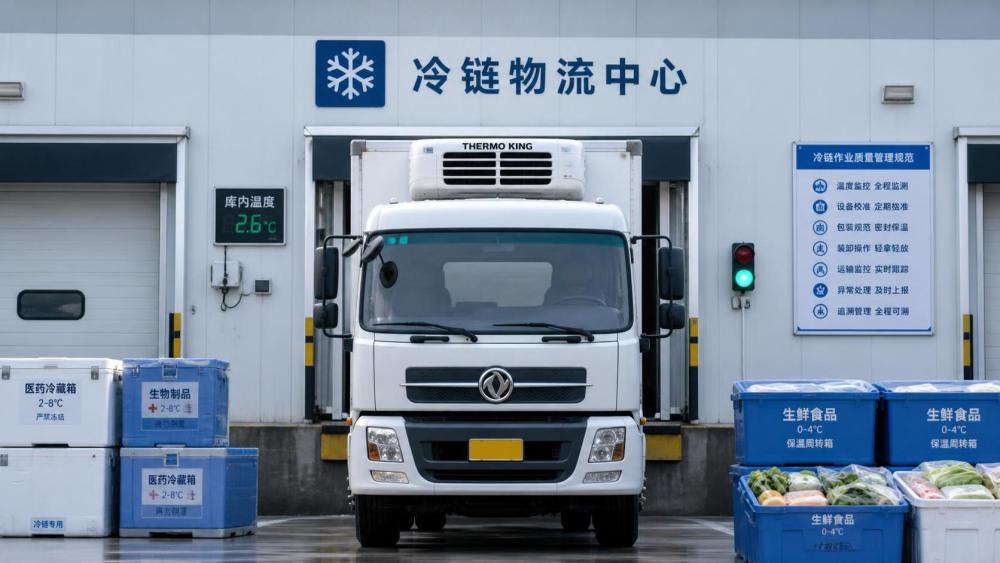
Pharma and food share infrastructure, but not the same risk logic
It is tempting to treat pharmaceutical and food cold chains as variations of the same challenge. They do overlap in equipment, insulated packaging, reefer assets, data logging, and controlled storage. But the decision logic is different enough that procurement and quality teams should be careful about assuming one model transfers cleanly to the other.
Pharmaceutical logistics is often governed by product stability profiles, validated packaging performance, lane qualification, chain-of-custody requirements, and formal deviation handling. The consequence of failure may include not only product loss but also compliance exposure, especially where good distribution practice expectations apply. In some markets and product classes, requirements may also intersect with IATA CEIV Pharma handling frameworks, customer-specific SOPs, and auditable release documentation.
Food logistics, by contrast, often has greater volume variability, tighter cost pressure, and more frequent movement through mixed infrastructure. Risk is closely tied to spoilage, microbial growth, shelf-life reduction, organoleptic change, and food safety controls. The acceptable operating range may differ by commodity, packaging format, and transit duration, and the business impact often shows up as shrink, claims, and retailer penalties before it appears as a formal compliance issue.
So while both sectors need temperature-controlled logistics, they do not always need the same level of packaging redundancy, documentation rigor, or intervention threshold.
What temperature-controlled logistics does when it works
Well-designed temperature control reduces risk in three layers at once.
1. It stabilizes the physical environment
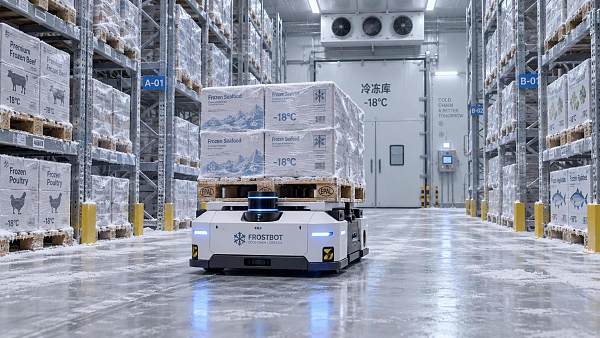
This is the visible layer: refrigerated transport, reefer containers, active or passive packaging, cold rooms, insulated handling zones, and qualified storage equipment. These assets matter, but they should be selected against real route conditions. A solution that performs well on a direct lane may fail on a lane with recurring transshipment or customs delay.
2. It improves visibility before product loss becomes irreversible
Real-time monitoring is valuable because it turns cold-chain management from retrospective reporting into active control. A data logger that confirms an excursion after delivery has limited preventive value. A connected monitoring system that flags rising temperature during a border wait may allow intervention, rerouting, or prioritization. That said, visibility only reduces risk if someone owns the response protocol. Many companies overestimate the benefit of telemetry and underestimate the need for 24/7 escalation design.
3. It creates decision-grade evidence
For both pharma and food, shipment data is not just operational history. It becomes evidence for release decisions, claims resolution, supplier evaluation, CAPA work, and network redesign. Quality teams should ask whether the data is granular enough, tamper-resistant enough, and context-rich enough to support a defensible decision. A single temperature trace without location, dwell context, or sensor-placement rationale may be insufficient in a disputed event.
What to examine before selecting a solution
Companies often start with the wrong comparison. They compare packaging types, refrigeration technologies, or freight rates before defining the lane risk. The better starting point is to segment the use case.
That framework usually clarifies whether a company is dealing with a transport problem, a packaging problem, an infrastructure problem, or a governance problem.
Some common claims do not fully hold up in practice
“If the truck or container is refrigerated, the shipment is protected.” Not necessarily. Temperature-controlled equipment manages the environment, but exposure can still occur during staging, inspection, or poor loading. Product-core temperature may also behave differently from ambient air temperature.
“Real-time sensors solve cold-chain risk.” Sensors improve visibility, but they do not by themselves create response capability. If there is no authority to intervene, no alternative facility available, or no clear threshold for action, monitoring becomes evidence of failure rather than prevention.
“The cheapest compliant option is enough.” This depends on the cost of failure, not only the cost of transport. For low-margin food categories, that tradeoff may still point to leaner control. For pharmaceuticals or high-liability food products, under-specifying the cold chain can be a false economy.
“One validated packaging design covers all lanes.” Only if the route conditions remain comparable. Seasonal extremes, airport dwell, customs patterns, and modal shifts can invalidate assumptions that were reasonable during qualification.
Operational controls that matter more than many buyers expect
Several controls are often less visible than hardware, but they have a disproportionate effect on outcomes.
- Lane qualification: Historical route performance, climate exposure, and handoff mapping should inform packaging and service selection.
- Time-at-risk mapping: Teams should know how long a product can tolerate specific conditions during each transfer stage, not just the total transit window.
- Escalation ownership: Alert thresholds must connect to named actions, named decision-makers, and realistic intervention options.
- Handoff governance: Each custody transfer should include condition checks, scan discipline, and clear accountability for delay.
- Data review routines: Shipment monitoring data should feed recurring quality review, not only incident response.
These are not glamorous controls, but they are often where mature programs separate themselves from nominally compliant ones.
How to tell whether it fits your current business scenario
Not every shipment needs the same intensity of cold-chain design. The question is whether product criticality and lane instability justify tighter control.
Temperature-controlled logistics is usually a strong fit when:
- Products have narrow or non-linear stability tolerance
- The cost of release failure is high relative to freight cost
- Distribution involves multiple borders, climate zones, or handoff points
- Customers require documented condition integrity, not just proof of dispatch
- Past incidents show repeatable dwell or transfer problems
It may require a more selective approach when products are more tolerant, routes are short and stable, and packaging plus local cold storage already provide sufficient protection. In those cases, overengineering the solution can add cost without proportionate risk reduction. QC and safety managers should therefore push for lane-specific decisions instead of blanket policies.
What quality and safety teams should ask providers
When evaluating 3PLs, forwarders, cold-chain operators, or infrastructure partners, useful questions are usually operational rather than promotional.
- How do you manage excursions during nights, weekends, and border holds?
- What are the highest-risk nodes in this lane based on your own performance history?
- How are sensors placed, calibrated, and matched to product configuration?
- Can you separate ambient excursions from true product-impact events?
- What contingency options exist if the original transport plan fails?
- How do you document chain of custody and condition at each transfer?
- Which elements of your cold-chain process are audited internally or externally? Any certification or compliance claim should be verified against current scope【待核实】.
If a provider can only describe equipment and not decision processes, that is usually a warning sign. In temperature-controlled logistics, execution maturity is often more important than marketing language.
The next changes worth watching
Over the next few years, the practical changes are likely to come from integration rather than from any single breakthrough. Better linkage between reefer monitoring, warehouse systems, transport management, customs status, and quality records should make excursion response more predictive. Infrastructure investment in specialized cold storage, port and airport handling areas, and more connected intermodal assets may also reduce exposure at transfer points, especially on international lanes.
At the same time, compliance expectations are unlikely to become simpler. Companies should expect more scrutiny around traceability, evidence integrity, and whether monitoring data actually supports release and safety decisions. Decarbonization pressure may also affect cold-chain design, since shifts in equipment type, modal choice, or energy systems can introduce new operating constraints that quality teams need to understand.
For most organizations, the decision is not whether to spend more on cold chain in the abstract. It is whether the current logistics model can still protect product integrity under real operating conditions, not ideal ones. Temperature-controlled logistics reduces cold-chain risk when it is treated as a controlled operating system across packaging, infrastructure, monitoring, and response. That is the level at which QC and safety managers can move the conversation from freight cost to product protection.
Related News
 Where Autonomous Freight Vehicles Deliver the Most Value in Port OperationsPort Digital Twin ArchitectAutonomous freight vehicles ports: discover where automation delivers the highest value in quay-to-yard, rail, and logistics workflows—improving throughput, safety, and reliability.
 How to Size High-Rate Sortation Capacity for Peak Parcel VolumesGlobal Routing & Distribution StrategistHigh-rate sortation capacity planning: learn how to size peak parcel throughput, reduce recirculation, protect carrier cut-offs, and build a resilient operation.
 How to Calculate Rail-Sea Intermodal Logistics Costs Before Choosing a RouteZero-Carbon Powertrain FellowRail-sea intermodal logistics cost: learn to compare all-in freight, rail, port, customs, and risk costs before choosing a route for smarter sourcing decisions.
 What Should Ports Evaluate Before Selecting a Digital Port Platform?Port Digital Twin ArchitectDigital port platform selection guide: evaluate integration, data governance, automation readiness, cybersecurity, and pilots to choose a resilient solution that improves port operations.
 How to Compare Rail-Sea Intermodal Providers for Port-to-Inland Freight ReliabilityZero-Carbon Powertrain FellowCompare rail-sea intermodal providers with a practical guide to lane reliability, capacity, visibility, costs, and contingency planning for resilient port-to-inland freight.
 How to Select Autonomous Mobile Robots for Subzero Cold Storage OperationsPort Digital Twin ArchitectAutonomous mobile robots cold storage teams can rely on: evaluate batteries, navigation, safety, charging, and service for proven subzero performance.
 How Real-Time Route Optimization Reduces Delays Across Multi-Stop Freight OperationsChief Logistics AI & Fluid Dynamics ScientistReal time route optimization helps multi-stop freight teams cut delays, protect delivery windows, and respond faster to port, warehouse, and traffic disruptions.
 How to Build a Logistics Tender Workflow That Improves Bid Quality and ControlFreight Capital & Infra Investment EconomicsLogistics tender workflow guide: improve bid quality, compare total costs, assess suppliers, and strengthen contract control for better logistics outcomes.
 How Should UAE Businesses Evaluate Drone Logistics Systems for Last-Mile Delivery?Spatial Computing & Machine Vision GeekDrone logistics systems UAE: learn how to evaluate regulatory readiness, route safety, integration, reliability, and total cost for smarter last-mile delivery.
 How to Evaluate Port Automation Systems for Container Terminal Efficiency and ROIPort Digital Twin ArchitectPort Automation Systems for terminals: evaluate efficiency, TOS integration, supplier risk, and ROI to choose scalable solutions that improve throughput and resilience.
 How to Use Freight Benchmark Pricing to Compare Carrier Rates and Control CostsFreight Capital & Infra Investment EconomicsFreight benchmark pricing helps procurement teams compare carrier rates, control total transport costs, uncover surcharges, and negotiate better freight deals with confidence.
 Container Yard Management: How to Cut Truck Turn Times and Improve Slot UtilizationPort Digital Twin ArchitectContainer yard management strategies to cut truck turn times, optimize slot utilization, reduce rehandles, and improve yard flow with smarter appointments, planning, and real-time control.