How Reefer Monitoring Helps Reduce Cold Chain Losses in Temperature-Sensitive Cargo




How Reefer Monitoring Helps Reduce Cold Chain Losses in Temperature-Sensitive Cargo
Temperature-sensitive cargo is rarely lost because a refrigeration unit simply stops working without warning. More often, losses begin with a smaller failure in visibility: a power interruption at the terminal, a return-air reading that no one checks in time, a door event during inland transfer, a setpoint mismatch between shipper instructions and actual controller settings, or an alarm that is logged but not escalated. By the time the consignee opens the container, the argument is no longer about temperature control alone. It becomes a dispute about timing, accountability, and whether the cargo deviation happened at origin, at transshipment, in the yard, or on the road.
That is where reefer monitoring earns its place. Not as a generic tracking add-on, but as an operating discipline that connects equipment status, cargo risk, and response time. For quality teams, it provides a record of temperature, humidity, power condition, defrost behavior, and alarm history. For terminal and logistics operators, it narrows the gap between a reefer problem occurring and someone acting on it. In cold chain work, that gap is often the difference between a manageable exception and a full cargo claim.
The practical value becomes clearer when you compare cargo types. Frozen seafood, chilled fruit, vaccines, specialty chemicals, dairy, and high-value biologics do not fail in the same way. Some cargo can tolerate short ambient exposure if pulp temperature remains stable. Some cannot. Some loads are damaged by humidity drift or poor airflow before the container ever moves outside its nominal setpoint. A useful monitoring setup therefore has to match the commodity, the route profile, and the control points where failures usually occur.
Where the losses usually start
On long ocean routes, operators often focus on vessel transit and overlook the handoff zones. Yet many cold chain deviations start on land: pre-trip inspection gaps, delayed plug-in after gate move, incorrect cargo loading pattern that blocks airflow, or a container sitting in a reefer stack with a power issue that is not visible beyond the local team. Reefer monitoring is especially useful in these transition points because the refrigeration unit may still be technically functional while the cargo environment is already drifting toward non-compliance.
For chilled produce, that distinction matters. Fruit and vegetables are often more sensitive to air circulation, fresh-air exchange settings, and humidity than many non-specialists assume. A reefer can show an acceptable supply-air temperature while uneven stowage, blocked floor channels, or repeated door openings are gradually shortening shelf life. Monitoring does not replace correct packing and pre-cooling, but it gives operations teams a way to identify whether the issue is equipment-related or process-related before the product reaches destination with a reduced market window.
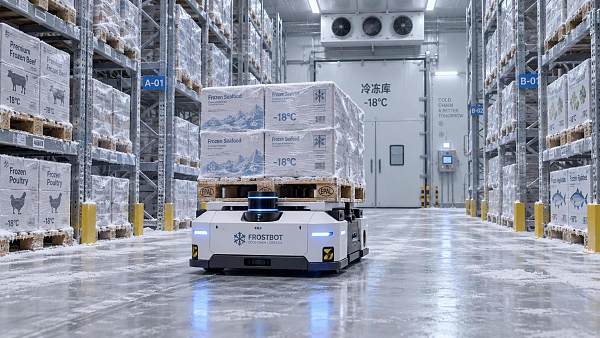
Frozen cargo creates a different problem. It is generally more temperature-stable over short periods, so teams may underestimate the impact of a power interruption in a terminal yard or during rail transfer. The cargo may still appear hard frozen at delivery, but repeated thermal stress can still trigger customer complaints, especially with premium seafood, meat, or products moving under strict export quality programs. In those cases, event history matters almost as much as the final temperature reading.
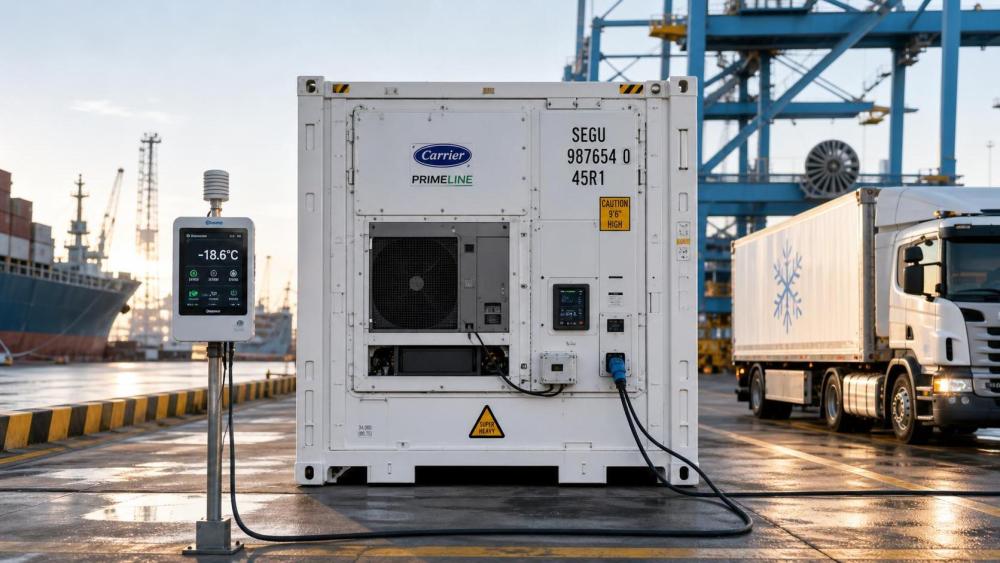
Pharmaceutical and life-science cargo raises the threshold again. Here, reefer monitoring is not just about spoilage prevention. It supports deviation review, chain-of-custody documentation, and the ability to show when alarms were triggered, acknowledged, and resolved. The reefer container is only one part of the temperature-controlled chain, but if the monitoring data is incomplete or cannot be reconciled with handling timestamps, the cargo owner may treat the shipment as compromised even when visible damage is absent.
What good monitoring actually looks like on site
A common mistake is to think reefer monitoring means a dashboard with live temperatures. In practice, that is the easy part. The harder part is whether the monitoring system is tied to the operating environment where decisions are made. Terminal operators need plug status, alarm prioritization, and exception visibility across hundreds or thousands of reefer points. A warehouse-connected cold chain operator may care more about inbound dwell time, yard transfer exposure, and whether a container was held outside its intended turnaround window. A shipping line may need voyage-level visibility and machine event continuity across multiple ports.
That is why experienced operators look beyond sensor availability and ask narrower questions. Can the system distinguish a brief communication loss from a real unit fault? Does it capture controller alarms in a way operations staff can act on quickly? Is the response workflow clear when a reefer is unplugged, showing high return-air temperature, or failing to pull down after loading? If monitoring only produces more data without changing who responds and how fast, it will not reduce losses in any meaningful way.
Power status is one of the most underrated signals. In many reefer yards, cargo incidents are first framed as refrigeration failures when the more immediate issue was delayed power restoration, incorrect connection, or unnoticed unplugging during movement. A temperature graph alone may show the result, but plug and power event records help explain the cause. For claims management and internal root-cause review, that difference is essential.
Why cargo type changes the monitoring logic
Not every reefer shipment needs the same alert thresholds or escalation rules. With frozen cargo, operators may prioritize uninterrupted power, compressor status, and prolonged temperature excursion. With chilled produce, the more revealing signal may be poor pull-down behavior after stuffing or repeated temperature oscillation that suggests loading or airflow problems. For pharmaceuticals, the key question is often whether the entire monitored journey can stand up to audit and deviation review, not simply whether the average temperature stayed near target.
This is where some monitoring deployments disappoint users. They are installed as universal platforms, but operated as if all reefer boxes carry the same risk. That approach usually creates alert fatigue. The better method is to segment by commodity, transit time, handling complexity, and claim exposure. A short-haul domestic reefer shuttle with stable infrastructure may not need the same intervention model as an export shipment that moves through congested terminals, customs holds, and modal transfers before arrival.
In other words, reefer monitoring works best when it supports decisions at the level where cargo actually fails. If a route is vulnerable to handoff delay, time stamps matter. If a terminal sees frequent plug congestion, power and queue visibility matter. If product value collapses after a narrow temperature breach, alarm latency matters. The system should be built around those real exposures, not around a generic promise of end-to-end visibility.
Limits that operators should be honest about
Monitoring does not repair poor cold chain fundamentals. It will not compensate for cargo loaded warm, bad packaging design, blocked evaporator airflow, incorrect fresh-air vent settings, or unrealistic transit planning. It can reveal symptoms earlier and preserve evidence more reliably, but it cannot turn a weak process into a stable one. This matters because some project teams expect reefer monitoring to solve claim problems that actually begin in loading discipline or SOP compliance.
Connectivity is another practical limit. Depending on the environment, live data continuity may vary across ports, inland depots, or ocean legs. That does not make monitoring useless, but it does mean project owners should confirm where data is truly real-time, where it is event-synced, and where manual intervention still matters. A system may be operationally valuable even with partial visibility, provided the blind spots are understood and the escalation plan accounts for them.
Implementation also tends to fail for organizational reasons rather than technical ones. Alarm ownership is often unclear between terminal staff, shipping lines, transport providers, and cargo owners. If no one is accountable for reviewing exceptions during weekends, gate peaks, or transshipment windows, the quality of monitoring output becomes secondary. Experienced operators usually settle this early: who sees the alert, who confirms the physical condition, who authorizes intervention, and how the action is recorded.
What to check before treating monitoring as a loss-reduction tool
Three questions are usually more useful than a long feature checklist.
One: where in your operation do temperature-sensitive shipments actually become vulnerable? If most exceptions happen during port dwell or inland waiting time, spend less energy on broad visibility claims and more on plug management, alarm routing, and intervention speed.
Two: what evidence do you need when a shipment is questioned? Some operators only need operational alerts. Others need traceable event logs that support customer review, insurer discussion, or internal CAPA processes. Those are not the same requirement.
Three: which deviations are worth reacting to immediately, and which should simply be recorded? Without that distinction, monitoring programs often drown teams in non-critical exceptions while missing the few events that cause actual financial damage.
For cold chain operators, 3PLs, terminal managers, and shippers, reefer monitoring is most valuable when it is treated as part of operational control rather than a passive visibility layer. The reduction in losses usually comes from earlier intervention, cleaner accountability, and fewer ambiguous handoffs. Before expanding any system, it is worth mapping one route, one cargo family, and one failure pattern in detail. That exercise often shows very quickly whether the next investment should go into more sensors, faster response procedures, tighter yard discipline, or better alignment between monitoring data and cold chain decisions.
Related News
 Where Autonomous Freight Vehicles Deliver the Most Value in Port OperationsPort Digital Twin ArchitectAutonomous freight vehicles ports: discover where automation delivers the highest value in quay-to-yard, rail, and logistics workflows—improving throughput, safety, and reliability.
 How to Size High-Rate Sortation Capacity for Peak Parcel VolumesGlobal Routing & Distribution StrategistHigh-rate sortation capacity planning: learn how to size peak parcel throughput, reduce recirculation, protect carrier cut-offs, and build a resilient operation.
 How to Calculate Rail-Sea Intermodal Logistics Costs Before Choosing a RouteZero-Carbon Powertrain FellowRail-sea intermodal logistics cost: learn to compare all-in freight, rail, port, customs, and risk costs before choosing a route for smarter sourcing decisions.
 What Should Ports Evaluate Before Selecting a Digital Port Platform?Port Digital Twin ArchitectDigital port platform selection guide: evaluate integration, data governance, automation readiness, cybersecurity, and pilots to choose a resilient solution that improves port operations.
 How to Compare Rail-Sea Intermodal Providers for Port-to-Inland Freight ReliabilityZero-Carbon Powertrain FellowCompare rail-sea intermodal providers with a practical guide to lane reliability, capacity, visibility, costs, and contingency planning for resilient port-to-inland freight.
 How to Select Autonomous Mobile Robots for Subzero Cold Storage OperationsPort Digital Twin ArchitectAutonomous mobile robots cold storage teams can rely on: evaluate batteries, navigation, safety, charging, and service for proven subzero performance.
 How Real-Time Route Optimization Reduces Delays Across Multi-Stop Freight OperationsChief Logistics AI & Fluid Dynamics ScientistReal time route optimization helps multi-stop freight teams cut delays, protect delivery windows, and respond faster to port, warehouse, and traffic disruptions.
 How to Build a Logistics Tender Workflow That Improves Bid Quality and ControlFreight Capital & Infra Investment EconomicsLogistics tender workflow guide: improve bid quality, compare total costs, assess suppliers, and strengthen contract control for better logistics outcomes.
 How Should UAE Businesses Evaluate Drone Logistics Systems for Last-Mile Delivery?Spatial Computing & Machine Vision GeekDrone logistics systems UAE: learn how to evaluate regulatory readiness, route safety, integration, reliability, and total cost for smarter last-mile delivery.
 How to Evaluate Port Automation Systems for Container Terminal Efficiency and ROIPort Digital Twin ArchitectPort Automation Systems for terminals: evaluate efficiency, TOS integration, supplier risk, and ROI to choose scalable solutions that improve throughput and resilience.
 How to Use Freight Benchmark Pricing to Compare Carrier Rates and Control CostsFreight Capital & Infra Investment EconomicsFreight benchmark pricing helps procurement teams compare carrier rates, control total transport costs, uncover surcharges, and negotiate better freight deals with confidence.
 Container Yard Management: How to Cut Truck Turn Times and Improve Slot UtilizationPort Digital Twin ArchitectContainer yard management strategies to cut truck turn times, optimize slot utilization, reduce rehandles, and improve yard flow with smarter appointments, planning, and real-time control.